Red Sox Momentum Play: Nine-Game Streak Tests AL East Reality
By PropBetEdge Editorial Team ·
Boston's nine-game win streak entering the All-Star break has compressed them into wild-card contention, but the streak's sustainability against stronger pitching will define whether the surge sticks.
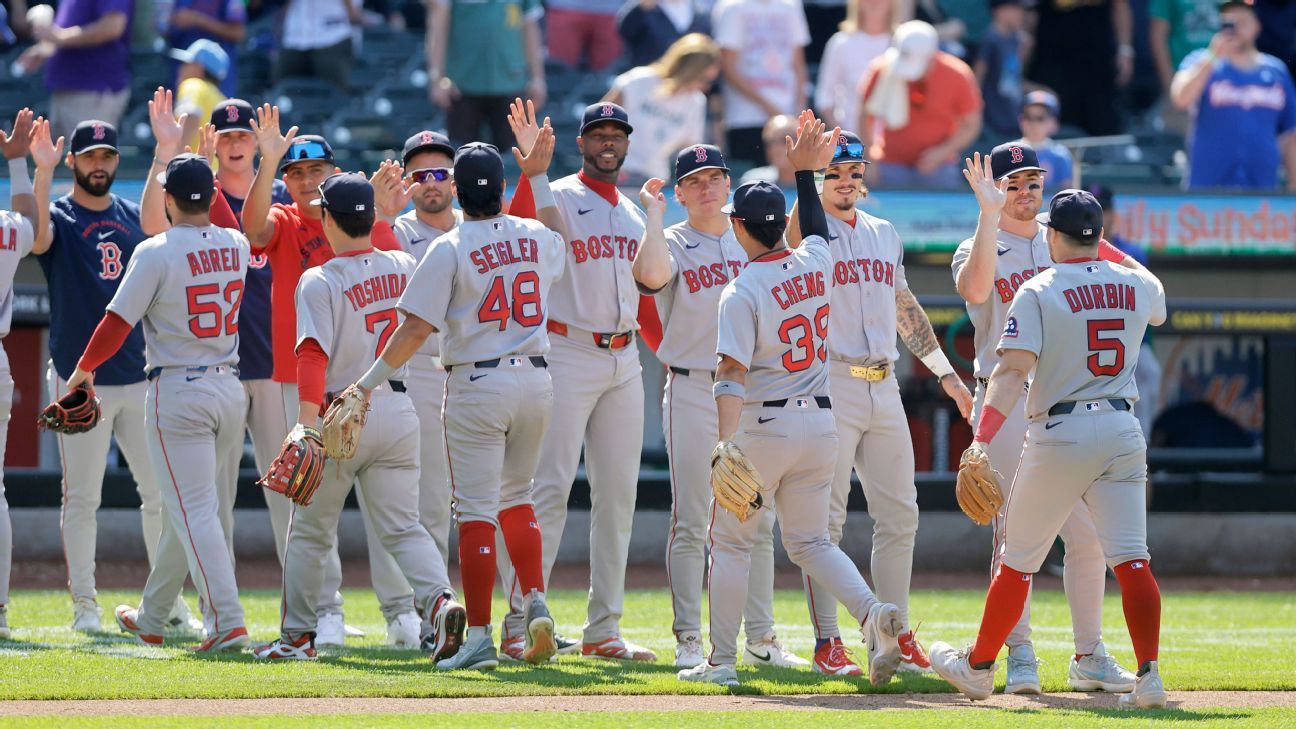
The Red Sox have won nine consecutive games, a run that began July 2 and carried through the All-Star break, vaulting a team that sat 11 games under .500 on July 1 into a half-game of the final wild-card spot. The streak includes sweeps of the Angels, White Sox, and Mets—a plus-34 run differential across those nine games—and ties the third-longest winning streak in the majors this season. Boston's 14-2 record since June 25 represents a dramatic organizational swing, though the AL East lead remains a forbidding 10 games with Tampa Bay still running away in the division.
The mechanics of the run are worth isolating from the narrative noise. Boston faced three of baseball's weakest offenses and pitching staffs during this window. The Angels rank bottom-five in both runs per game and ERA; the White Sox are historically bad; the Mets arrived without their top offensive talent healthy. Against those opponents, even a middling offense puts up crooked numbers. The real pressure test comes now—the second half begins with Boston facing stronger divisional opponents and playoff-contention teams with both talent and incentive to compete. A nine-game streak against weak competition is a confidence builder. Sustaining performance against the Astros, Orioles, and Rays is an entirely different proposition.
For betting purposes, this creates a classic regression inflection point. The market has already moved—favorites on Red Sox games have tightened, their run-line odds have compressed—because the recent data is unavoidable. But the composition of that data matters more than the volume. Boston's pitching staff remains in the bottom quartile of ERA and strikeout rate. Their defense is league-average at best. The run differential spike came against below-average competition, which means the underlying talent differential hasn't fundamentally shifted. A 14-2 record since June 25 looks dominant; a 9-0 road trip looks historic. But both figures are anchored in a specific, soft schedule that has now ended.
The prop angles here are directional fades on Boston team totals and run-line favoritism over the next three weeks as the schedule hardens. Red Sox team total overs in games against AL East competitors and wild-card contenders should be viewed with skepticism—the streak has created a halo effect in market pricing that isn't justified by the underlying talent match. The pitching limitations that plagued Boston all season haven't been fixed by a week of dominant hitting. Unders on team totals at 4.5 or higher have value as long as the market prices in recent results rather than rest-of-season talent alignment. This is a persistence bet: the streak will fade because the schedule hardened, not because the offense suddenly misfires.
Boston's position in the wild-card race is real and important, but momentum from nine games against the Angels, White Sox, and Mets is a fragile foundation. The question now is whether the underlying roster has legitimately improved—spoiler: it hasn't—or whether the market simply allowed a soft schedule to create optical illusions. The next 10 games will clarify which version of the Red Sox emerges after the break.