Taillon's Innings Limit Hands Houston a Pitching Edge in Matinee Spot
By Ty Whitney ·
Toronto's rotation skip transforms a marquee AL Cy Young duel into a mismatch that favors the Astros' high-leverage bats.
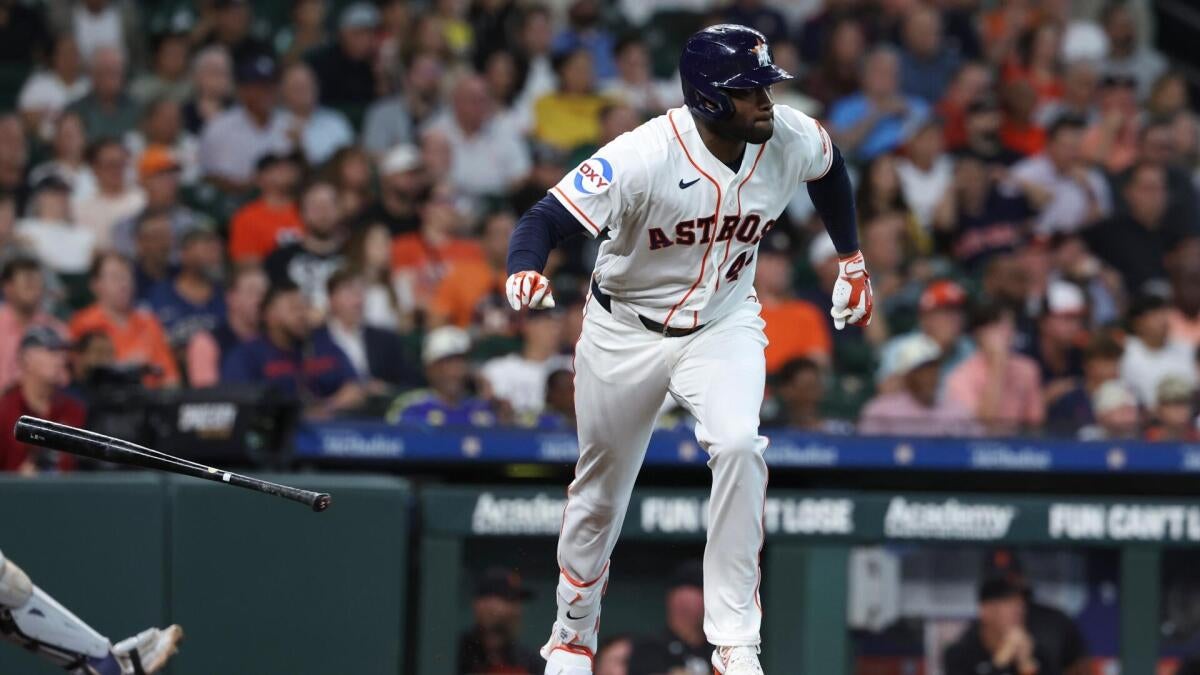
The Blue Jays pushed Dylan Cease back from his scheduled start against Houston on Wednesday afternoon, flipping what was slated as a top-tier AL Cy Young matchup into a lopsided pitching advantage for the Astros. In Cease's place: Jameson Taillon, a 34-year-old righty whom the Cubs designated for assignment before dealing him to Toronto for minimal return. The context matters. Toronto is out of playoff contention—the SportsLine model gives them a 2.2% postseason probability—and the team has shifted to a six-man rotation to preserve innings on Cease and other pieces for 2027. Combined with a makeup game at Chicago on Thursday, the Cease delay was always in play. It's a calculated organizational decision that leaves Houston with a material pitching-matchup edge in a getaway-day matinee.
Taillon's recent track record is unsparing. Over 76 innings this season, he's surrendered 25 home runs—a rate that projects to roughly 2.9 per nine innings. The SportsLine model pegs him for 5.7 innings, 2.8 earned runs, and 5.3 hits allowed. Against Hunter Brown, who carries a 3.42 ERA and has thrown 104 pitches in his most recent outing, the Astros have the healthier arm on the mound. Brown himself just returned from a lengthy injured-list stint and is on a deliberate workload; he threw 104 pitches last time out, a season high, suggesting the Astros will be cautious with his innings total.
The individual hitter-pitcher dynamics amplify Houston's advantage. Yordan Alvarez, the AL MVP betting favorite at -900 odds, is 5-for-15 with a home run in his career against Taillon. Catcher Christian Vasquez, likely to see action today despite part-time regular status, owns a 1.818 OPS off Taillon on 6-for-11 hitting with four extra-base hits. Daulton Varsho, acquired from Toronto at the deadline, will face his former teammates; he's 1-for-6 in limited plate appearances against his old club but with three walks, suggesting disciplined at-bats. These are not random splits—they're evidence of Houston's roster hitting its pitches and Taillon's vulnerability to mistake exposure.
For the prop market, the pitching mismatch creates a two-pronged angle. First, Astros' run production in the early innings should carry legitimate juice. SportsLine's 2.8 projected earned runs for Taillon understates the damage when paired with Alvarez and Vasquez's individual track records; both players have shown explicit power production off this specific arm. A same-game parlay combining Houston's moneyline with an under on first-inning runs reflects modest juice at +130—sharp enough to suggest that the broader public hasn't fully capitalized on Taillon's home-run surrender rate. Second, strikeout props on Brown worth monitoring as Houston's lineup has shown ability to make contact; if the Astros jump on early mistakes, Brown's workload management becomes a lever for totals plays. The edge is persistent—driven by roster composition and pitcher-specific splits, not one-game variance—but it will compress as books recognize Cease's absence.