Blue Jays Lock in Carlon Below Slot, Freeing Capital for Brick—What It Means for Toronto's Farm
By Erik Schwartz ·
By negotiating Cole Carlon's bonus $170,000 below slot value, the Blue Jays are preserving draft capital to make an aggressive overslot push for catcher Will Brick in round four.
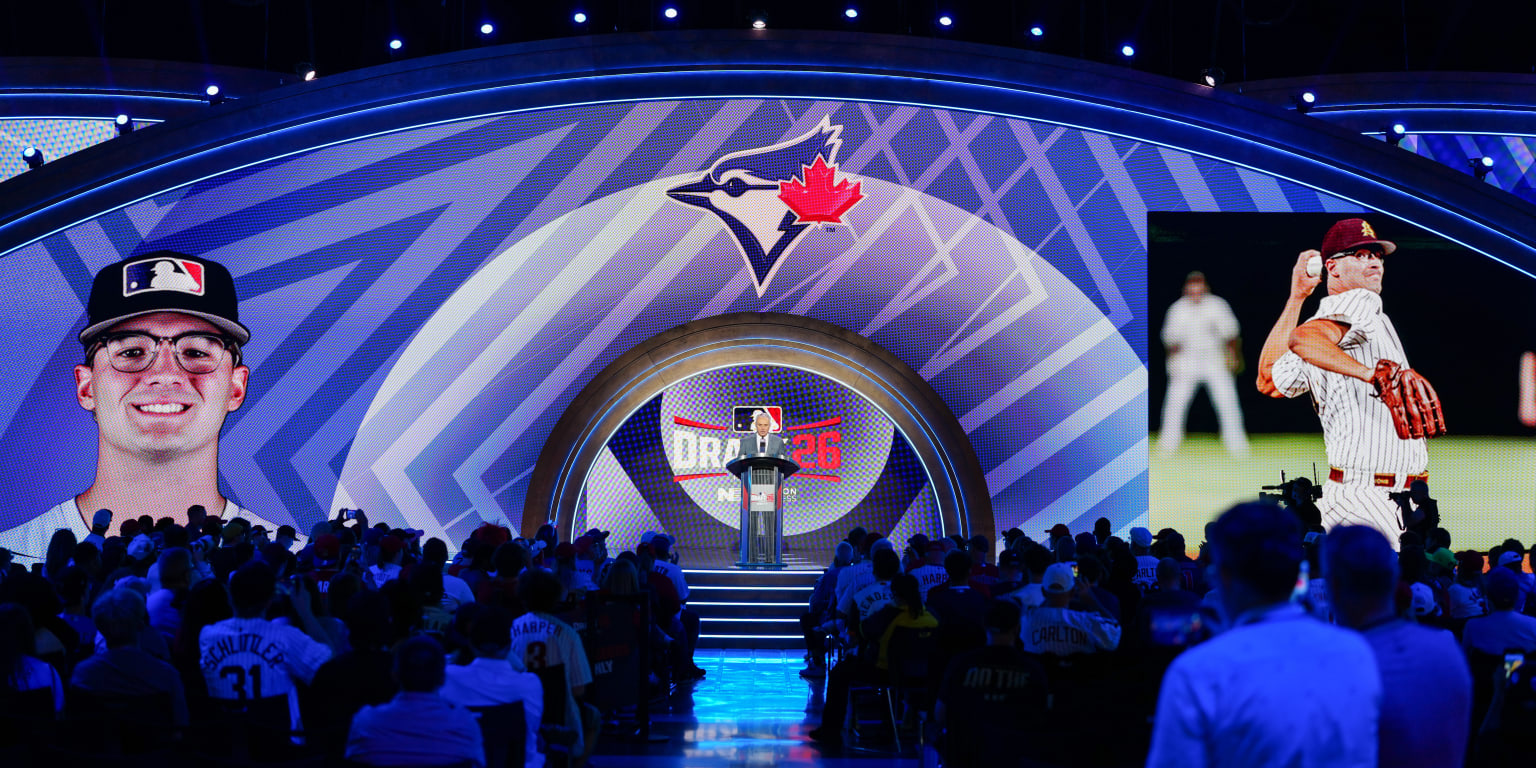
The Blue Jays agreed to a $2.4 million signing bonus with Cole Carlon, their first pick in the 2026 MLB Draft at No. 39, landing the Arizona State lefty roughly $170,000 below the slot value of $2,571,700. The penalty that sent Toronto back to pick 39—a Competitive Balance Tax surcharge hit shared with the Dodgers, Mets, Phillies, and Yankees—created an unexpected opportunity: a chance to acquire a prospect with top-10 overall upside at a pick deep enough to carry real discount leverage.
Carlon's profile is straightforward elite. At 6-foot-5 and 230 pounds, he sits in the triple digits and owns what scouts call the draft's best slider—the kind of two-pitch death combination that wins October games. His 133 strikeouts over 83⅔ innings ranked fifth in Division I this past season, and the Blue Jays' track record developing college arms (see Trey Yesavage) suggests they understand the runway from NCAA velocity to big-league impact. The savings on Carlon's deal aren't random. Director of amateur scouting Marc Tramuta explicitly framed the fastball and slider as October pitches; the club is buying a finished product in terms of stuff, not a project requiring years of mechanical overhaul.
The real story is what Toronto saved for. With the second-smallest bonus pool in the draft, the Blue Jays combined the Carlon discount with over-slot spending projected across rounds four through ten—where they weighted toward college bats—to fund an aggressive play for Will Brick, a prep catcher they landed in round four at pick 131. Brick is widely considered the prep class's best defensive catcher and owns the kind of power profile that justifies overslot investment in a position where catching depth is perpetually scarce. Baseball America and MLB Network scouts compare Carlon to a bigger Robbie Ray; if Brick becomes a perennial All-Star-caliber defensive catcher with average-to-plus power, the Blue Jays have assembled a class that moves their major-league window forward.
For prop-focused observers, this matters because it signals where Toronto's internal valuation lands on farm depth and timeline. The club is not conserving payroll or punting on talent acquisition—they're optimizing the pool's utility by accepting a modest discount on a high-ceiling arm to bankroll a swing on a position of genuine need. Carlon will likely remain in development through the rest of 2026, possibly shut down entirely pending his workload ramping from college bullpen duty into a starter's role. Brick, the high-school bat, enters pro ball with front-office confidence and prospect-capital backing. Neither player factors into major-league prop markets immediately, but the drafting posture—disciplined on premium arms, aggressive on premium bats—tells you the organization believes it can build around starting pitching depth and middle-of-the-order position players over the next three to five seasons. That construction philosophy ripples into how the Blue Jays' major-league roster will be shaped at the trade deadline and in future free agency.
The Competitive Balance Tax penalty created a short-term disadvantage that the Blue Jays converted into structural gain: cap savings bundled into player acquisition. It's the kind of front-office flexibility that doesn't change tomorrow's betting market but signals which teams understand how to extract edge from administrative constraint. Watch Toronto's international signings and fall league assignments over the next calendar year; this draft class setup suggests patience with youth development and confidence in organic upside generation.