Scherzer's Injury Compounds Toronto's Rotation Math
By Erik Schwartz ·
A month on the shelf with dual injuries leaves the Blue Jays scrambling to clarify their front-line pitching depth as Bieber's own status remains unresolved.
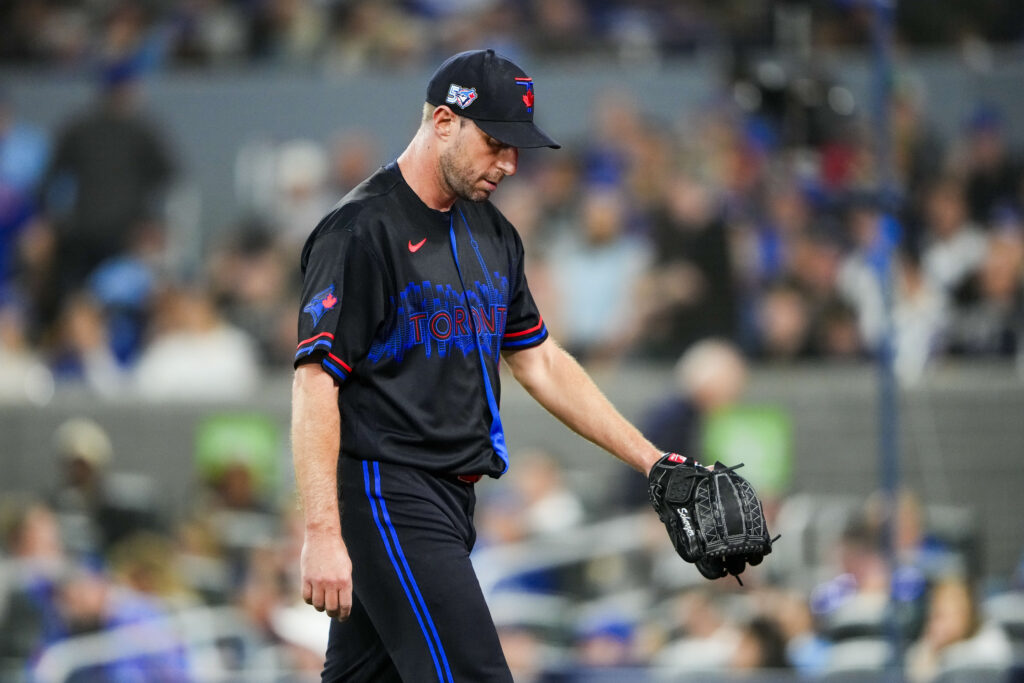
Max Scherzer has been sidelined for approximately a month with right forearm tendinitis and left ankle inflammation, leaving Toronto's rotation in flux heading into the stretch. The 41-year-old's five starts before landing on the 15-day IL were inconsistent—he pitched into the sixth inning in his season debut while allowing just one earned run, but the larger pattern suggested inefficiency and elevated pitch counts that signal durability concerns for a pitcher operating at his age.
The Blue Jays signed Scherzer as a veteran innings-eater, expecting stability from his track record. Instead, they're absorbing both the opportunity cost of a rotation slot and the injury risk that comes with aging arms asked to carry heavy workloads. With Shane Bieber's own health status unclear, Toronto faces a genuine depth problem: the rotation lacks redundancy at the top. If Scherzer remains unavailable long-term or loses effectiveness after his return, the club loses both its Plan A and Plan B in short order.
The internal debate around Corbin—whether he deserves a rotation spot ahead of a struggling Scherzer—reflects the organization's growing desperation to find competence in the fifth-starter ecosystem. This isn't about Corbin's talent; it's about the absence of alternatives. When a front office starts publicly considering mid-tier arms to displace a $15M+ veteran, the rotation's baseline reliability has already fractured.
For bettors tracking Toronto's playoff odds, this injury clouds the picture considerably. Every game the Blue Jays play with a suboptimal rotation compounds playoff probability. Unders on Blue Jays team totals carry meaningful value in the near term—not because the offense is broken, but because a rotation held together by question marks will force the lineup into deeper counts and fewer scoring opportunities. Scherzer's absence guarantees elevated reliance on secondaries and bullpen depth. That recipe produces fewer runs, not more, regardless of Toronto's offensive talent.
The 15-day IL window expires within days, but Scherzer's dual-location injury—forearm tendinitis paired with ankle inflammation—suggests soft-tissue complications that don't resolve on schedule. Early indications point toward a longer stay or a cautious return that sacrifices velocity. If he does rejoin the rotation, expect lower-end performance: fewer strikeouts (tendinitis affects grip and extension), shorter outings (ankle limits his mechanics), and elevated walk rates (compensation for lost zip). That's a fourth or fifth starter's outcome for a franchise payment that screams "ace investment."