Miller's Elite Strikeout Rate Carries a Workload Caveat for All-Star Case—and Prop Bettors
By PropBetEdge Editorial Team ·
A pitcher who has thrown 55 innings in two months cannot build a reliably large strikeout prop sample, even at an elite rate.
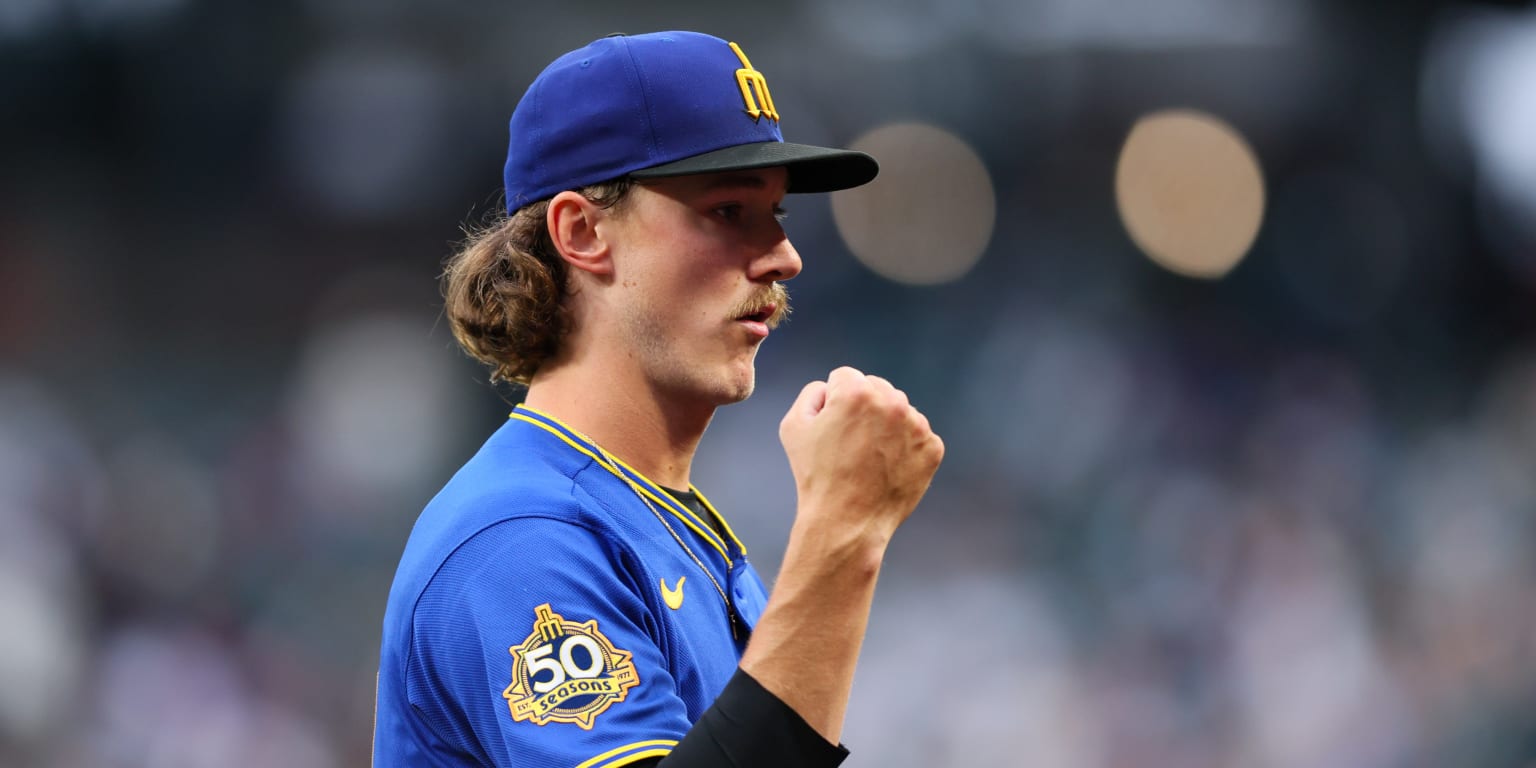
Bryce Miller carried a no-hitter into the seventh inning Thursday night as the Mariners blanked the Angels 1-0, striking out eight and issuing no walks for the fourth straight start. The performance reinforced what has become a clear pattern: when the Seattle right-hander takes the ball, he induces swings and misses at a clip that rivals the league's most dominant arms. His 1.71 ERA and 0.66 WHIP through 55⅔ innings since his May 13 debut are legitimate All-Star credentials. But the All-Star case and the prop-betting case diverge sharply on one axis: volume.
Miller missed the first seven weeks of the season with a left oblique strain, then made eight regular starts and one relief appearance across about eight weeks. That pace—roughly one start per week with intermittent rest days—is sustainable for a full season, but it is not a workload that compares to front-of-the-rotation horses. The AL's strikeout leaders have logged 120–150 innings already by early July; Miller sits at 55⅔. For voters evaluating All-Star eligibility, limited innings against high-quality results are a legitimate argument: depth at the position, injury risk in the postseason, and past precedent all matter. For bettors chasing strikeout props, that same constraint becomes a vulnerability.
His strikeout rate—8.0 K/9 over 55⅔ innings—is elite. But the sample is small enough that a two- or three-start stretch of regression (a spike in ground-ball contact, a change in sequencing, fatigue from increased workload post-All-Star break) would visibly alter his per-game average. The market has not yet priced Miller's strikeout props with the same conviction as, say, a Gerrit Cole or Logan Gilbert, who have pitched 120+ innings at similar rates. If his strikeout line opens at 7.5 or 8.0 K's in his next start, bettors should recognize that the edge lies not in chasing the over on volume alone, but in whether the matchup (opponent team K% against RHP, bullpen fatigue forcing extended innings, specific batter weakness to his fastball) justifies the line independent of his season average.
Miller's lack of volume also means his next start carries disproportionate weight in the All-Star discussion—and that scrutiny will intensify if he pitches on short rest or into early-inning trouble. From a prop perspective, that contextual pressure is worth noting. An elite pitcher on a seven-week ramp-up pitch is not the same asset as an elite pitcher 100+ innings into a season. One has fewer innings logged; the other has proven durability. The market will continue to misprice Miller's strikeout props as long as bettors treat his per-inning rate in isolation from his total workload and remaining schedule.