Bieber's Return Tightens Blue Jays Rotation Math—and Playoff Window Uncertainty
By PropBetEdge Editorial Team ·
Toronto's ace rejoins the team after three months shelved; activation could come within days, reshaping the team's second-half pitching leverage.
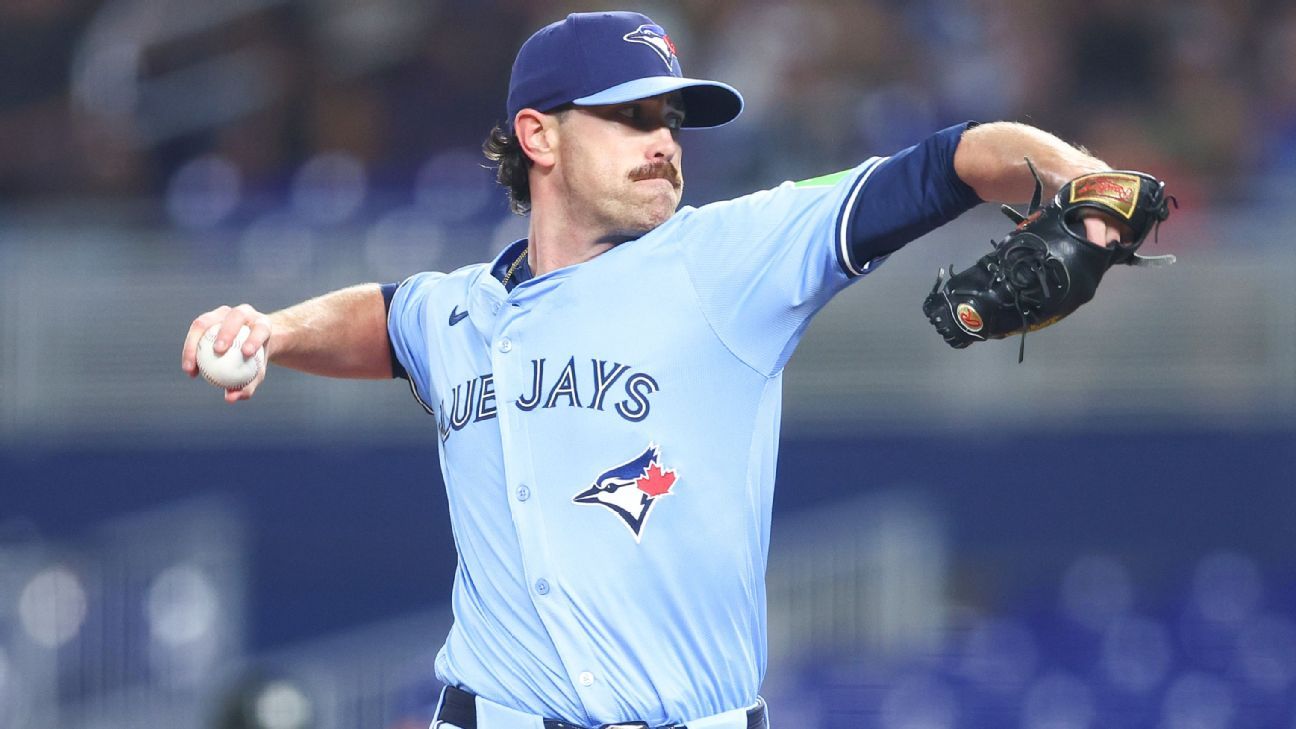
Shane Bieber rejoined the Toronto Blue Jays on Friday in Chicago, clearing the final gate before activation from the 60-day injured list. Manager John Schneider confirmed the right-hander will throw a side session at Wrigley Field on Saturday and could return to live competition as soon as Monday. The timeline closes a three-month absence that began with elbow inflammation in March, before Bieber was reclassified to the 60-day IL on April 13.
Bieber's rehab assignment to Triple-A Buffalo on Wednesday delivered the first live-action data: five-plus innings, five runs, 11 baserunners, 80 pitches, and a peak velocity of 93 mph. Those numbers don't scream dominance, but they do signal mechanical completeness. Schneider's reference to "housekeeping stuff" in Saturday's side session suggests the concerns are marginal—vetting arm slot consistency, recovery sequencing, or confidence cues that don't show up in line scores. The velocity floor (93 mph) matters; Bieber's career fastball velocity sits around 95 mph, so a three-tick drop isn't alarming for a pitcher one rehab start removed from competitive duty. If he clears Saturday without setback, the team moves forward.
Context sharpens the leverage. Toronto acquired Bieber at last year's trade deadline specifically as a postseason insurance policy. He delivered: 4-2 record with a 3.57 ERA in seven regular-season starts, then 2-1 with a 3.86 ERA in five playoff games as the Blue Jays reached Game 7 of the World Series. He exercised his $16 million player option in the offseason, betting on himself with Toronto rather than testing free agency—an internal valuation signal that he believed the team's window remained open. But this season's injury has forced Toronto to pitch around his absence, thinning a rotation already taxed by mid-June innings demands.
For prop purposes, Bieber's insertion changes two critical variables. First, his strikeout ceiling resets the K prop conversation for Toronto's rotation once he faces live hitters. His career rate sits at 10.4 K/9, and his velocity profile—even at 93 mph in rehab—remains in the upper tier for AL starters. Markets have likely priced Bieber into the Blue Jays' rotation construction on the assumption of his eventual return, but his first active start will carry sharp early-market mispricing as books recalibrate based on actual performance data rather than rehab narratives. Second, team total lines for Toronto games shift materially once Bieber takes a turn. His 3.57 ERA over the past three seasons (including playoffs) sits well below the league mean. Betting unders on Blue Jays team totals becomes riskier the moment his name hits the rotation card.
Monitor the velocity trend over Bieber's next two starts. If he sustains 94-95 mph fastball with command settling in (walk rates normalizing below his career 6.5% baseline), the strikeout props flatten and Toronto's implied run prevention jumps. That's a durable shift, not a single-game spark. If velocity lingers at 92-93 or command lags (elevated walk rates in outings two and three), markets will decompress on the strikeout props and team totals trend back toward unders. The edge exists in the gap between Schneider's cautious optimism and the actual arm strength data Bieber produces once live batters see him.