Bibee's Bullpen Collapse Masks a Deeper Cleveland Problem
By Erik Schwartz ·
Tanner Bibee finally got run support in his 13th start, then watched the Guardians bullpen hemorrhage six runs in one inning—a cautionary tale about pitching wins in an era of leverage and volatility.
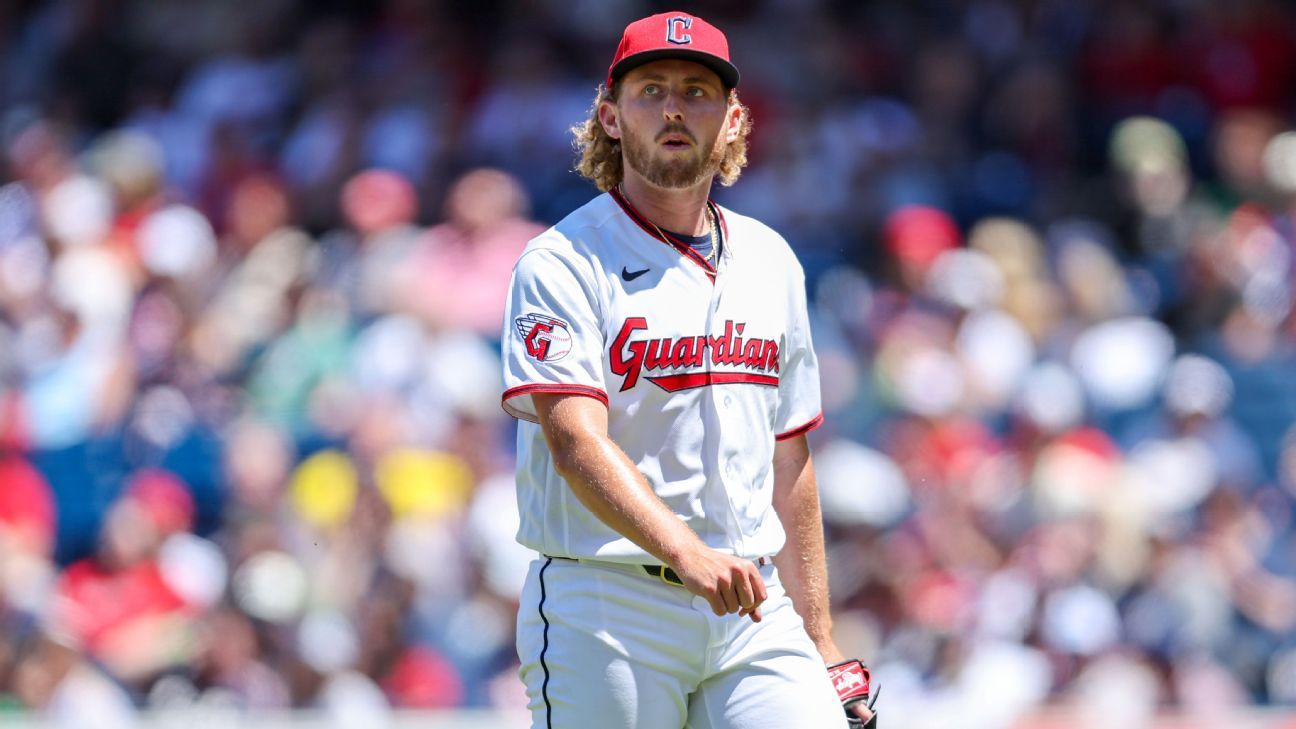
Tanner Bibee threw 90 pitches of competent baseball on Sunday against Boston, allowed three runs across six innings, and exited with Cleveland ahead 4-3. For the first time in 13 starts this season, he had a lead. For the first time in 13 starts, the Guardians actually scored. Then the bullpen imploded—six runs in the seventh, a 9-4 final, and Bibee's record dropped to 0-7, making him the first pitcher in Cleveland's 125-year history to go winless through 13 starts.
The headline—longest win drought to start a season in franchise history—is technically accurate but misleading about what's actually broken. Bibee's ERA sits at 4.57, which is mediocre but not catastrophic. He's struck out five per nine innings at a reasonable clip and walked just one in this outing. His issue isn't stuff; it's the margin of error and the team's failure to protect leads. He's been the fourth-best performer among opening-day starters in terms of ERA, yet he sits tied for second in losses. That gap doesn't signal pitcher failure—it signals Cleveland's run-support and bullpen infrastructure are doing him no favors. A 0-7 record in 13 starts is not a curse. It's a three-sigma outlier in an environment where bullpen volatility and run-scoring inconsistency have compounded.
For betting purposes, Bibee's next start carries embedded value the market has likely priced in one direction: uncertainty and fade. Sportsbooks have adjusted his moneyline into underdog territory and his team total has compressed. But the core issue—that he's a league-average pitcher who happens to pitch for a team with bottom-tier bullpen consistency and sporadic offensive support—is durable across multiple starts. The 0-7 record is noise. The 4.57 ERA with reasonable strikeout rates and limited walks is the signal. When Bibee returns to the mound, Cleveland's bullpen risk and offensive inconsistency remain constant. Neither has materially improved because one bad inning won't reshape the franchise's foundational problems.
That said, Bibee's actual pitching performance (three runs in six innings, five strikeouts, one walk) against a Boston lineup that did damage against him suggests his stuff is playable. The question for prop bettors isn't whether he'll earn a W—wins are downstream of bullpen performance and team offense, both of which remain volatile. The sharper angle is his strikeout line in his next start. If his K/9 rate has held steady around 5.0-5.5 across his 13-start sample, a strikeout prop set at 4.5-5.5 may carry value if the market has over-weighted his record into a wider strikeout line. His ability to miss bats hasn't changed; the context around him has simply been unforgiving. Track his actual stuff metrics—whiff rate, fastball velo, chase rates—not his win column. Those remain the only honest measure of his pitcher-specific value.
Cleveland's bullpen collapse is the real story. Herrin couldn't close a bases-loaded jam, and six runs in one inning against a middling Boston offense is the kind of performance that defines a team's ceiling, not a starter's floor. Bibee will continue to pitch into this volatility. The next time he takes the ball, the risk hasn't diminished—it's just become more visible to bettors who've been watching this narrative unfold.