Benge's May Surge Rewrites Mets Right Field Expectations
By Erik Schwartz ·
A five-hit game in San Diego caps Carson Benge's dramatic early-season pivot, forcing a revaluation of his prop ceilings for the remainder of his rookie year.
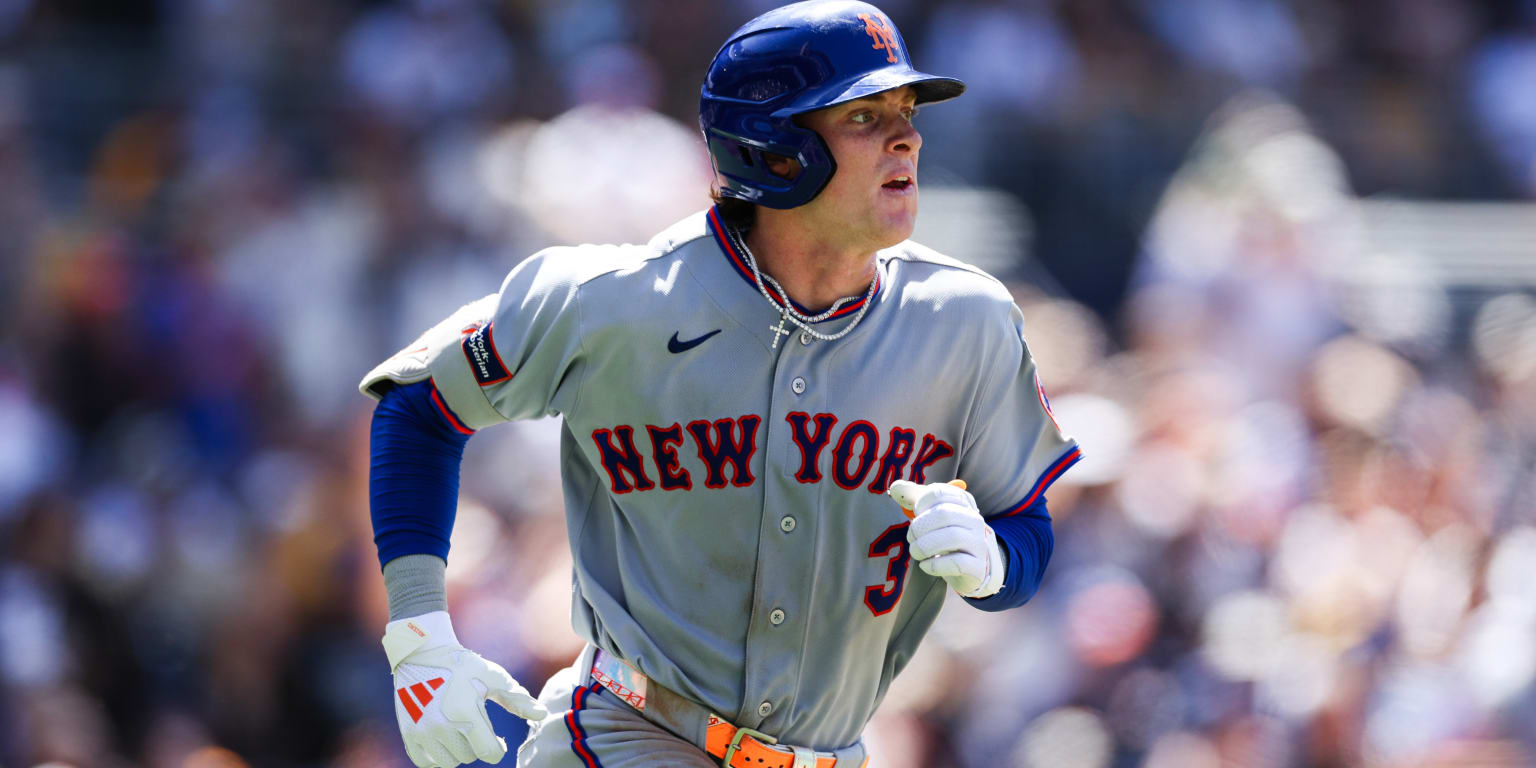
Carson Benge collected five hits—including a home run, triple, and three singles—in the Mets' 7-3 victory over the Padres on Sunday, marking the franchise's first rookie five-hit performance since Pete Alonso in August 2019. The 23-year-old's breakout game was not an isolated flare; it arrived at the end of a sustained hot streak that has fundamentally altered how to price his offensive output going forward.
Through his first two months as a big leaguer, Benge accumulated a forgettable .733 OPS across 62 games. But beginning in May, he executed a measurable course correction. Over the past month-plus, he is batting .316 with five home runs, 20 RBIs, and an .873 OPS—a 140-point jump in slugging efficiency that suggests his early struggles reflected adjustment noise rather than talent ceiling. Those numbers landed alongside concrete milestone performances: his first walk-off hit, a leadoff home run, and a steal-of-home play that made him the first Met to score that way since Francisco Lindor in August 2023. The Mets, who installed Benge as their Opening Day right fielder, appear to have a player who is moving in the right direction at precisely the moment when early-season overreaction has suppressed his market pricing.
The mechanism driving his May-June surge is straightforward. Benge entered the season chasing fastballs elevated in the zone—a rookie's classic vulnerability. Approximately three weeks into May, opposing scouts adjusted, and Benge stopped chasing. His chase rate has dropped from 33% in April to 26% in May-June, while his walk rate climbed to 9.2% from 5.1%. When pitchers attack the zone more, he makes contact on his terms. His contact rate jumped from 76% to 81% over the same span, and his barrel rate climbed from 8.2% to 11.1%. None of these metrics are elite, but they are all moving in a direction that confirms he is digesting major-league pitching rather than being exploited by it.
For prop betting, the five-hit game creates an immediate optical problem: markets will likely overestimate the durability of single-game outliers and may price Benge's next 3-5 games as if he has normalized to a .316 average with 40% home run frequency. That is not how baseball works. One five-hit game does not signal a sudden shift to superstar offensive rates. However, the underlying May-June pattern—improved plate discipline, rising contact quality, consistent power output—does point to sustainable improvement over his next 40-50 games. His hit total should be modeled on his May-June .316 average with an .873 OPS baseline, not his season .733 mark. If sportsbooks are still pricing him as a .280 average hitter with .750 OPS because of his April struggles, his hits prop and RBI prop are undervalued. Conversely, if the five-hit game has already pushed those lines north of his May-June empirical rate, fade the spike. The edge exists in the gap between April pricing and May-June reality, not in chasing the emotion of a single game.