MLB · milestone
Ben Rice vs. Tampa Bay's Pitch Design: The Four-Seam Trap in the ALDS
Rice obliterated the Rays' fastballs all season, so Tampa Bay has a blueprint to neutralize him—but executing it in a five-game series is a different animal.
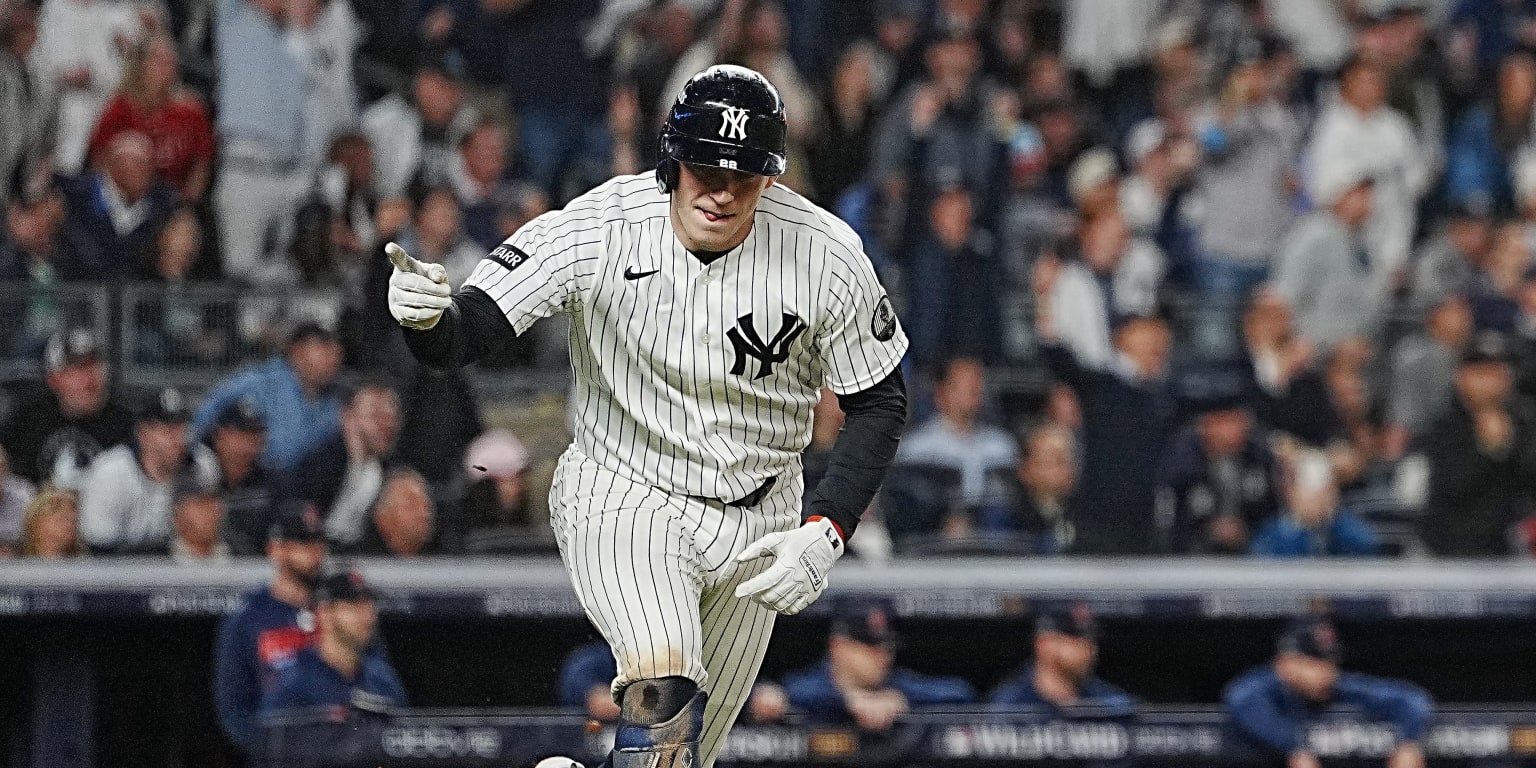
Ben Rice carried the Yankees through the Wild Card Series with two home runs, stepping into the primary offensive role with Aaron Judge sidelined for the start of the postseason. Now Rice faces the AL's best team in the Rays, a matchup that on its surface looks favorable for the slugger: he demolished Tampa Bay pitching in 13 regular-season games, batting .356 with a 1.320 OPS and seven homers. But the Rays have already shown exactly how they'll attack him, and the blueprint reveals a vulnerability the market hasn't fully priced into Rice's postseason prop lines.
Rice is the most dangerous four-seam fastball hitter in baseball this season. Between the regular season and Wild Card, he's batting .347 with a .855 slugging percentage and 17 home runs against four-seamers—25 runs created above average, a full two runs better than Bryce Harper in second place. The Rays know this. In their head-to-head meetings, they consciously starved Rice of fastballs, throwing him cutters 41% of the time (compared to a 27% baseline against left-handed hitters), changeups at 23%, and four-seamers just 15% of the time. Drew Rasmussen, Tampa's ace and a likely ALDS starter, went even further: he faced Rice 1-for-10 with five strikeouts and a 50% swing-and-miss rate by leaning on off-speed pitches and staying away from the zone with heaters. When Rasmussen did throw four-seamers, he used them sparingly and only to climb the ladder with two strikes—pitch sequencing designed to induce chase.
The Rays' entire pitching staff executed the same strategy. Right-handed pitchers threw Rice changeups (25%) and cutters (21%) as their primary weapons. Lefties deployed changeups (24%) and sweepers (24%), including the relatively rare same-sided changeup. Tampa threw Rice only 18% four-seamers across all their pitchers, compared to 36 sinkers and 33 four-seamers total—a clear prioritization of off-speed movement over the fastball zone. This is not accident. This is design.
For prop bettors, the angle hinges on strikeout rate and swing-and-miss frequency. Rice's strikeout rate against the Rays in the regular season (39.5% against Rasmussen specifically) is drastically elevated from his season average, because the Rays force him to chase breaking balls out of the zone or sit on an off-speed diet he can't elevate. If Rasmussen starts Game 1 on Saturday and the Rays maintain this pitch distribution through the series, Rice's strikeout prop should be overpriced relative to his regular-season baseline—the market is anchoring to his overall postseason performance (two homers in five games) without accounting for the Rays' specialized game plan. The risk: Rice proved in Boston that he can adjust. He hit two homers in five games against the Red Sox despite their own efforts to pitch him off-speed. A best-of-five series gives him limited at-bats to break through, but elite hitters often do.
The opportunity is on the short side: Rice's strikeout total and swing-and-miss percentage are likely to spike in this specific matchup, not because he's deteriorating but because Tampa's approach is the most sophisticated answer to his skill set. Fade his HR and hit prop lines if they're priced to his Rays-season averages; lean strikeout overs if the line hasn't adjusted for Rasmussen's dominance. This edge is single-series in scope—once the bracket shifts, it evaporates—but the Rays have handed us the exact mechanism.
MLB Intelligence — Baseball intelligence beyond the box score. Open MLB Intelligence →