Bazzana's Yankee Stadium Debut Reframes Cleveland's Leadoff Math
By PropBetEdge Editorial Team ·
The 23-year-old's four-RBI night suggests his early-season slash line is no fluke—and forces a recalibration of how often the Guardians' top two hitters will bat with runners in scoring position.
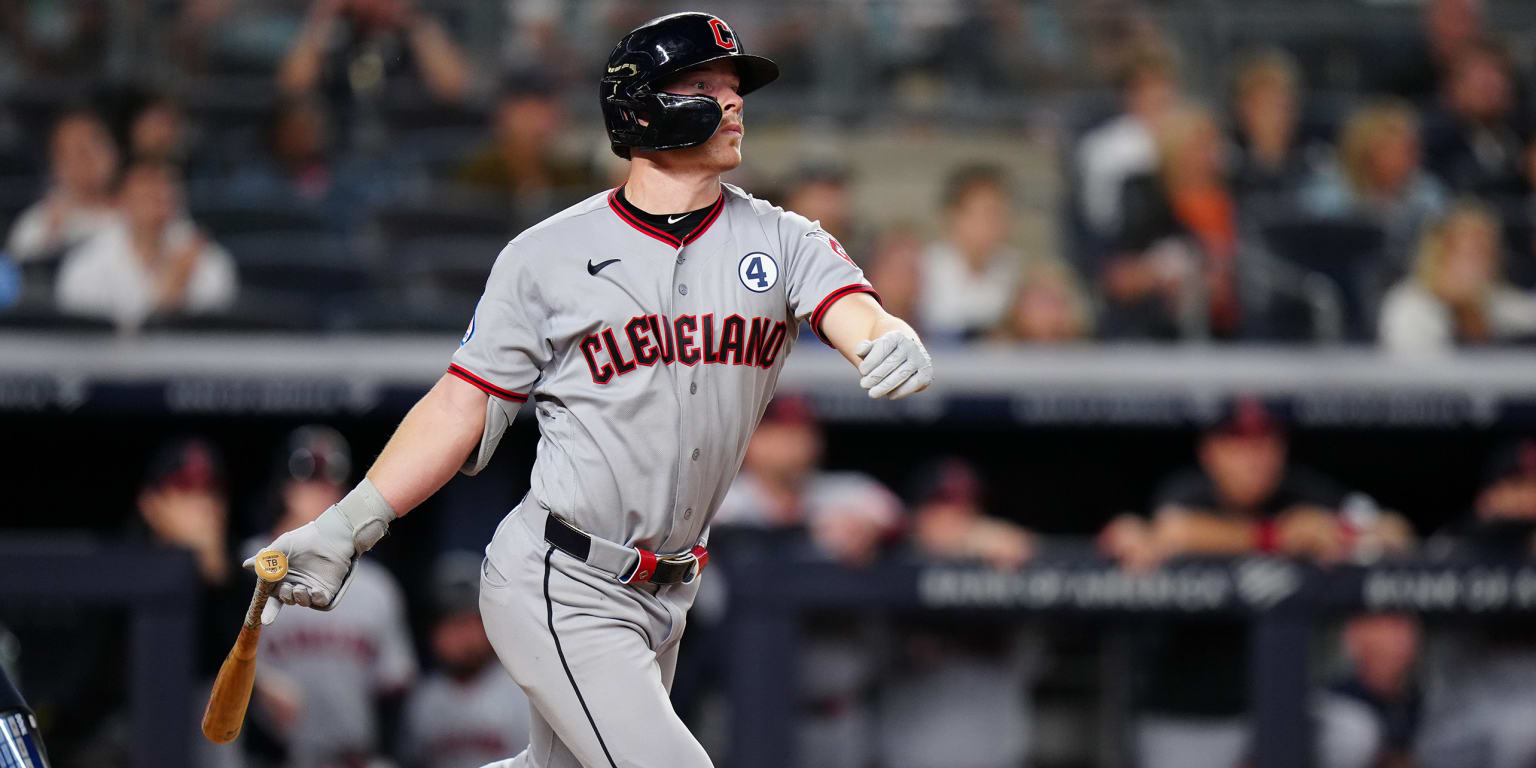
Travis Bazzana delivered a career-high four RBIs in his first game at Yankee Stadium on Tuesday, lifting Cleveland over New York 9-4. The Guardians' second baseman—promoted from Triple-A on April 28—had spent his first four games largely acclimating to big-league velocity. Tuesday, he stopped adjusting and started executing. His sacrifice fly off starter Cam Schlittler in the fifth tied the game; his two-out bases-clearing double off Camilo Doval in the eighth broke it open. The performance wasn't a one-off hot streak masking a struggling rookie—it was the logical extension of a pattern already visible in the box score.
Through 31 games, Bazzana is slashing .292/.382/.451 with a 15-to-25 walk-to-strikeout ratio. That .382 OBP places him above league average for a rookie, and his 9.4 BB% approaches the 10%+ clip associated with patient, disciplined hitters who work deep counts. More tellingly, Cleveland installed him as leadoff hitter on May 23—a role he's held for nine consecutive games. Manager Stephen Vogt's decision to slot the 23-year-old ahead of José Ramírez, the team's superstar third baseman, isn't borne of desperation or novelty; it reflects internal confidence that Bazzana can both execute the on-base function and create leverage for Ramírez in the second spot. Against Doval, Bazzana proved that thesis. Down 0-2, he fouled off a 102.2 mph sinker, took the next two offerings below the zone, then punished a fourth sinker that climbed to 100.9 mph. The exit velo (73 mph) wouldn't impress a launch-angle analyst, but the barrel found grass in a high-leverage moment—the kind of composure typically absent from a month-old rookie.
The betting implications track directly from Bazzana's early reliability. His leadoff role plus Ramírez's cleanup proximity creates a structural edge for Guardians run-scoring props. When Bazzana reaches base (which he's done in roughly 40% of his plate appearances), Ramírez comes to the plate with a runner on and the pitcher's attention divided. In Tuesday's eighth inning, Cleveland engineered the exact scenario: small-ball sitdown, bases loaded, Bazzana's two-out double clearing them all. That sequence wasn't random; it's repeatable. Bazzana's 15 walks in 31 games and his aggressive approach on hittable pitches (evidenced by his ability to stay on 100+ mph heaters) suggest he'll reach base frequently enough to keep Ramírez in productive spots.
The market hasn't yet priced Bazzana's role stability. Early-season rookie narratives typically anchor on raw counting stats—his 4 RBIs Tuesday—rather than on the underlying batting profile that sustains those counting stats across a season. His .382 OBP, walk rate, and the Guardians' explicit decision to bat him leadoff are three separate signals pointing to the same conclusion: he's not a September call-up getting a cup of coffee; he's the team's structural offensive anchor going forward. That changes how you approach Cleveland run totals. When Bazzana runs are in play—specifically when he's reaching base and Ramírez is driving in runs—Cleveland's team total props and Ramírez RBI props shift from variance plays into process-based edges.
The single-game spike in RBIs (his previous career high was 2) will fade; that's volatility. The underlying mechanism—a leadoff hitter with elite plate discipline batting ahead of a 40-home-run threat—compounds across a 162-game season. Bazzana's first Yankee Stadium game wasn't a breakout. It was confirmation.