Orioles Lose Both Catchers to Injury; Backup Depth Becomes Immediate Liability
By Erik Schwartz ·
With Adley Rutschman and Samuel Basallo now sidelined, Baltimore's offensive profile shifts sharply toward two backup catchers hitting a combined .200.
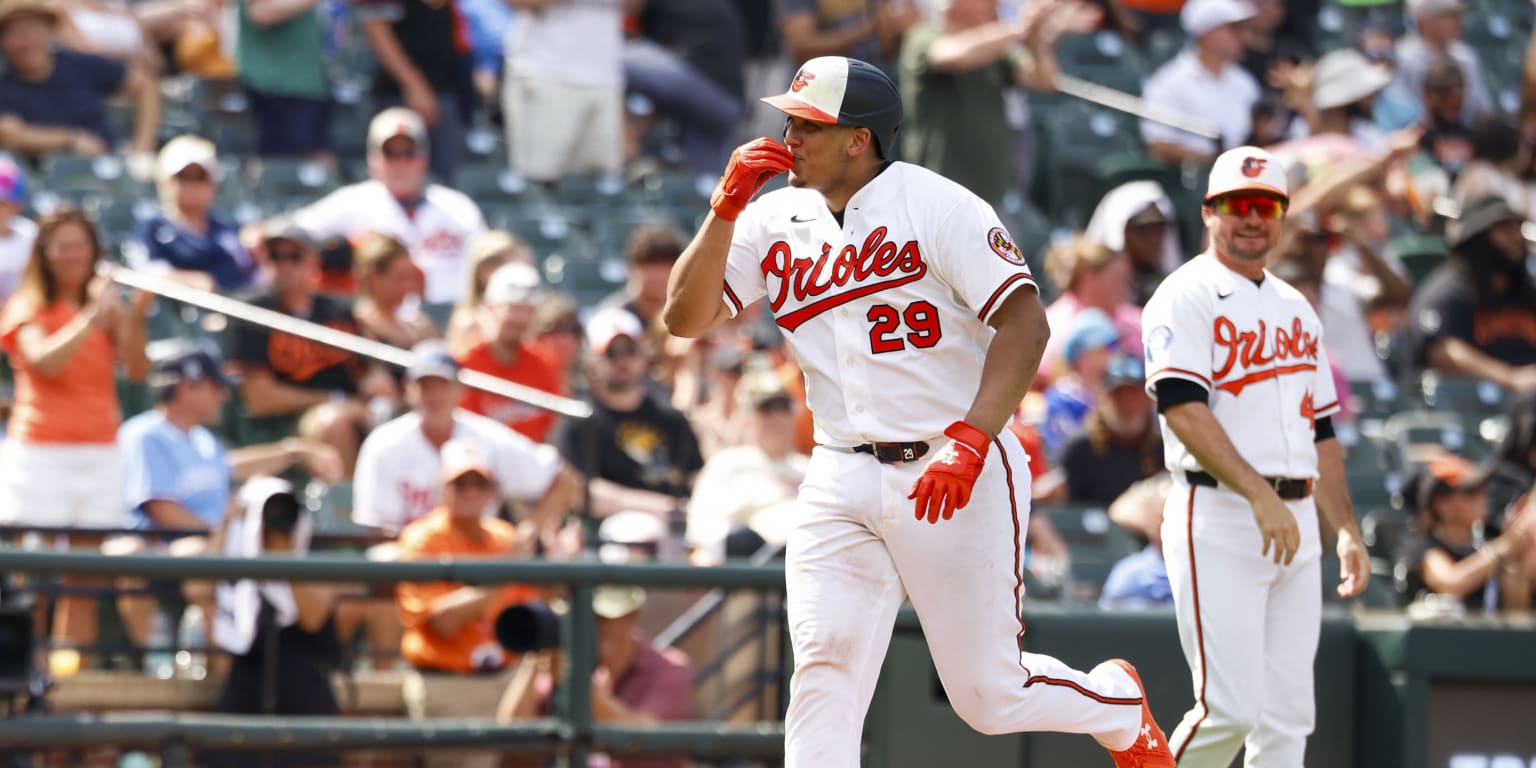
Samuel Basallo landed on the 10-day injured list Wednesday with right shoulder inflammation, joining Adley Rutschman on the sidelines after the Orioles' star catcher went down Monday with left wrist inflammation. The timing compounds Baltimore's problem: Basallo exited Sunday's win in Houston after aggravating the shoulder on a swing, and despite optimism from manager Craig Albernaz that he was trending in the right direction, the team chose to shut him down rather than risk further damage. For the first time in his rookie season—which began last August 17—the 21-year-old is unable to contribute. The corresponding move brought back Johnathan Rodríguez from Triple-A Norfolk, but the real story is who's left holding the position.
Basallo's absence is not a bench depth move. He has been one of Baltimore's offensive anchors during his first full season, hitting .241 with 16 home runs, 46 RBIs, and a .756 OPS across 86 games. He ranks third on the team in homers behind only Pete Alonso (21) and Gunnar Henderson (17). That's production you don't replace with internal options. The Orioles are now dependent on Sam Huff and Chadwick Tromp—a pair combining for a .138 average (4-for-29) and a single RBI in limited action. Huff, who started Game 1 of Wednesday's doubleheader, has been nearly unplayable this season. Tromp, called up from Norfolk when Rutschman went down, has played just one game for Baltimore in 2026 despite the team's sudden desperation at the position.
The offensive hit is measurable. Basallo's removal eliminates a source of legitimate power from a lineup that already saw Rutschman contribute 11 home runs before injury. Defensively, both backups present a different profile than either starter: neither has the game-calling credibility or pitch-sequencing security of Rutschman, and neither brings the same physical tools Basallo's youth suggests could develop. The catching position in baseball is as much about pitcher management as it is plate production, and a two-week window with Huff and Tromp handling that duty creates both tactical and confidence friction.
From a betting perspective, the impact on team offensive output is direct and durable. Basallo's IL stint signals a multi-week absence at minimum, and the lack of a credible third option (Rodríguez's recall is organizational depth, not a solution) means Baltimore's offensive ceiling is compressed through at least August. Games with Huff or Tromp as the primary catcher should see downward adjustment to team totals. The Orioles rank among baseball's better offenses, but removing two of their top 10 run producers simultaneously—especially one (Rutschman) who was their original catcher and another (Basallo) generating offensive efficiency at a position typically light on power—flattens that advantage. Team totals of 4.5+ become less reliable over the next two weeks. Additionally, the reduced offensive equity in catching reps means pitching matchups assume slightly more weight in game outcomes; with weaker offensive output from that position, run-scoring becomes more dependent on lineup depth elsewhere, which tightens variance.
The injury also raises durability questions about Basallo's shoulder going forward. Right shoulder inflammation on a young hitter who generates power from rotational mechanics is worth monitoring closely even post-recovery. Shoulder injuries in baseball don't always resolve cleanly, and a 21-year-old carrying this type of inflammation early in his rookie season may face recurring issues if he doesn't complete thorough rehab. The Orioles' depth chart is fragile now; if Basallo returns but continues to manage shoulder tightness, the catching position remains unstable through season's end.