Avila's Efficiency Leap Signals Sustainable Rookie Arc for Royals Rotation
By Ty Whitney ·
Kansas City's rookie right-hander cut his pitch count by 17 pitches in five innings while facing a loaded Phillies lineup, suggesting he's moved past the early-season variance trap that catches most young arms.
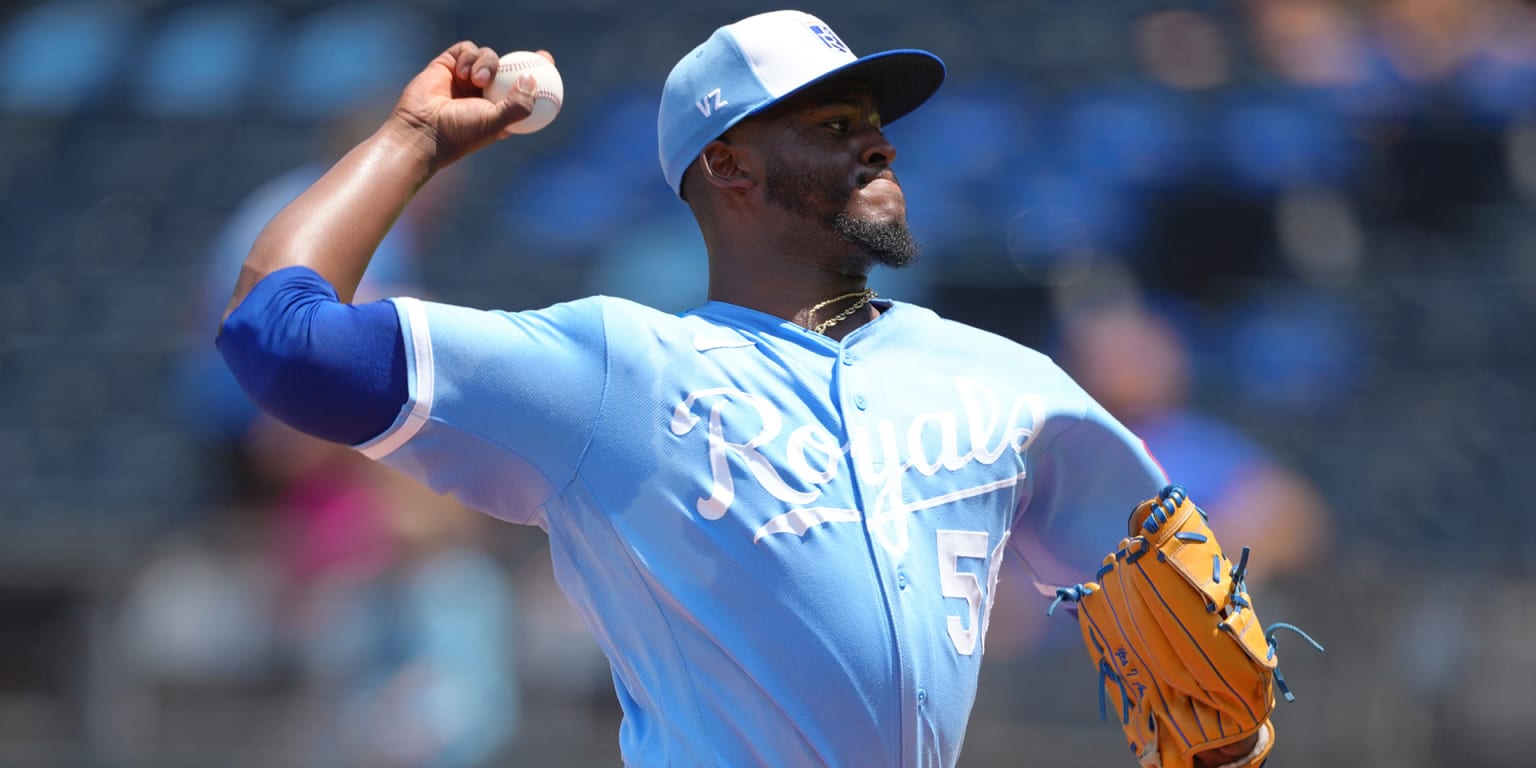
Luinder Avila carved up the Phillies on Sunday at Kauffman Stadium, allowing one run on three hits over five innings in a 5-2 Royals victory. The headline number—one earned run against an All-Star-laden Philadelphia lineup—matters less than what it took to get there: 69 pitches, one walk, four strikeouts, and early contact management that deteriorated opposing at-bats the second time through the order. This wasn't dominance. It was calibration.
That calibration becomes clearer when you measure it against Avila's previous start against the White Sox six days prior. He burned 86 pitches in four innings that day, labored through three walks, surrendered four runs, and left the bullpen no margin for error in a 5-4 escape. The mechanical difference between those two outings—fastball velocity (97-98 mph early, then pivot to sinker-offspeed sequencing) and what he actually threw—reveals a pitcher who is learning mid-season how major-league hitters exploit one-dimensional approaches. He's not getting worse when he regresses; he's regressing faster when he doesn't adjust in-game.
The Royals' decision to pull him after the fifth, regardless of pitch efficiency, matters for the injury-management read. The organization's willingness to protect his workload (120-inning rookie cap is a reasonable guardrail) and the timing of that hook—before Avila faced the Phillies' order a third time—signals they're treating his development as a marathon, not a showcase. That's the organizational framing that separates sustainable ROI from a hot rookie wall that collapses in September.
For prop betting, Avila's strikeout props are now trading on a volatile small sample (he's a 21-year-old seven starts into his career), and the market is pricing recent performance without the context that young starters often oscillate between command breakthroughs and mechanical regressions. His 4 K's Sunday came with elite fastball velocity and a functional secondary offering—both sustainable if his sinker and changeup continue tracking improvement. His walk rate, however, remains a ceiling: one free pass per five innings suggests he'll need a couple more starts to generate reliable props on strikeout floor. Fade any strikeout overs that price him at his 4.5-strikeout season average; Sunday proved he can sustain mid-game command adjustments, but small-sample props on rookies correct sharply once the market recalibrates on larger datasets. The angle isn't "he had a good game," it's that his pitch efficiency improved specifically against quality opposition, which is the opposite pattern of how most young arms fail.