Blue Jays favored at home, but Astros' road woes mask a scoring mismatch
By Erik Schwartz ·
Toronto enters as a clear moneyline favorite despite Houston's recent form; the real edge lies in total bases distribution, not run volume.
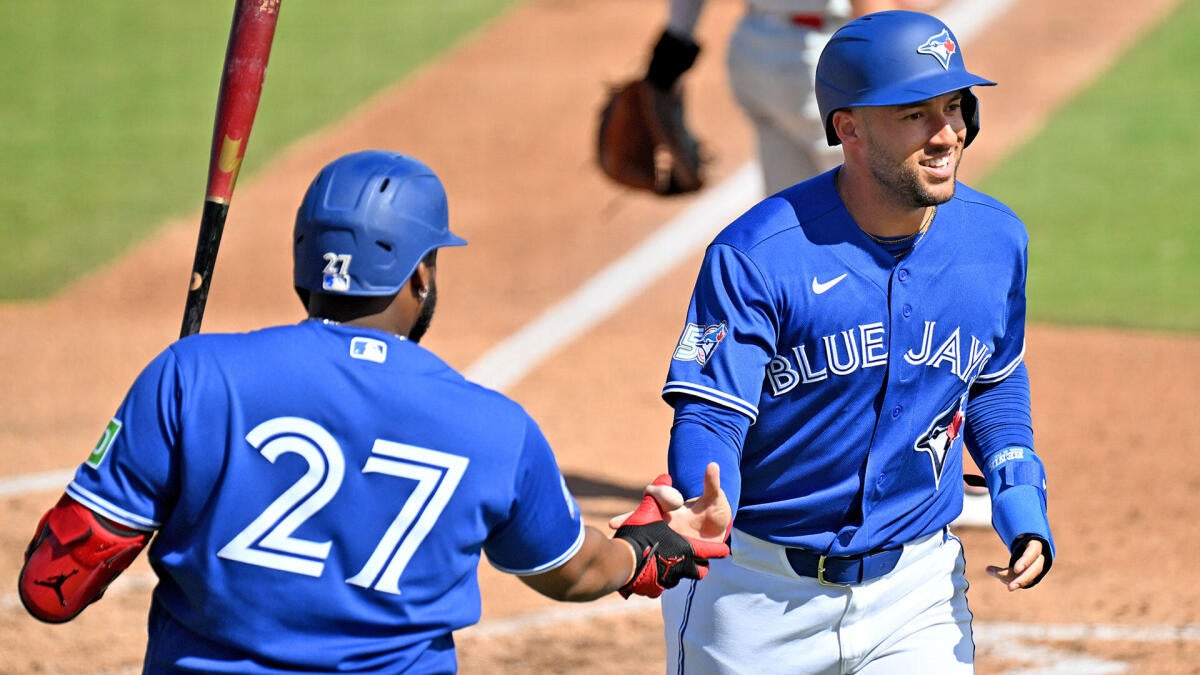
The Blue Jays take the series lead Monday night with a 4-2 victory, and Toronto sits as the -138 moneyline favorite for Tuesday's afternoon matchup at Rogers Centre. The positioning makes surface sense: the Blue Jays have won five of their last six, own a 22-18 home record, and are facing an Astros team that has lost ground on the road (17-22 in away games). Houston sits at 37-43 overall and trails the all-time series 48-38, including a 3-6 mark in their past nine meetings.
But the frame that matters for prop bettors isn't the binary win-loss line—it's the distribution of offensive production within the game. The Astros, despite their overall struggles, have pushed offense through specific corridors: Yordan Alvarez, Jeremy Peña, Isaac Paredes, and Christian Walker have each logged significant stretch marks in isolation. The Blue Jays counter with Vladimir Guerrero Jr., Kazuma Okamoto, George Springer, and Daulton Varsho. The presence of these names suggests Tuesday won't be a pitching-dominated grind. Houston's road-game weakness isn't driven by an inability to produce at all—it's driven by inconsistency and sequencing. When the Astros do manufacture runs away from home, they often cluster them. Conversely, Toronto's home splits show a team that spreads offensive load across multiple bats.
The over/under sits at 8.5 combined runs. Simulation models projecting 9.0 combined runs (clearing the over in roughly 52% of their samples) are reading the talent correctly but not accounting for the variance that road teams introduce. The over has cashed in 42 of Houston's last 80 games—a 52.5% rate that mirrors the projection but exists because the Astros oscillate between outbursts and dead zones. Toronto is 12-4-1 at home with an 8-to-8.5 total line, a more stable win rate that reflects home-field stability rather than explosive scoring. The disparity is instructive: the Blue Jays' over cash rate reflects efficiency; the Astros' rate reflects volatility.
Total bases props on the named hitters offer more granular conviction than the aggregate run line. Alvarez and Guerrero Jr. represent the surest paths to baseline production, but the secondary names—Paredes, Okamoto, Varsho—introduce variance that can swing a game total without producing the decisive run. Bettors chasing the over at 8.5 are implicitly betting that both teams cluster their hits and manufacturing within a compressed window. That's a structural ask in a noon-ish start time (4:07 p.m. ET local, a relatively early first pitch for this pairing) where relief arms wear down later innings and neither team has shown an outsized tendency to break open late. The over's 52% simulation edge is real but modest; it suggests the line is efficiently priced, and the true alpha lies in player-level bases, not aggregate scoring.