Astros Add Left-Handed Depth With Wade Jr. Signing
By Ty Whitney ·
Houston's free-agent acquisition of LaMonte Wade Jr. addresses a platoon gap but carries minimal immediate impact on the roster's run-production machinery.
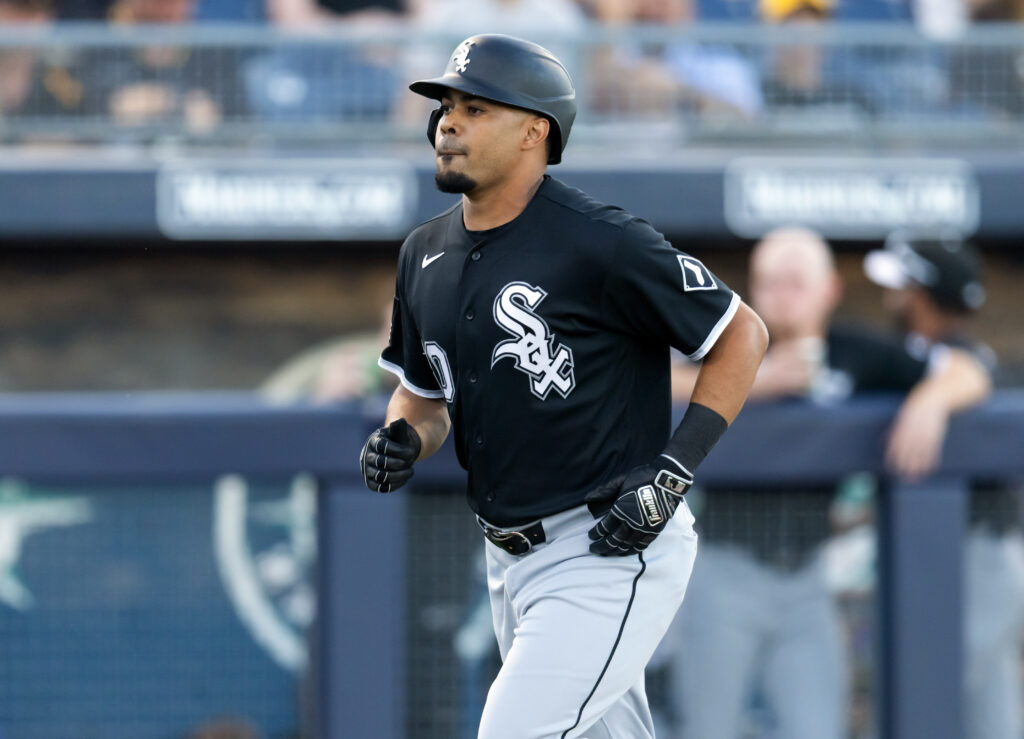
The Astros signed veteran outfielder/first baseman LaMonte Wade Jr. to a major league contract as of June 4, per reporting from The Athletic. Wade, who opted out of his minor league deal with the White Sox last week, joins Houston on a bench role, pending the corresponding 40-man roster move the club must execute to finalize the signing.
Wade's career profile is modest but functional: a left-handed bat with a career .243/.328/.404 slash line across 1,100 plate appearances, primarily spanning time with the Giants and White Sox. His value lies in platoon deployment—he carries a 113 OPS+ against right-handed pitching and a 93 OPS+ against lefties, making him a complementary piece rather than a lineup anchor. At 31 years old with declining exit velocity metrics (86.8 mph in 2025, down from 88.1 mph two years prior), Wade represents organizational depth and injury insurance rather than a transformative addition.
Houston's rotation of Kyle Tucker, Jose Altuve, and Corey Seager anchors a competitive window. Wade slots into a utility role, backing up first base and the outfield corners. His appearance on the roster doesn't materially alter the team's offensive architecture—the Astros' offensive ceiling remains tethered to their core three and the performance of secondary hitters like Brent Rooker and Mauricio Dubon. Wade's typical home/road and platoon splits suggest he contributes roughly 0.05-0.10 wins above replacement across a season of limited at-bats, which is the ceiling for a mid-tier utility acquisition in June.
From a wagering lens, Wade's signing carries negligible direct impact on individual player props or team totals. Houston's team total projections, currently hovering in the 4.3-4.5 range for single-game contests, won't shift on the margins of a depth add. Wade's personal prop opportunities—hits, RBIs, runs—will emerge sporadically against right-handed starters and in low-leverage innings, making him an unreliable daily play. The angle, if any, lies in fade-based thinking: bettors who were considering inflated Astros team totals based on roster construction should note that depth acquisitions of this caliber don't catalyze offensive improvements; they merely fill roster slots.
The real story is what Houston didn't do—pursue a front-line starter, add a power-bat trade chip, or strengthen the bench with a proven postseason commodity. Wade is a placeholder, not a statement. For prop bettors, that means the Astros' run-production profile remains unchanged, and any uptick in their offensive projections must trace to performance, not acquisition noise.