Astros Doubling Down on Alvarez and Peña: What a Seller's Stance Means for Their Deadline Window
By PropBetEdge Editorial Team ·
Houston's GM just closed the door on trading his two cornerstones—a signal the front office expects the division to remain volatile enough for a late push.
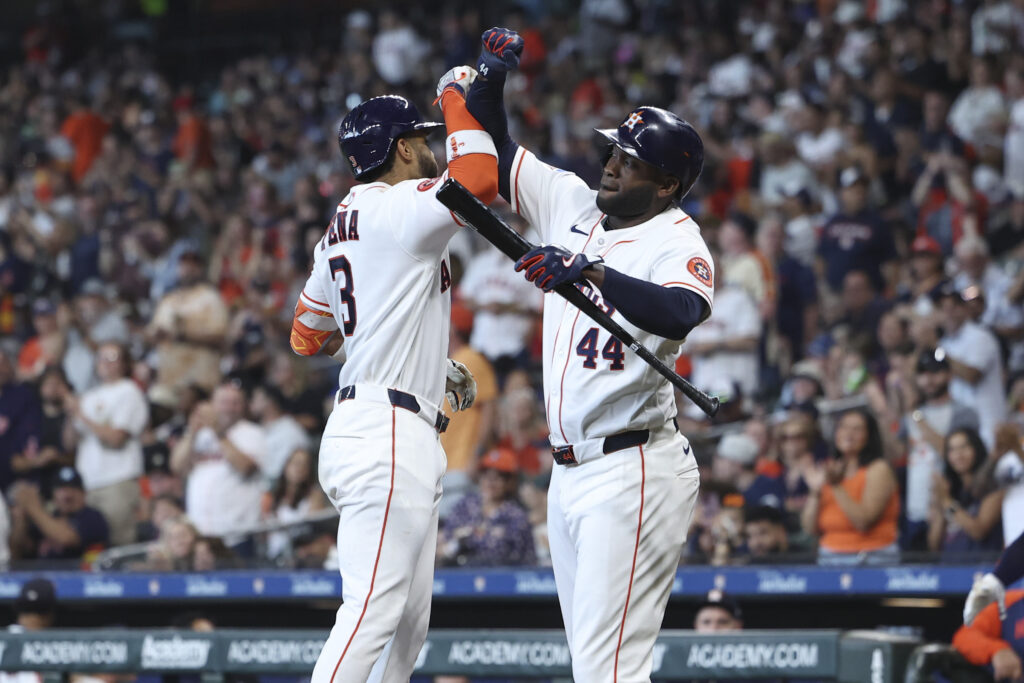
The Astros refused to blink. After eking out an extra-inning win over the Angels on June 8 to improve to 31-37, general manager Dana Brown made it explicit: Jeremy Peña and Yordan Alvarez are not moving. "We've had zero discussions about trading those two internally," Brown told the Houston Chronicle. "We can't go trading two pillars." This is less a surprise than a reaffirmation of posture. With the AL West scattered—Seattle leads by just 4.5 games over Houston—and the Wild Card logjam tight enough that the Rangers (32-33) currently hold the final spot, Brown sees margin for error. More important, he sees margin for his own job security. In the final year of his contract, with an owner (Jim Crane) who's been running a win-now operation for over a decade, selling at the deadline would be an admission of organizational failure.
The numbers back Brown's logic, at least on surface. Alvarez is having the best offensive season in baseball. Peña provides lineup protection and defense. Both are locked into reasonable contracts (Alvarez through 2028 at $26 million annually; Peña headed for around $15 million in his final arbitration year in 2027). Hunter Brown, the ace, returns next week from shoulder inflammation. Josh Hader recently took over ninth-inning duties. A bullpen that ranked fifth in ERA over the past 30 days (2.88) has solidified after an April collapse. On paper, Houston has assembled the pieces to mount a run. The trap is the lineup. Houston's position players are hitting .221/.293/.375 over the last month—a 30-point downturn in batting average and a 90-point loss in slugging percentage compared to their season average. Alvarez and Peña can't carry a punchless supporting cast alone. Christian Walker (.252/.324/.500, 16 homers in 278 plate appearances) and Isaac Paredes (.241/.331/.415) have stabilized recently, but neither has established the consistency required to sustain a 120-game sprint. The Astros dug an 8-18 hole in April and have been treading water since—playing slightly better than .500 from May onward isn't a foundation for a postseason team in July and August.
For bettors, Brown's no-trade pledge creates a specific vulnerability. Houston's front office has painted itself into a corner: holding two superstars, a closer, and a rotation that looks more respectable week-to-week means the market will price Houston as a playoff contender through August, even as the fundamentals of their lineup offensive efficiency remain weak. This matters because it forces a binary bet structure. If the Astros climb back into division contention or secure a Wild Card seat, their team totals and moneylines will compress sharply—and the early-season discount will have evaporated. If the lineup's cold spell persists and Walker and Paredes don't elevate their production, Houston will fall out of the race despite having Alvarez and Peña, and they'll be stuck holding two All-Star-tier assets with no ability to retool.
The play isn't whether the Astros make the postseason. It's whether the market will price their June-August trajectory correctly given the constraint Brown has imposed. Unders on Houston team totals for the next two months carry value if you believe the supporting cast can't produce enough to offset the bullpen-dependent pathway to wins. The team's record and run differential (negative in the period measured here) suggest they're winning closer than their roster construction supports. Lean unders on Houston's team total at 88+ wins for the full season; the lineup's offensive malaise paired with Brown's inability to add bats creates a ceiling around 85-86 wins even with Alvarez running on fumes.