Matthews' Wall Collision Darkens Astros Outfield Depth Before Deadline Push
By Ty Whitney ·
Houston's center fielder exits with a left knee injury after a wall crash, forcing the team to lean on reserve options during a pennant race.
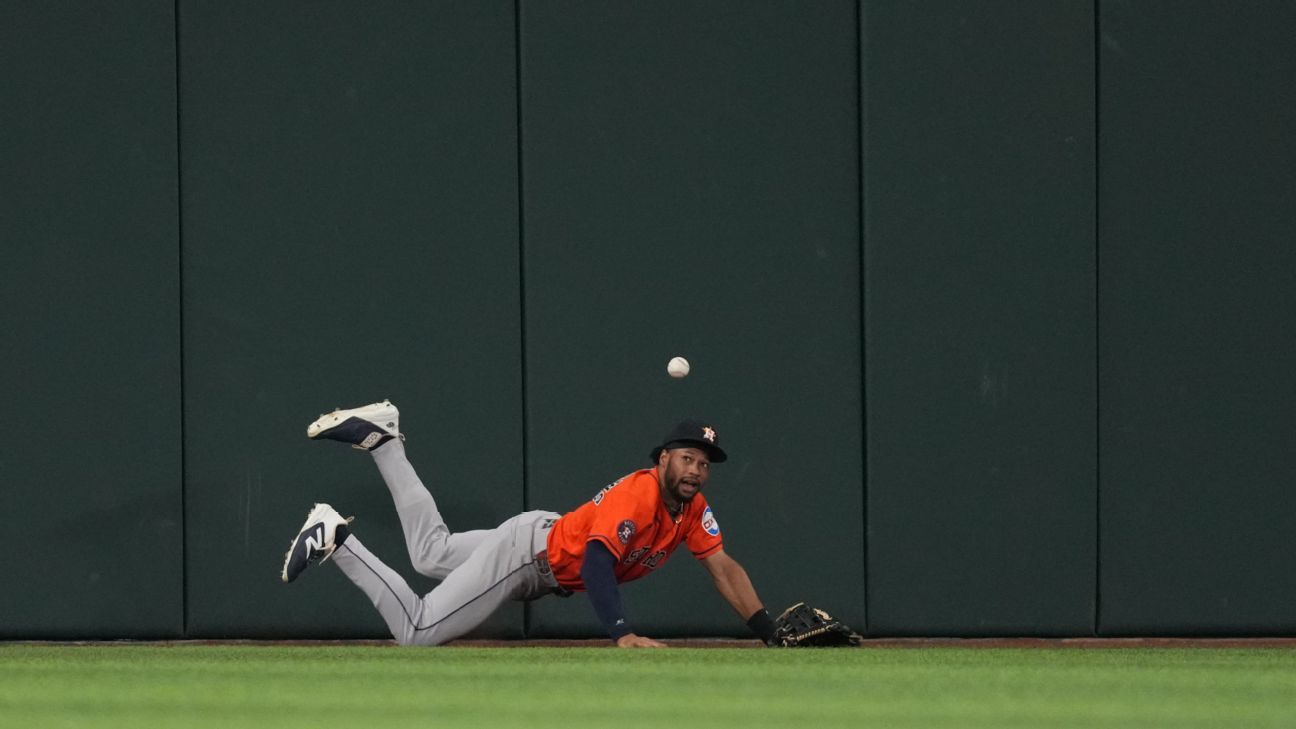
Astros center fielder Brice Matthews exited Sunday's game against Texas with a left knee injury sustained after crashing into the wall while tracking a fly ball hit by Rangers batter Josh Jung. The ball fell free and went for a triple—a direct outcome of the collision. Matthews remained in the game through the rest of the inning but did not return, replaced by pinch hitter Taylor Trammell in the second.
The injury arrives at a precarious moment. Matthews, 24, has appeared in 81 games this season with a .197 batting average, meaning his offensive profile already sits below the replacement threshold. His defensive positioning—center field—matters more to the Astros' win probability than his bat does, but a hobbled or absent Matthews forces Houston to shuffle the outfield and compress playing time options during a July push toward October. The initial severity remains unclear; whether this sidelines him for days or weeks will reshape Houston's deadline strategy.
Matthews made his MLB debut last summer and has carved out a bench role with speed as his primary asset. Against that baseline, his absence matters most for lineup flexibility and matchup decisions. The Astros' full outfield rotation now tightens considerably, and the team may accelerate targeting depth at the trade deadline rather than waiting for August.
From a betting lens, this injury compresses Astros team total expectations in the near term. If Matthews misses more than a week, Houston loses both an outfield glove and a speed-based late-inning option, which typically contributes to higher team totals when available. The swap to Trammell—a reserve with inferior plate discipline—slightly depresses offensive upside. Look for modest downward pressure on Astros totals in games immediately following confirmation of the injury's timeline; the market may overcorrect if the team confirms anything beyond a day-to-day designation.