Houston's Outfield Shuffle: Wade's Return, Meyers' Demotion Signal a Depth Reset
By PropBetEdge Editorial Team ·
The Astros bench Jake Meyers after a year of decline, activate LaMonte Wade Jr., and signal a recalibration in their corner outfield rotation—one that matters for lineup construction props.
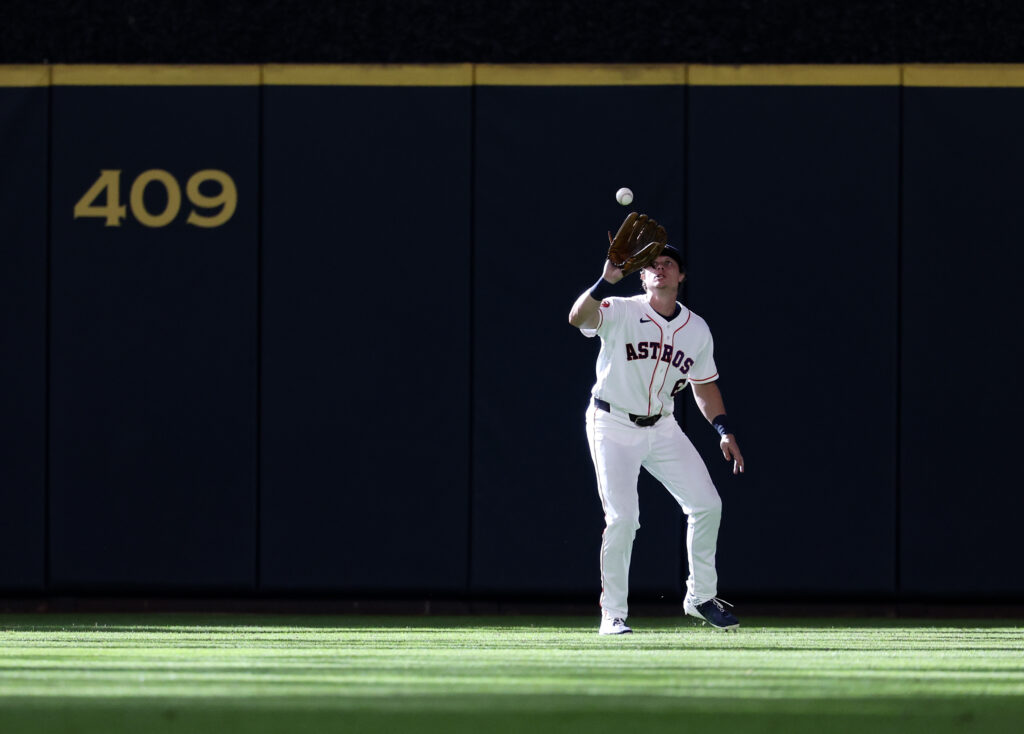
Houston made four roster moves Saturday, the centerpiece being Jake Meyers's demotion to Triple-A Sugar Land. The move arrives after a year in which Meyers failed to replicate the production that made him a prospect worth holding through injury, and it doubles down with the activation of LaMonte Wade Jr. from the injured list. Joey Loperfido also heads to the minors, while Zach Dezenzo comes up to fill depth.
Meyers hit .247 last season with a .309 on-base percentage and 8 home runs across 347 plate appearances—numbers that fell well short of his 2024 output, when he posted a .276 average and slugged .445. His plate discipline eroded; strikeout rate climbed and walk rate fell. The decline wasn't subtle, and Houston's front office made the calculation that his path back runs through sustained work in the minors, not major league playing time. That's a departure from the faith the organization showed him as recently as the offseason, when trading him was an option the market apparently didn't price high enough to move.
Wade's return is the narrative counterweight—a veteran left-handed bat with proven ability to hit from both sides of the plate, now available after time on the injured list. Wade brings career flexibility (he's played first, second, left field, and center field across his career), which matters in a Houston outfield that has dealt with inconsistency up the middle. For the Astros, his activation signals a willingness to shift roster construction toward reliability over upside chasing. Dezenzo, the rookie, gives Houston a swing-for-contact option off the bench; his arrival suggests the team is comfortable cycling young talent into development windows rather than embedding sunk cost in a single prospect.
For prop bettors, the lineup implications are immediate. Meyers had roughly 50 percent of the team's at-bats in left field when healthy; his removal opens 100-150 additional plate appearances per month for Wade and whoever else Houston rotates into that slot. Wade's career slash line (.265/.357/.416) against right-handed pitchers suggests he'll anchor the platoon side, which tilts Houston's hitting distribution toward more disciplined, walk-generating approaches. That's a minor but persistent shift: teams with higher walk rates and lower strikeout rates in their lineup construction tend to produce longer at-bat sequences, which correlates with slightly elevated team totals in the +0.5 to +1 range.
The demotion also matters as a contrarian indicator. If Meyers was a fixture in betting markets—either as a hitting prop or as part of Astros player prop combinations—the drop in his playing time removes him from daily leverage. That sounds obvious, but it's worth pricing in: any prop structure that assumed Meyers as a regular corner outfielder needs revision. Conversely, Wade's activation into a more defined role means his prop lines (if offered) should stabilize faster than they would for a bench acquisition, because the team has told you exactly where he fits.