Astros Get Their Ace and Catcher Back—But the Roster Math Says They're Still Racing the Clock
By Erik Schwartz ·
Hunter Brown and Yainer Diaz return to Houston's lineup, but the team's injury recovery window may not be wide enough to salvage a playoff push.
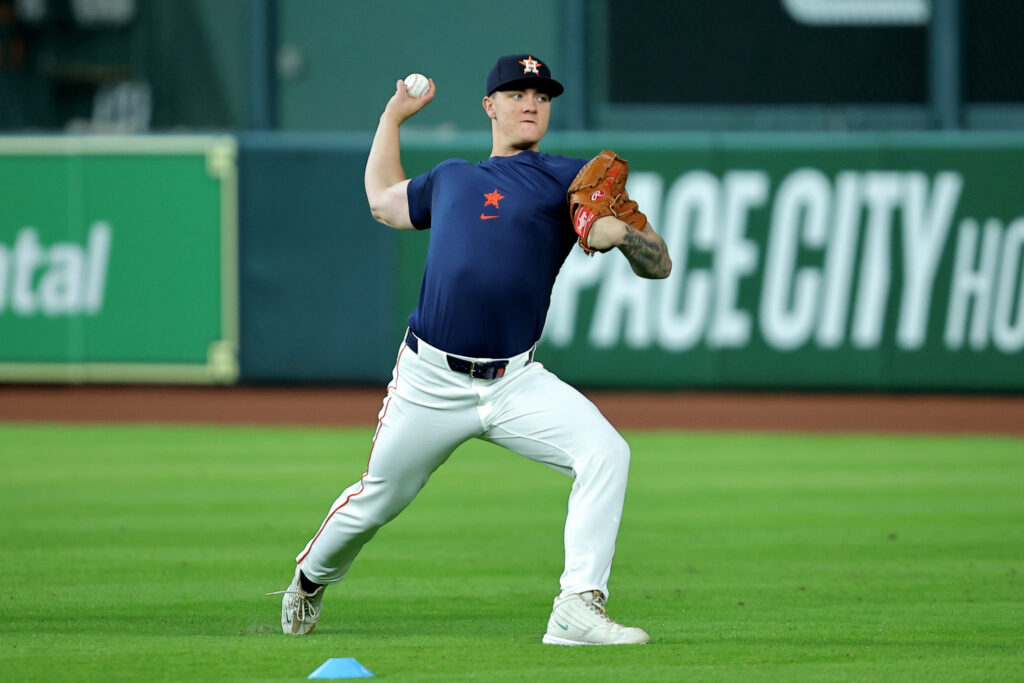
The Astros activated right-hander Hunter Brown from the 60-day injured list and brought catcher Yainer Diaz back from a 10-day stint on Tuesday, moving to clear roster spots by optioning Collin Price to Triple-A Sugar Land and designating reliever Jayden Murray for assignment. Both moves represent wins for Houston's health—Brown and Diaz are foundational pieces—but they also expose a harder truth: the Astros are playing catch-up in a division where the margin for error has already shrunk.
Brown's return is the larger piece here. A talented young starter, his presence in the rotation immediately upgrades Houston's top-end pitching and gives the team a reliable arm for high-leverage spots down the stretch. Diaz's return to behind the plate stabilizes a critical defensive position and restores offensive continuity in the middle of the order. These are not marginal upgrades. Yet timing matters enormously in June baseball. The Astros have been operating in survival mode while waiting for them. Every game played without these two represents sunk opportunity cost—wins the team cannot get back.
The arithmetic is unforgiving. For Houston to claw back to .500 and position itself as a credible playoff contender, the team needs to play sustained winning baseball over the next six weeks. The trade deadline arrives in mid-July; by early August, Houston's front office will have to make a final assessment on whether the roster is trending toward contention or away from it. Injuries to star-tier players create a compression effect: the window to prove viability shrinks, and the required win rate climbs steeply. A team that was treading water at 45-50 or worse cannot simply activate two players and expect the market to price it as a sudden contender. The books will wait for on-field evidence before repricing Houston's playoff odds and team-total expectations.
For bettors, this creates a timing mismatch. Houston's team total and moneyline prices for the next 7-10 games will likely reflect cautious skepticism—the market will not yet trust that Brown and Diaz, healthy, make the team a .600 pace club. If the Astros do rattle off four or five consecutive wins with both pieces in the lineup, the line will move sharply upward, erasing any early value. The edge exists now, in the gap between market skepticism (based on June performance) and the marginal improvement Brown and Diaz bring. Once that gap closes via results, it closes fast. Play Houston's team total overs in the 4.0-4.3 range against weaker AL West opposition over the next week, before the market reprices based on winning.
Brown's individual strikeout prop carries similar logic. A young, high-velo starter returning from injury often comes back with pitch counts capped in the 80-100 range for the first 1-2 starts. The books will shade his strikeout total conservatively (likely 4.5-5.5 for his first outing), anticipating early departure. If he clears that threshold against a struggling lineup, the line will jump by a full strikeout or more by his second start. Bet his strikeout prop in his first appearance only, before the market recalibrates for a healthy workload.