Ginn's Blister Upends Oakland's Rotation as IL Roster Balloons
By PropBetEdge Editorial Team ·
The Athletics lose a productive starter mid-season just as their injury list hits a season-high 11, reshaping rotation depth and bullpen pressure for the stretch run.
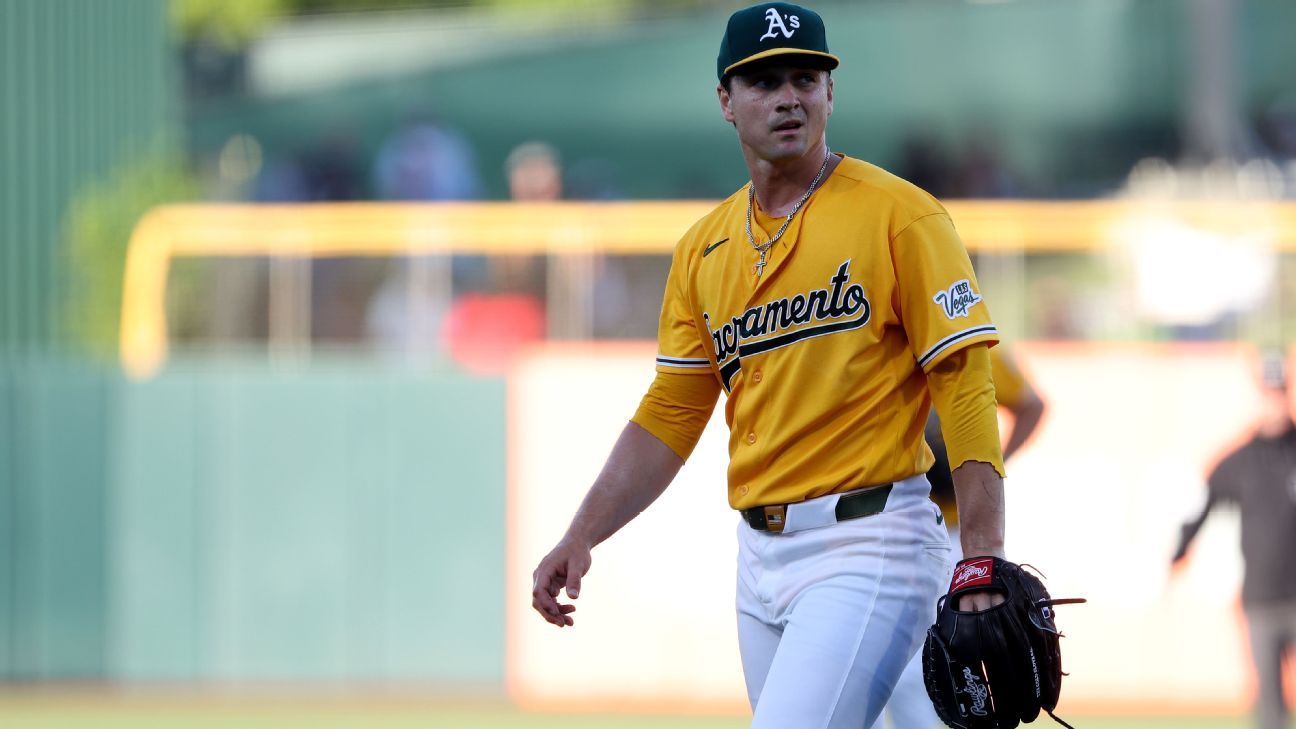
The Athletics placed right-hander J.T. Ginn on the 15-day injured list Wednesday with a blister on the middle finger of his pitching hand, a move retroactive to last Saturday. The timing is particularly punishing: Ginn had just delivered 6⅓ shutout innings with seven strikeouts against Washington in a 15-1 rout, positioning himself as a stabilizing force in Oakland's rotation. The blister, minor in isolation, becomes significant in context—Ginn entered July with an 8-6 record and 3.46 ERA across 109⅓ innings and 19 starts, marking him as one of the few reliable arms the A's have leaned on this season.
Oakland's injury crisis deepens. At 11 players currently on the injured list (a season high), the Athletics are operating with rotational depth that's paper-thin. The recall of Mason Barnett from Triple-A Las Vegas—a reliever now being stretched into a starting role after posting a 4.64 ERA in 21⅓ innings as a reliever—reflects the organizational strain. Barnett's track record as a starter in the minors offers some credibility, but plugging a middle-rotation slot with a relief-profile arm is a regression move, not a solution. The A's offense can carry them to occasional wins (the 15-1 demolition of Washington proves that), but pitching depth directly controls their ability to string together consecutive victories in a competitive race.
From a betting perspective, this reshuffles Oakland's rotation leverage significantly. Ginn's absence removes a sub-3.50 ERA arm from matchups for at least two weeks—and blisters have a habit of lingering or recurring once they appear mid-season, making the 15-day timeline optimistic. Any game in which Barnett gets a start becomes a fade opportunity on the A's side; his relief ERA (4.64) projects poorly when extended into a starter's workload, particularly in the first inning where starter pedigree matters most. Oakland's team totals should compress when Barnett takes the ball, and opposing batter strikeout props merit scrutiny—Barnett's 21⅓ innings generated only 17 strikeouts, a 7.2 K/9 rate well below league average, suggesting hitters will see fewer unhittable pitches in the zone.
The broader implication: Oakland's rotation is now holding together by thread. Ginn was one of three or four dependable starts in any given week. Losing him mid-stretch tightens the margin for error and increases reliance on a bullpen already taxed by the 11-man IL roster. Books have likely already adjusted Oakland's win probability for the stretch, but if sharp action hasn't yet accounted for Barnett as a starter (rather than a reliever), there's a window to fade A's team totals and moneyline odds before the full market reprices.