Athletics Bet on Youth Upside as Civale's Rotation Gamble Unravels
By Erik Schwartz ·
Oakland cuts ties with a $6 million starter mid-season and promotes a power-hitting prospect with legitimate plate discipline, signaling a shift from win-now to build-around talent.
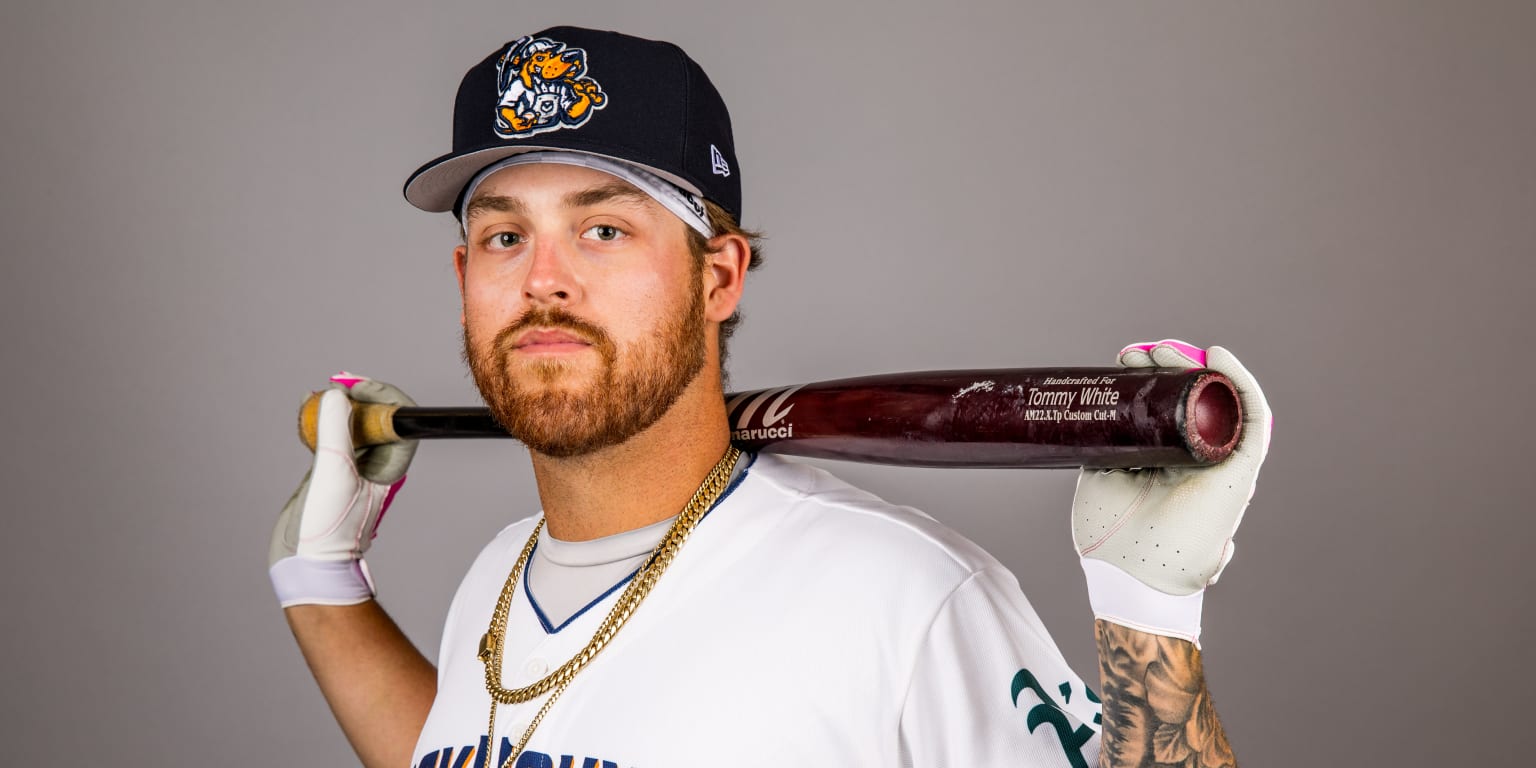
The Athletics are tearing up their 2026 rotation plan. Aaron Civale, signed to a one-year, $6 million deal to stabilize Oakland's pitching, has been designated for assignment after posting a 5.42 ERA over 74 2/3 innings. He last appeared five days ago, giving up four runs in 2 1/3 innings during a 14-1 drubbing by the White Sox—the kind of blowout that clarifies a front office's thinking fast. In his place, the A's are promoting right-hander Yunior Tur, a 26-year-old Cuban prospect with a high-90s fastball, and calling up third baseman Tommy White, the organization's No. 7 prospect, who makes his debut Friday against Washington.
White represents something Oakland hasn't had much of lately: legitimate offensive projection paired with the discipline to execute it. The 23-year-old hit .303 with an .818 OPS across 76 Minor League games this season—a split assignment between Double-A and Triple-A that showcases progressive readiness. More telling is his 14.3% strikeout rate across his entire Minor League career, well below league average for prospects. That's not a fringe skill; that's a hitter who understands the zone. His nickname from his LSU days, "Tommy Tanks," nods to 24 home runs over 194 Minor League games, but the power plays within a framework of plate control rather than overswing chaos.
Tur's call-up is more of a vertical flyer—a 4.41 ERA at Triple-A doesn't scream reliability, and 26 walks in 51 innings (4.58 BB/9) signals command issues. But Oakland is clearly betting that the velocity (low-to-mid 90s) and strikeout rate (64 K in 51 IP) give him a development runway the organization wants to supervise directly. Civale, by contrast, represents sunk cost. The shoulder tendinitis that forced him to miss three weeks in early July compounds the issue: a 31-year-old starter bleeding velocity and control isn't a bounce-back candidate, he's a roster slot that can be reclaimed.
For bettors, the White promotion carries immediate implications for Oakland's offensive profiles. A rookie third baseman with a .303 batting average and sub-15% strikeout rate doesn't arrive as a outs-heavy hitter. His wRC+ isn't yet calculable, but his plate discipline and opposite-field power approach suggest he'll accumulate contact-based volume—hits, walks, runs scored—at rates Oakland's recent lineup depth hasn't offered. If he plays regularly in the second half (and the promotion timing suggests the A's intend that), team total overs become more viable as the lineup adds a hitter who doesn't gift away outs. The Civale departure simultaneously removes a pitcher who's been bleeding earned runs; Oakland's run prevention had already suffered, so replacing a 5.42 ERA arm, even with an untested relief candidate, isn't a regression bet—it's damage control.
The timing matters: Oakland is 6.5 games out of a Wild Card spot following a nine-game slide that dragged them out of contention before the All-Star break. This isn't a pennant-race rotation shuffle; it's a front office pivoting toward 2027 while keeping August competitive. White's strikeout discipline and contact rate make him a longer-term lineup asset, not a walk-off savior. But in the short term, adding a hitter who takes walks and doesn't chase out of the zone addresses a season-long vulnerability. The market hasn't yet absorbed how meaningful White's plate discipline is relative to prospect hype; most prop builders will price his debut conservatively based on rookie status alone, not on the fact that he's a sub-15% strikeout-rate prospect in the majors—a genuinely rare profile.