Greene's Health Uncertainty Complicates Trade Math as Deadline Looms
By Erik Schwartz ·
Cincinnati's injury-prone ace draws 50-50 trade interest with four days to deadline, but his elbow history and current ERA crater the return package.
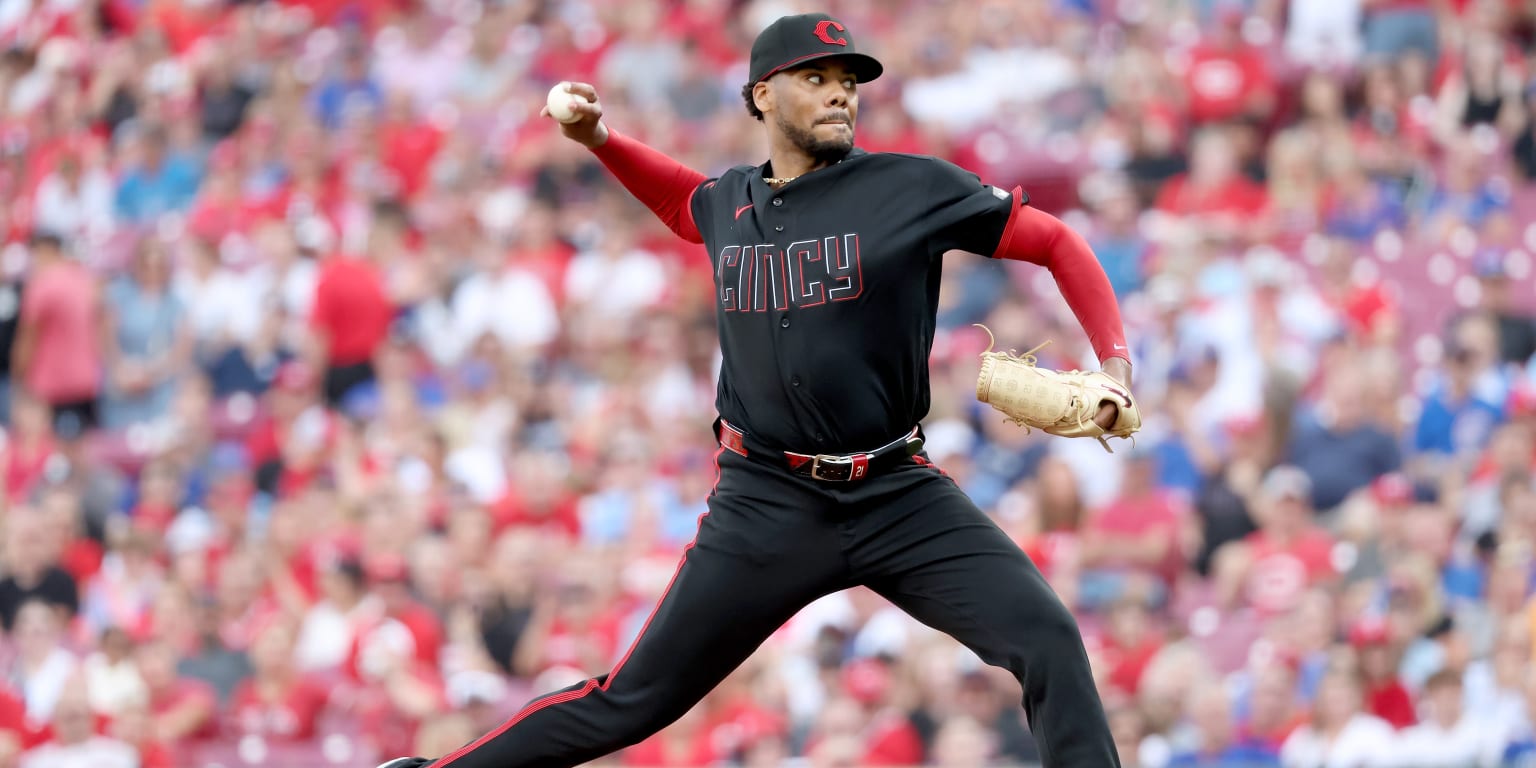
Hunter Greene's market value hinges on a paradox: he has the stuff to anchor a contender's rotation, but the durability record to terrify any front office that acquires him. The Reds are fielding trade interest in their former All-Star right-hander ahead of Monday's deadline—four days from now—with sources placing a "50-50" probability he moves. The calculus is straightforward: Greene's six-year, $53 million deal provides cost certainty through 2028 and a club option in 2029, making him a palatable acquisition for a win-now team. The execution is far messier.
Greene missed the first three-plus months of the 2026 season recovering from elbow surgery in March to remove bone chips—a procedure he delayed last October in favor of a platelet-rich plasma injection. That timing decision likely cost him value heading into the stretch drive. He returned July 10 with a sterling performance: 12 strikeouts over seven scoreless innings against the Cubs. But his four-start sample this year sits at 2-2 with a 7.06 ERA, a surface-level indictment that obscures both opportunity and concern. Teams evaluating Greene understand the small sample size is noise. What they cannot ignore is the pattern. He has never thrown more than 26 starts in a season. A parade of injuries—Tommy John surgery in 2018, shoulder, hip, shin, and groin issues during his big-league tenure—has constrained his innings production. Even during his 2024 All-Star year (9-5, 2.75 ERA, 150 1/3 IP, 3.7 fWAR), the durability ceiling remained evident. The 2025 season compressed further: 19 starts, 107 2/3 innings, but a pristine 2.76 ERA with 132 strikeouts.
The trade comp framework is instructive. Executives inside baseball point to the Garrett Crochet deal from December 2024 as a ceiling—the White Sox received two Top-100 prospects plus two more of Boston's top-15 talent. But Crochet had logged 146 innings of 4.6 fWAR production at the time of his move and carried two years of control. Greene's platform season is truncated, his current ERA inflammatory even if not reflective of his stuff, and his health track record looms. The floor analog is December 2023's Tyler Glasnow trade to the Dodgers, which netted Tampa Bay a No. 6 prospect prospect and No. 22. That spread—from Crochet's haul to Glasnow's return—captures Greene's negotiating range, and the injury burden pushes him closer to the Glasnow end.
For bettors tracking Cincinnati's playoff odds or Greene-dependent pitcher props, the trade deadline is the inflection point. If Greene stays, his innings per start will remain volatile and capped; his ERA props are unreliable given the small sample and recovery phase. If he moves, his new team's bullpen and defense profiles instantly matter more than his current velocity readings. The uncertainty itself is the edge. Books set Greene strikeout totals and ERA projections on the assumption he completes his next start. A Monday trade liquidates that assumption. Early-week bets on his K props or team totals are vulnerable to franchise relocation risk; wait until after the deadline or fade the bet entirely until the Reds' roster status clarifies.