Angels Gamble on Mancini Return After Three-Year MLB Absence
By Ty Whitney ·
Los Angeles fills a roster hole with a former All-Star trying to resurrect his career, but the timeline and depth of that resurrection remain high-variance unknowns.
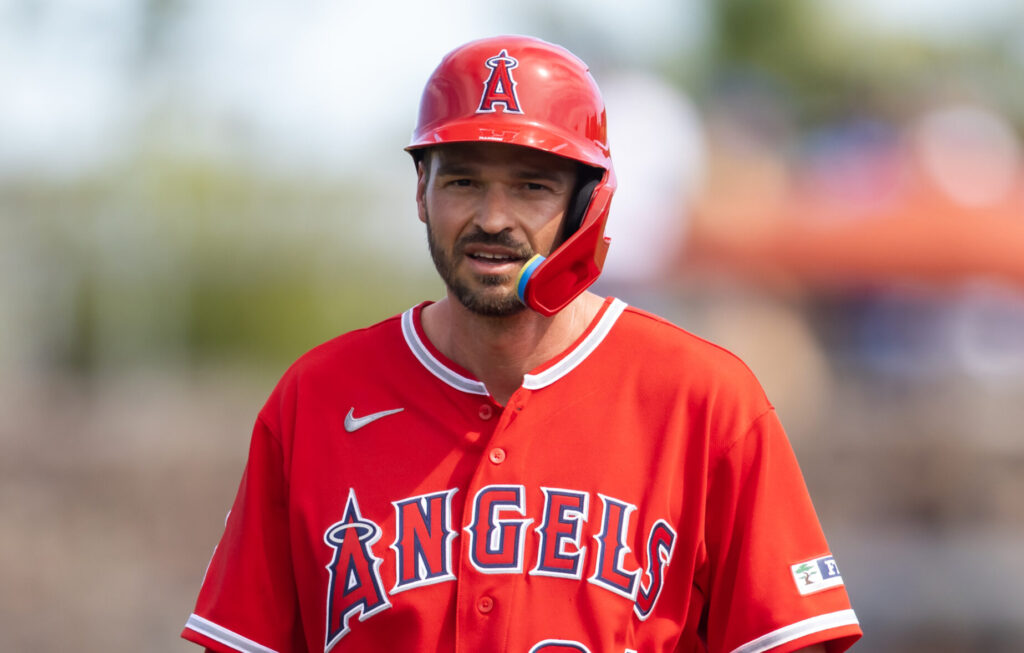
The Angels selected Trey Mancini's contract from Triple-A Salt Lake on Monday, marking his first major-league appearance since 2023. The move doubles as both an act of organizational necessity and speculative hope: Mancini has been absent from MLB for nearly three years, working his way back through the minor-league system after health setbacks derailed his career trajectory. Los Angeles also recalled infielder Denzer Guzman and placed both Vaughn Grissom and Adam Frazier on the 10-day IL, creating the roster space Mancini now occupies.
What the Angels are banking on is institutional memory plus a Triple-A body of work. Mancini's peak—including an All-Star season in 2019 and resilience through earlier adversity—is well-documented. But three years is a canyon in baseball time. A 32-year-old trying to reconnect with big-league pitching after that extended gap faces an asymmetric risk profile: upside is modest (he's a depth piece, not a cornerstone), while downside includes rapid ineffectiveness and a sunk roster spot. The fact that he's available on a minor-league contract (the Angels only needed to select it, not trade for him) underscores that the market wasn't rushing to claim him either.
Grissom and Frazier's simultaneous IL stints reveal the pressure points. Neither injury appears catastrophic enough to require a 60-day stay, meaning the Angels are likely looking at a 10-day absence and a relatively quick return. That timeline suggests they view Mancini as a gap-filler rather than a permanent upgrade—which is prudent given his rust. His at-bats will almost certainly come in lower-leverage situations early in counts, against relievers or in blowout spots where the Angels can afford experimentation.
For betting purposes, Mancini's insertion into the lineup creates a marginal depressant on Angels team totals and individual hit props. He's not displacing a productive regular; he's rotating in alongside Guzman during an injury crunch. His strikeout rate in the minors this season and his approach against breaking balls after such a layoff are unknowns. Books will price his first few games generously, factoring in the uncertainty and the below-average expected output. If you're fading Angels totals for the next week or two, Mancini's presence is a minor structural headwind—not the primary reason, but a real one. More immediately useful: monitor Mancini's actual box-score contribution over his first 5-10 games. If he shows immediate offensive dysfunction (K rate north of 30%, line-drive rate below 18%), that's validation of the underestimation. If he strings together a few solid games, the Angels' depth picture improves enough to widen their offensive range going forward.