MLB
Anderson's Coors Masterclass Rewrites Seattle's Pitcher Development Timeline
A 29-year-old left-hander just completed his first sub-85-pitch quality start at baseball's hardest park, and the Mariners' 2027 rotation suddenly has a credible answer.
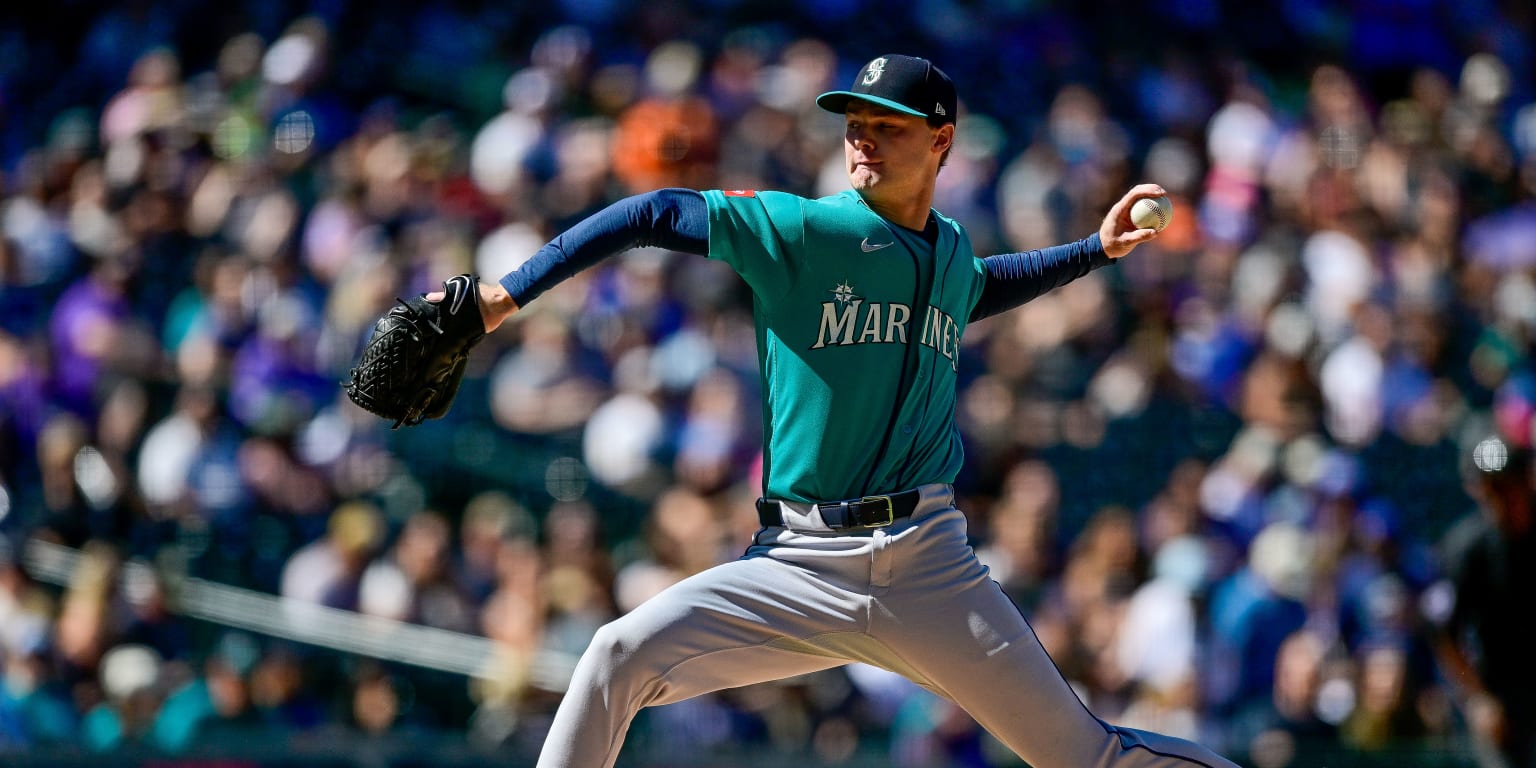
Kade Anderson took the mound at Coors Field on Sunday and did something only one other pitcher has done this season: threw seven scoreless innings in a ballpark that has buried more arms than it has built. The Mariners' 2–1 win over Colorado was survival baseball at its core—Seattle's bats mustered two runs on three hits, with Dominic Canzone accounting for both RBIs—but Anderson's outing was less about the game situation and more about what it signals for the organization's future.
Called up on August 22, Anderson has now completed the seventh inning for the first time since his arrival, using just 84 pitches to scatter three hits and blank a Rockies lineup that, despite sitting on a fourth consecutive 100-loss season, still swings at home. The mechanical story matters here: Anderson's last start, a loss to Anaheim on Monday, September 14, exposed a two-strike vulnerability—he was throwing too many strikes when ahead in the count, allowing Colorado's hitters to hunt fastballs in favorable zones. On Sunday, he adjusted his sequencing in those spots, leaning on a changeup at the bottom of the zone in two-strike situations and a back-foot slider that had no business being in the strike zone. Connor Norby swung through one. Hunter Goodman did the same. The adjustment isn't incidental; it's the difference between a pitcher who survives his first month and one who sustains a rotation slot through October and into next season.
Context deepens the intrigue. Anderson is only the second pitcher ever to throw seven scoreless at Coors within his first six career starts—Kyle Freeland did it on April 23, 2017, and Freeland is now Colorado's franchise cornerstone. That comp isn't perfect—Freeland was homegrown and surrounded by a different organization—but the trajectory available to Anderson is visible. Mariners manager Dan Wilson noted the adjustments explicitly after the game, a public validation that carries weight in clubhouse development conversations. A rookie who arrives in August, struggles against a division rival, then immediately recalibrates his approach against the sport's most punishing stadium is demonstrating cognitive flexibility that most arms never show.
From a betting lens, Anderson's elite strikeout execution at Coors creates a cascading opportunity. He struck out seven in seven innings against a Rockies team that struck out 11 times—a 63.6% strikeout rate in two-strike counts. Over his first six starts, Anderson has logged 35 strikeouts in 29.2 innings (10.6 K/9), a number that would rank in the 72nd percentile among qualified MLB starters. The market has not yet priced in the possibility that a pitcher who just completed seven scoreless innings at the sport's most hitter-friendly park—on 84 pitches, within organizational thresholds—might sustain that strikeout rate. If Anderson starts games down the stretch or beyond (the Mariners remain alive in the AL Wild Card hunt as of Sunday evening), his strikeout props will be priced to his overall ERA and innings distribution rather than his efficiency profile. Take the overs on K props if Anderson draws a start against a below-average strikeout avoidance team. The adjustment he made Monday-to-Sunday persists because it's mechanical, not circumstantial.