Alvarez Hits 40th Homer as Astros Power Past Royals in Playoff Push
By Ty Whitney ·
Houston's lineup erupts with five homers on Thursday to move one game above .500 with nine games left, keeping pace in a tight AL West race.
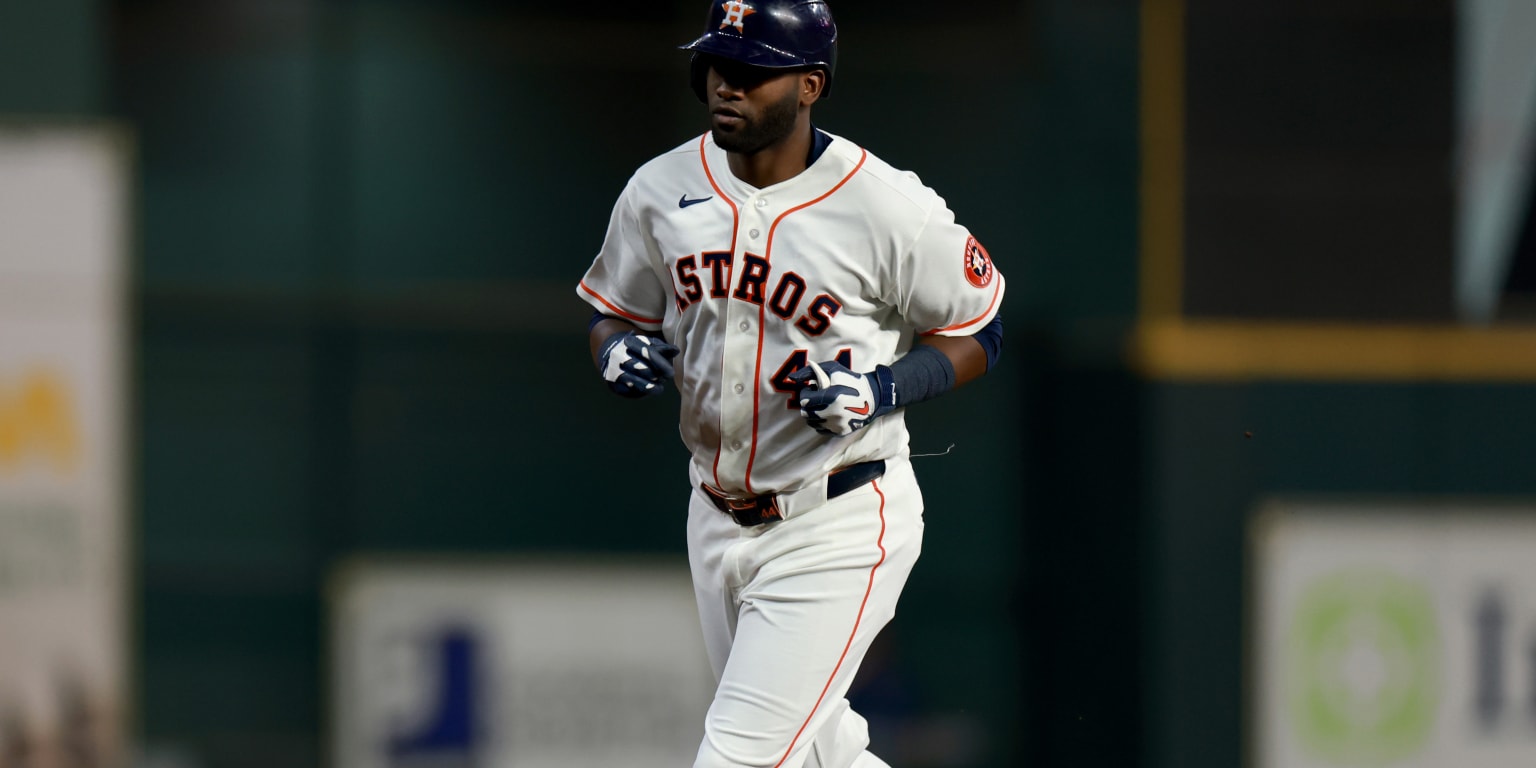
Yordan Alvarez joined an elite group of Houston hitters Thursday night, becoming only the fifth Astro to reach 40 homers in a single season after crushing a two-run shot off Seth Lugo in the fifth inning of a 6-2 win over Kansas City. The Astros (77-76) are now one game above .500 with a nine-game window to secure positioning before the playoff field locks. They hold a tiebreaker advantage over the Rangers for the AL West lead despite being tied in the standings, making this final stretch critical.
What made Thursday's performance remarkable was the sheer depth of the power display. Five different Astros went deep—Jeremy Peña led off the game with a homer, Daulton Varsho followed in the second, LaMonte Wade Jr. added another in the fifth, and Alvarez's blast turned what could have been a tight game into a comfortable margin. Peña's leadoff homer was his second in three games, a frequency that signals genuine momentum at the plate rather than noise. He and Alvarez had worked early batting practice prior to Tuesday's series opener to address recent offensive struggles, and the results suggest that hands-on mechanical work can produce tangible carryover.
Alvarez's 40-homer milestone places him alongside Jeff Bagwell (42 in 1999, 43 in 1997, 47 in 2000), Lance Berkman (42 in 2002, 45 in 2006), and Richard Hidalgo (44 in 2000). Alex Bregman was the franchise's last player to reach 40, finishing with 41 in 2019—a season that preceded Houston's 2021 World Series run. Alvarez has now joined an exclusive tier of Astros sluggers, and with nine games remaining, he has realistic paths to reach 45 or even 50 if power output sustains.
For prop players, the lineup's composite output creates two distinct angles. First, Alvarez's isolated power in high-leverage at-bats—he's now recorded multiple consecutive games with elevated exit velocities, a pattern that preceded his 40-homer milestone—suggests his HR prop remains live even as books tighten the line. The mechanism is mechanical consistency after corrective batting practice; early intervention that produces immediate results tends to hold for 7-10 days before variance reasserts. Second, the five-homer game against a weak Kansas City bullpen (Lugo allowed the damage, not the relief corps) should not be extrapolated to the final nine games. Houston faces stronger pitching staffs in the stretch run. However, the fact that Peña and Alvarez combined for five homers in three games after dedicated mechanical work is a genuine signal that both are exiting their doldrums with structural fixes, not random variance. Team total overs against below-average pitching should still be favored, but against playoff-caliber starters, tread cautiously.
The playoff-race context matters: Houston cannot afford to rely on five-homer nights. They need consistent, four-run outputs. Alvarez's individual trajectory remains bullish, but don't conflate one explosive team performance with sustained lineup health against quality arms.