Alonso's 300th Homer Signals Orioles' Window Closing as Playoff Odds Tighten
By Ty Whitney ·
Pete Alonso's landmark blast gave Baltimore a gut-punch win, but the Orioles remain three games back with seven weeks left—and their offensive depth has limits.
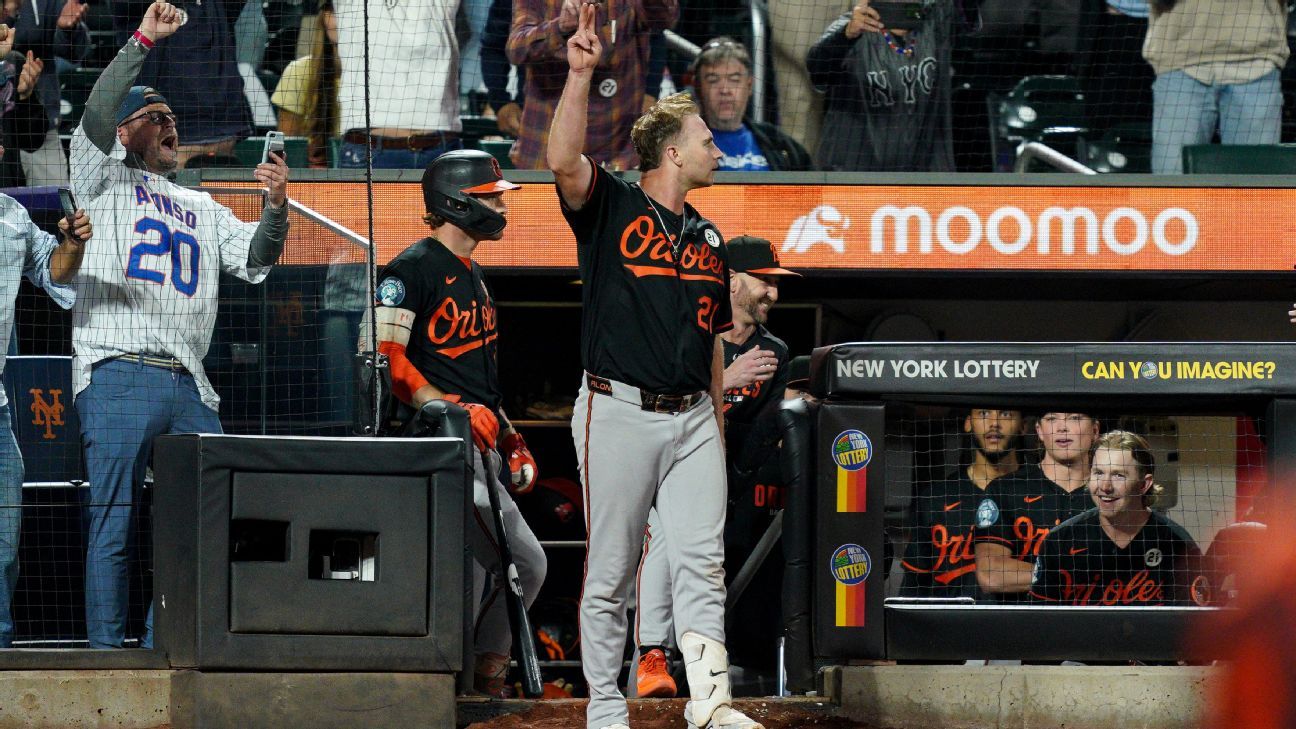
Pete Alonso drove in his 300th career home run Tuesday night, a solo shot off Kodai Senga in the ninth inning that knotted the game at 3 for the Orioles against his former team. Coby Mayo's inside-the-park homer in the 11th inning sealed a 7-5 Baltimore victory, keeping the Orioles' playoff hopes alive but precarious: they sit three games behind Cleveland for the last American League wild-card spot with 10 games remaining in the regular season.
Alonso's milestone at Citi Field carried symbolic weight—he hit 264 home runs for the Mets before signing with Baltimore last December, and the Citi Field crowd's reaction (including post-homer chants demanding the firing of Mets president David Stearns) underscored the organizational misstep of letting him walk. But the real story is the Orioles' dependence on late-inning heroics from a roster that has shuffled through multiple lineup combinations without establishing consistent run production. Baltimore's 74-78 record masks a deeper problem: outside of Alonso and the occasional power surge from supporting players like Mayo and Encarnacion-Strand, the offense lacks the depth to string together winning streaks. Mayo's three-run inside-the-parker was a rarity—the kind of low-probability home-run event that wins games in the moment but doesn't predict future output.
For bettors tracking Orioles team totals and moneylines over their final stretch, this victory is a cautionary tale. The team can manufacture individual explosive moments, but their win probability correlates more tightly to Alonso's daily performance and bullpen health than to sustainable offensive patterns. Alonso's September slash line and plate discipline will be the primary lever on Baltimore's total-runs output. When he's hitless (as he was in his first seven plate appearances of this series), the Orioles' offense sputters. When he connects on elevated fastballs in the zone—his 414-foot drive off Senga was a textbook middle-of-the-zone fastball he didn't miss—they win games they have no business winning. The volatility is the angle: Orioles team totals over 4.5 runs carry elevated variance because so much outcome depends on whether Alonso gets a mistake pitch to elevate. Against pitchers who limit elevated fastballs (Senga had tempo issues), the over-unders compress; against fastball-heavy arms, the range explodes.
Mayo's unorthodox inside-the-park homer also signals a secondary edge for Baltimore's prop bettors: with a depleted center-field defense (A.J. Ewing was working out of position and couldn't track Mayo's line drive cleanly), the Orioles' park factors for extra-base hits shift upward. The defensive mismatch is temporary—roster moves and positioning adjustments will correct it—but over the next 7-10 games, Baltimore's sluggers will face slightly lower barriers to gap hits and home-run opportunities if that center-field rotation continues. Fade Orioles team unders in their upcoming homestand; the combination of Alonso's aggressive late-inning approach and diminished center-field defense creates persistent run-scoring tailwinds.