Irvin's no-hit run ends in mystery as Nationals lose rotation depth to mid-game injury
By Erik Schwartz ·
Jake Irvin exited with an apparent shoulder or arm injury after five perfect innings, forcing Washington into early bullpen depletion and raising rotation reliability questions heading into September.
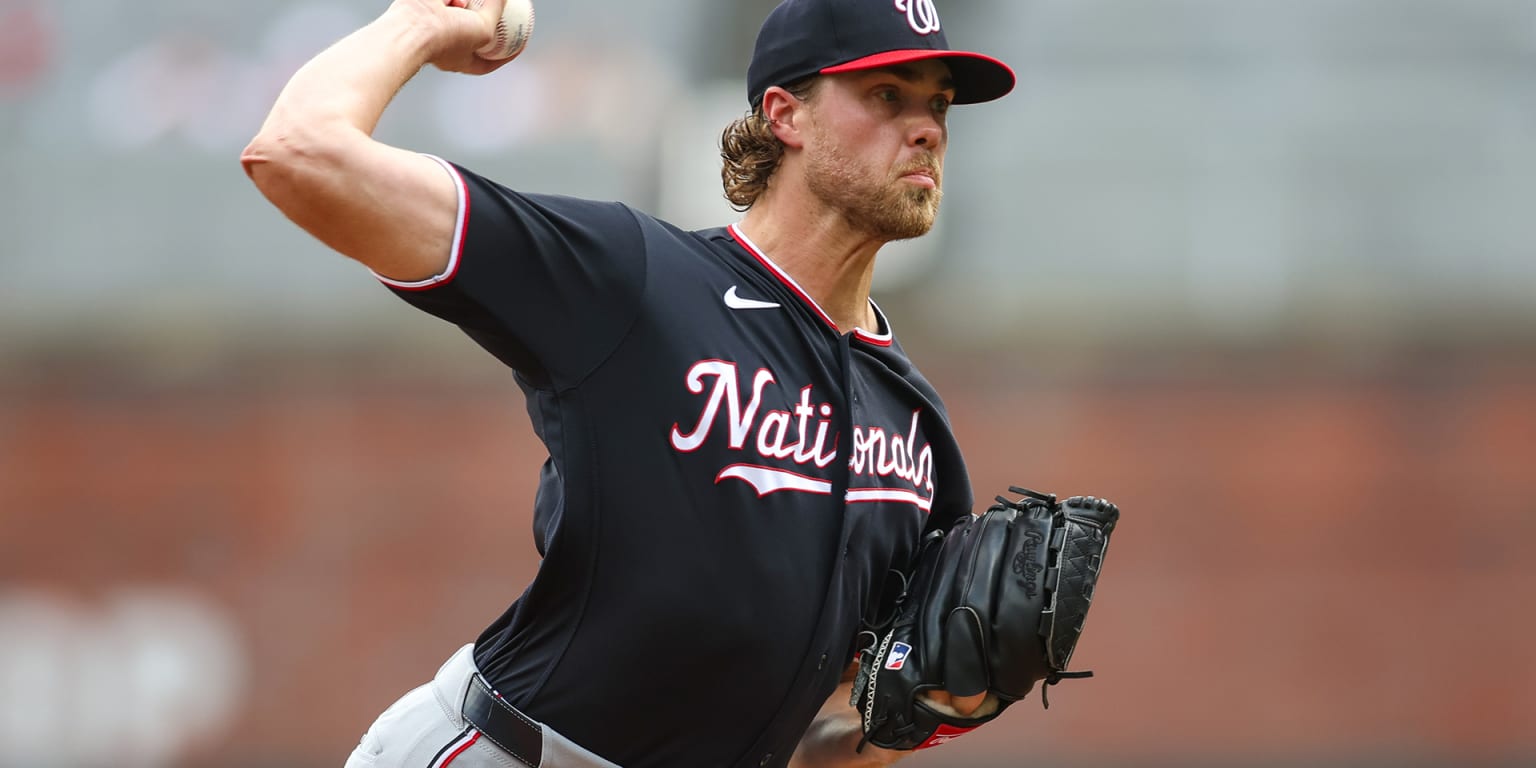
Jake Irvin was navigating one of the cleanest performances a pitcher can construct—five hitless innings, seven strikeouts, one walk, only 80 pitches—when he left the game Saturday in Atlanta without finishing the sixth. The injury came while warming up between innings, following a comebacker he reached for off-balance. He grimaced, shook his head, and departed with the training staff. The Nationals held a 2-0 lead at the time. Brad Lord took over and closed the sixth inning cleanly, but the early exit exposed a deeper problem: Washington's starting rotation just lost depth when it could least afford to.
Irvin's performance through five was a masterclass in efficiency—52 strikes on 80 pitches, seven Ks, zero hits allowed. A 41-minute rain delay in the first inning should have disrupted rhythm, but he resumed cleanly and kept rolling. The injury appeared to strike the throwing shoulder or upper arm, not the elbow (no grabbing, no immediate panic), which typically means either a strain or a labral tweak that could sideline him for weeks or months depending on imaging. For a Nationals team fighting to stay in contention, losing Irvin mid-season is a material blow to a rotation that was already threadbare.
From a bullpen workload angle, pulling Irvin at the 80-pitch mark in a 2-0 game forced Washington's hand earlier than planned. Lord pitched the sixth, meaning the pen faced six additional innings with a thin margin for error. If the injury forces Irvin to the injured list, the Nationals will scramble to either plug rotation gaps with relief innings or call up a prospect mid-stretch, both suboptimal solutions when games matter most.
The betting implication here hinges on Washington's bullpen durability and run-scoring volatility. In games where the Nationals rely on extended relief stints because of injuries, their bullpen ERA typically climbs 0.40–0.60 runs relative to full-strength games, and their ability to hold leads in the seventh and eighth innings diminishes. Overs on Washington games become sharper when the rotation is compromised and the pen is tasked with bridge innings it isn't built to throw. Expect unders on Nationals team totals and game totals to face pressure over the next two weeks as uncertainty about the rotation builds; the market will price in extended bullpen use and fatigue.
The timing also matters: if Irvin lands on the IL, Washington's remaining starters immediately inherit higher leverage situations and deeper pitch counts. That trickle-down effect typically reduces strikeout props for those remaining starters and increases chances of early exits, flattening the volatility that underpins prop value in a healthy rotation.