Hoerner's Four-Hit Game Signals Exit From First-Half Slump, But BABIP Luck Remains the Real Story
By Erik Schwartz ·
A 46-point gap between batting average and expected average suggests Hoerner's struggles were timing and placement, not mechanics—and that pain may be reversing fast.
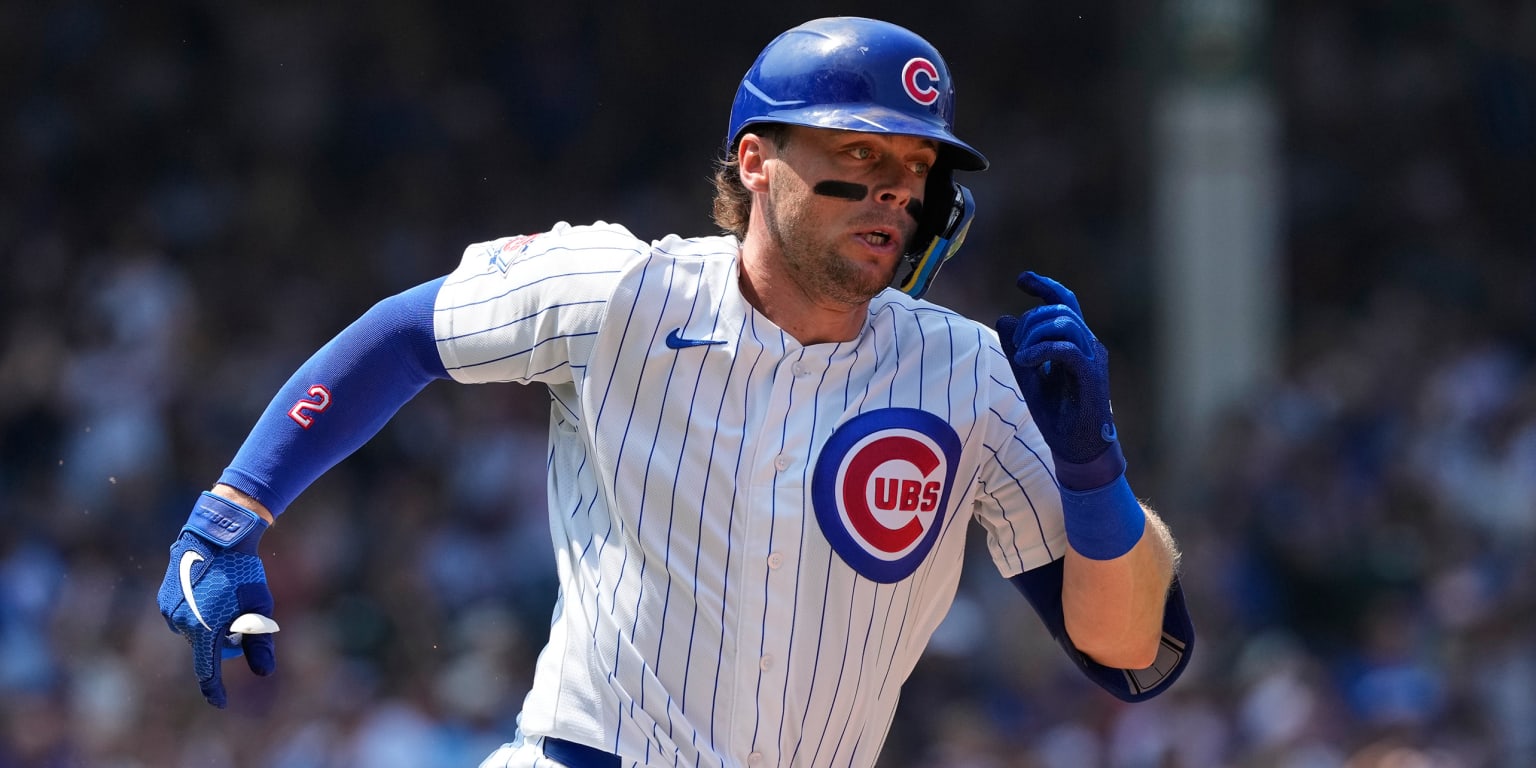
Nico Hoerner went 4-for-4 against Minnesota on Saturday, his first four-hit game since April 16, 2024, capping a second-half run that includes four multihit performances in the past week. The Cubs' $141 million second baseman arrived at the All-Star break looking dead at the plate: .202 batting average over 63 games from May 1 through July 16, a descent that blindsided a franchise expecting continued output from a player who nearly won an NL batting title in 2025. That reversal matters because the underlying mechanics never actually broke.
Hoerner's swing adjustments that fueled his April power spike—he hit four homers and carried a .819 OPS through the first month—remained structurally sound through the drought. His 89.3% contact rate sits at career norms. His barrel rate (36.6%) stays elite. Strikeout (8.1%) and whiff (11.7%) rates remain negligible. What changed was outcome sequencing, not approach: his .257 BABIP ranks 43 points below his career baseline, and his -46-point gap between actual BA (.244) and expected BA (.290) ranks second-worst among qualified MLB hitters this season. Against fastballs specifically—the pitch he hammered at .319 last year—he's hitting .231 this season with an xBA of .296, a 65-point variance that screams bad-luck variance rather than mechanical regression.
The April explosion created a false narrative about sustainable power uplift. Hoerner's four homers in 31 games and spike in extra-base production through April seeded expectations of a new offensive tier, but the data reveals a hitter getting squeezed by batted-ball placement and fielder positioning. Manager Craig Counsell framed it precisely: 'The ball doesn't go over the fence that much and he doesn't strike out, so the fielder has an opportunity on every play to catch his ball.' When those ground balls and line drives find gaps instead of gloves—as happened on Saturday—Hoerner's elite contact profile converts directly to hits and runs.
From a prop lens, the second-half uptick is not a temporary blip but a reversion to baseline. Hoerner's pre-May performance (.819 OPS) was the aberration; his true-talent line-drive and ground-ball hitter profile with high contact rates and minimal strikeouts should generate a .280-.290 batting average when his BABIP normalizes. With five games remaining before the August slate settles lineups, the market has yet to fully reprice his hit and runs props. Oddsmakers caught him leaning into the first-half funk; they're typically 2-4 days behind on non-star-player xBA corrections. Hoerner's 4-for-4 Saturday and subsequent multihit games will push sportsbooks to tighten his daily lines, but the durable edge exists in longer windows: season-long or next-seven-game hit totals, where the BABIP gap justifies aggressive chasing of overs before the correction fully prices in.
The injury risk also plays a role. Hoerner hasn't homered since April 21—a 94-day drought—but that drought sits atop a 46-point BA differential that has nothing to do with power and everything to do with where his contact is landing. When fastballs normalize from .231 to the .296 xBA range, and when BABIP creeps from .257 toward .300, Hoerner's run-scoring and hit-total profiles should tick up measurably. The Cubs play the Yankees, Dodgers, and Blue Jays starting July 31, three teams with different defensive positioning tendencies. If Hoerner faces fastball-heavy rotations against those opponents, his xBA edge should compound. Lean into his hit props and runs props in the near window before Vegas finishes its correction math.