Rodríguez's Mets-to-Reds Arc Closes with Debut; Offensive Upside Reshapes Cincinnati's Depth Chart
By PropBetEdge Editorial Team ·
A four-year journey from low-level prospect to Triple-A breakout lands Hector Rodríguez in the majors on Tuesday, filling the void created by Nathaniel Lowe's trade.
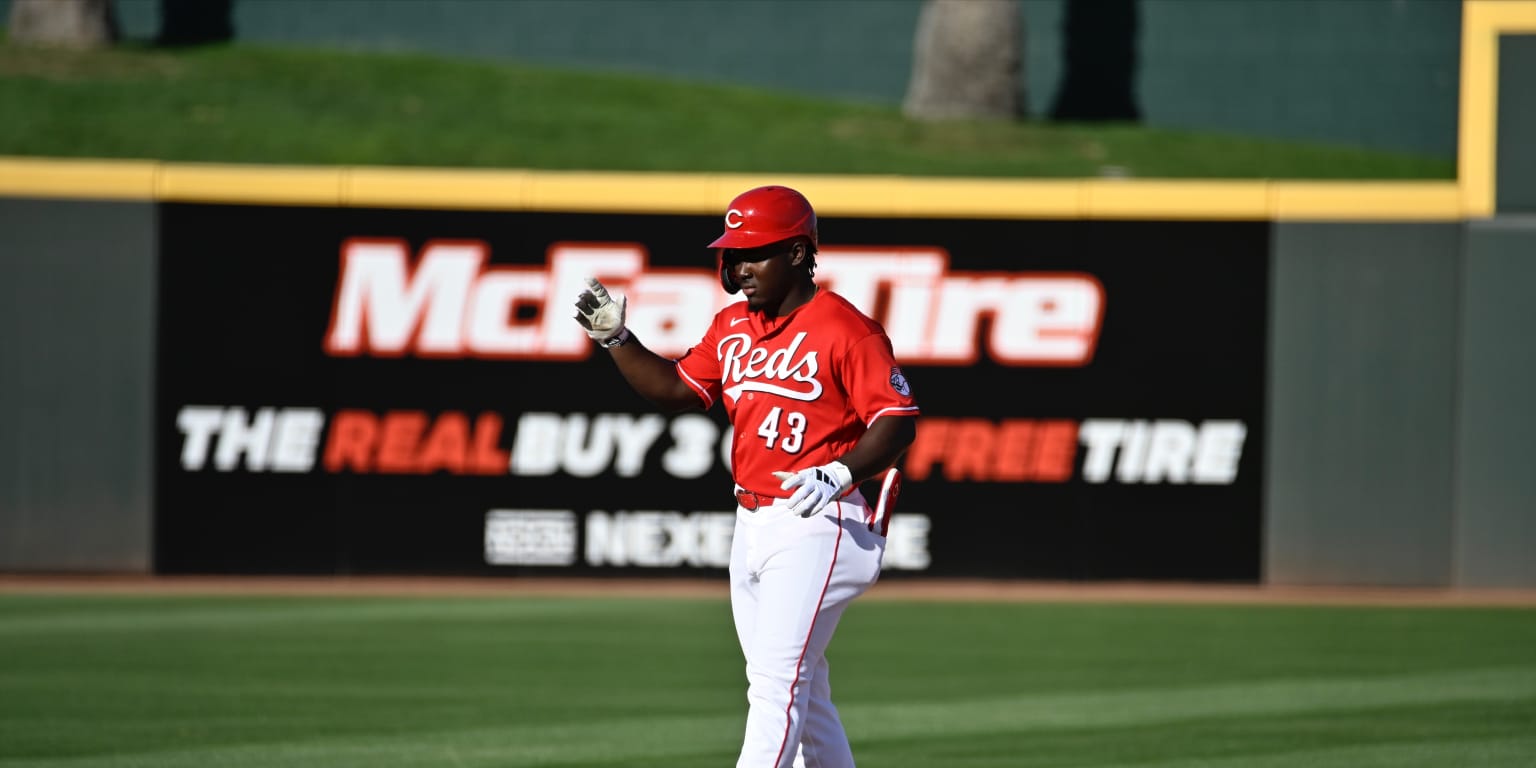
Hector Rodríguez made his major league debut in right field for the Reds on Tuesday against Oakland, four years after the Mets dealt him away at the 2022 Trade Deadline as salary ballast in a Tyler Naquin swap. The 22-year-old left-handed hitter arrived via call-up from Triple-A Louisville after the Guardians acquired Lowe on Monday, and he carries uncommon offensive credentials into his first big-league lineup card: a .274 batting average, .880 OPS, 27 home runs, and 69 RBIs across 104 Triple-A games this season. That production included a three-homer game in May and a cycle in June—the kind of breakout year that forces front offices to act.
Rodríguez's path to this moment reveals how organizational patience and internal development can recover asset value. Signed by the Mets out of the Dominican Republic in 2021 for $100,000, he carried low prospect pedigree when Cincinnati traded for him. The move appeared low-leverage on both sides at the time. Four years of work in the Reds' system—including repeated exposure to veteran mentors like Elly De La Cruz, Eugenio Suárez, and Noelvi Marte during spring training—has produced a hitter who commands the zone without overthinking it. "I don't think too much," Rodríguez said of his offensive approach. "I just react to what can happen at that moment." That simplicity, combined with his production profile, suggests Cincinnati has identified a legitimate offensive contributor rather than a short-term fill-in.
The defensive profile complicates matters. Rodríguez remains a below-average outfielder despite focused work over multiple seasons—a fact the Reds appear willing to accept in exchange for his offensive ceiling. Triple-A manager Pat Kelly reported significant improvement in the field, and Reds skipper Terry Francona has already flagged left field and DH as secondary positions where Rodríguez may see time. This defensive flexibility ceiling is narrow, but in an era when positional versatility and offensive output drive lineup construction, the Reds are betting that his bat carries more weight than his glove carries liability.
For bettors, Rodríguez's insertion into the daily lineup creates a distinct edge on Cincinnati team totals and specific hitting props. His Triple-A slash line (.274 BA / .880 OPS / 27 HR in 104 games) translates to roughly a .265–.275 major league floor if he maintains his zone discipline; that's a floor, not a ceiling. The Reds entered Tuesday with the second-lowest run production in baseball, and Rodríguez's arrival—alongside a recent bullpen refresh—reshapes the offensive math. Unders on Reds team totals (currently seated in the 3.5–4.0 range depending on opponent) have been profitable all season because Cincinnati's lineup lacked impact bats. Rodríguez's debut removes one variable from that calculus: a player with demonstrable, repeatable power (27 HR at Triple-A is not noise) stepping into a vacuum created by Lowe's departure. The market hasn't yet fully repriced Reds overs for the next week, as most books opened lines before the Tuesday call-up was official.
The edge is narrow and time-sensitive. A single strong or weak debut will generate line movement within 24 hours; the current dislocation between his Triple-A production and market pricing on Reds run props exists only because the news broke late. Bettors should expect rapid adjustment. However, if Rodríguez establishes himself as a consistent top-of-the-order threat—and his mechanics and confidence profile suggest he will—Cincinnati's team total overs become a durable angle over the next 4–6 weeks as public perception lags actual performance. The Mets' organizational mistake in 2022 has become Cincinnati's depth-chart gain.