Cabrera's Waiver Claim Signals Reds' Desperation at the Margins
By Erik Schwartz ·
A utility man reclaimed from the Yankees after a season-ending ankle fracture offers Cincinnati flexibility depth but minimal lineup impact in the final stretch.
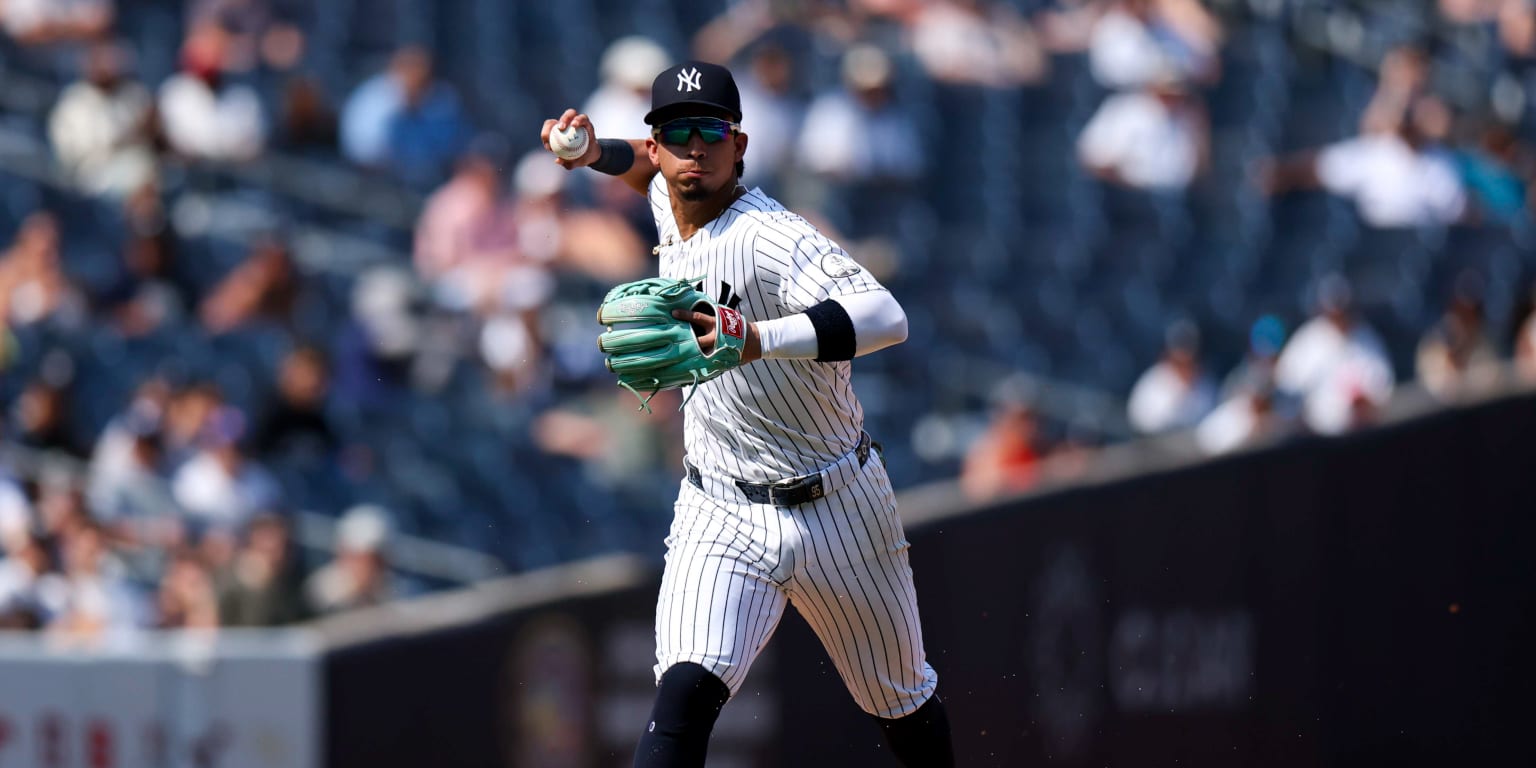
Oswaldo Cabrera arrived at Great American Ball Park on Saturday as the Reds' latest roster patch—claimed off waivers from the Yankees after being designated for assignment. The 27-year-old utility infielder endured a gruesome ankle injury on May 12, 2025, when he slid awkwardly into home plate during a game against Seattle, fracturing his ankle and tearing ligaments severely enough to require surgery and sideline him for the remainder of that season. More than a year of rehabilitation later, Cabrera has fought his way back to professional viability, posting a .288 average with a .789 OPS across 122 Triple-A games this season—respectable numbers that suggest his legs have healed enough to handle everyday baseball.
The timing of his claim matters: the Reds are in mid-September, with postseason positioning still unsettled. By acquiring a switch-hitter capable of playing second, third, and outfield, Cincinnati gains positional flexibility without consuming a major league roster spot in the long term—Friedl was optioned to make room, moving a slumping outfielder (.172 average, four homers in 91 games) off the active roster. Manager Terry Francona emphasized Cabrera's character and versatility, noting he received multiple endorsements from people within the organization. For a team searching for defensive options and bench depth down the stretch, Cabrera's ability to move around the diamond has obvious value.
But the betting case for Cabrera's immediate impact on Reds win totals and prop lines is tepid. His career batting line sits at .232 with just 20 home runs over 867 big-league at-bats—a player who rarely carries run-production equity on his own. He played in exactly three games for the Yankees this season before the injury and the subsequent recovery window, meaning he carries rust and injury recency that typically manifests as below-average performance against major league velocity in his first 50-75 plate appearances. The market has already priced Reds team totals for the final two weeks; adding a utility benchman doesn't shift offensive run-production expectations materially unless he displaces a starter.
Where Cabrera's presence might register is in Reds unders on games where he draws a start at a non-premium position. If he enters the lineup and bats below .220 over his first 2-3 weeks—a statistically likely outcome given his career floor and the injury's lingering effects—those games will carry depressed offensive footprints relative to a full-strength bench. The Reds' remaining schedule features several clubs with middling bullpens (non-pennant-contenders where run suppression is less acute); Cabrera's presence in those lineups could tilt small totals downward. However, this edge is tied to single-game variance and early-season (for him) underperformance; it will fade as he accumulates at-bats and either establishes a new floor or regresses to his career mean.
The broader signal is organizational: Cincinnati is depth-shopping in the September market, suggesting confidence in their playoff odds is medium-to-low. Teams making high-upside utility claims are typically those already outside contention or desperate enough to add lottery tickets. For bettors, that matters less than Cabrera's individual floor—and his floor is sub-.240 until evidence arrives.