Mason Miller Trade Validation Arrives for Padres—But Oakland's Prospect Gamble Still Has Work to Prove
By Erik Schwartz ·
When the Athletics watched Miller shut down San Diego on Saturday, both clubs got a snapshot of exactly what they wagered on—one a finished product, the other a bet on youth that's tracking ahead of schedule but remains unproven at the major league level.
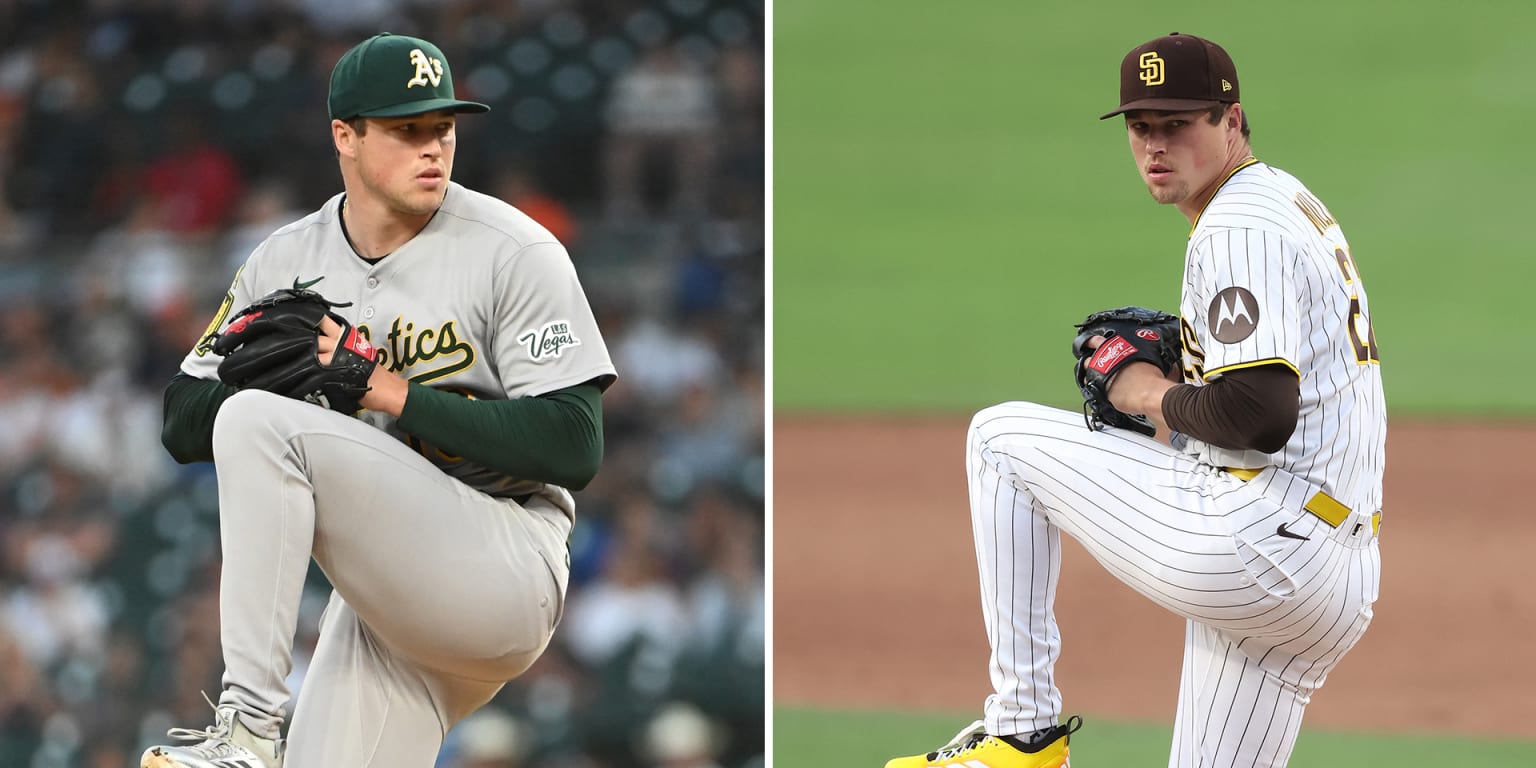
The Padres' closer Mason Miller dominated a 2-0 win over Oakland on Saturday night, striking through the ninth inning with the kind of electric stuff that made him the headpiece of last summer's deadline trade. When Oakland shipped Miller and JP Sears to San Diego in late July, the organization didn't plan to move its All-Star closer unless the price was extraordinary. The Padres made it so: a prospect haul fronted by Leo De Vries, then rated the third-best prospect in baseball by MLB Pipeline, plus depth arms including right-hander Braden Nett. A's manager Mark Kotsay watched his former closer do his work from the opposing dugout and refused to label the trade a loss—an important distinction worth examining.
De Vries, now ranked second overall on Pipeline's Top 100, is tracking as advertised. The 19-year-old switch-hitting infielder is hitting .281/.360/.401 at Double-A Midland with 16 stolen bases in 43 games, expanding his positional flexibility by taking reps at third base alongside his natural shortstop slot. Development coaches are seeing the foundational mechanics—balance through the zone, directional hitting from both sides, strength gains ahead of him as he adds age-appropriate weight. Nett, Oakland's sixth-ranked prospect, flashed triple-digit velocity and struck out five in 3 2/3 scoreless innings in his lone Triple-A outing before a finger injury sidelined him; the organization's player development director called him "the best guy I've seen since Mason Miller," a comparison that either signals outsized optimism or genuine recognition of how electric Nett's raw stuff appears. Both players have runway to validate the trade or expose it as a prospect-for-star miscalculation.
The betting angle here hinges on prospect volatility and timeline uncertainty. De Vries' minor league numbers are clean but modest in power production (five home runs in 43 games at Double-A), a category that will ultimately determine his MLB ceiling and contract value. His development timeline—potentially reaching Oakland in 2025, more likely 2026—means the A's won't know if they're getting a franchise cornerstone or a solid utility middle infielder for another 18 months. Nett's arm strength is real, but injury history (a finger issue that cost him early-season time, a shoulder concern that pulled him from this assignment) raises durability flags that affect both his trade value and long-term spot in the rotation. Neither player is ready to carry a major league franchise or close games in October.
For bettors tracking Oakland's long-term competitiveness, this trade encapsulates the organization's structural problem: it moved a known elite commodity (a 28-year-old closer in his prime, a sub-3.00 ERA starter under control through 2029) for ceiling-high prospects playing in Double-A and Triple-A. The Padres get immediate wins and playoff equity now. The A's are banking on compound growth from teenagers over the next 24-36 months—a framework that works if De Vries becomes a perennial All-Star and Nett stays healthy enough to pitch 180+ innings, but carries substantial variance risk. Monitor De Vries' power output at Triple-A later this season (sub-15% ISO or better?) and Nett's injury status closely; if either stalls, Oakland's 2025-2027 roster construction decisions become sharply constrained. The A's had no choice but to move Miller given their rebuild trajectory, but they needed at least one of these prospects to become genuinely elite. The committee is still out.