Oakland's Offensive Ceiling Finally Surfaces—But Consistency Remains the Real Test
By PropBetEdge Editorial Team ·
The A's erupted for 14 runs Tuesday night against a weak Angels starter, proving their lineup has teeth when the approach tightens—yet the pattern of sporadic outbursts masking deeper execution issues is the real story.
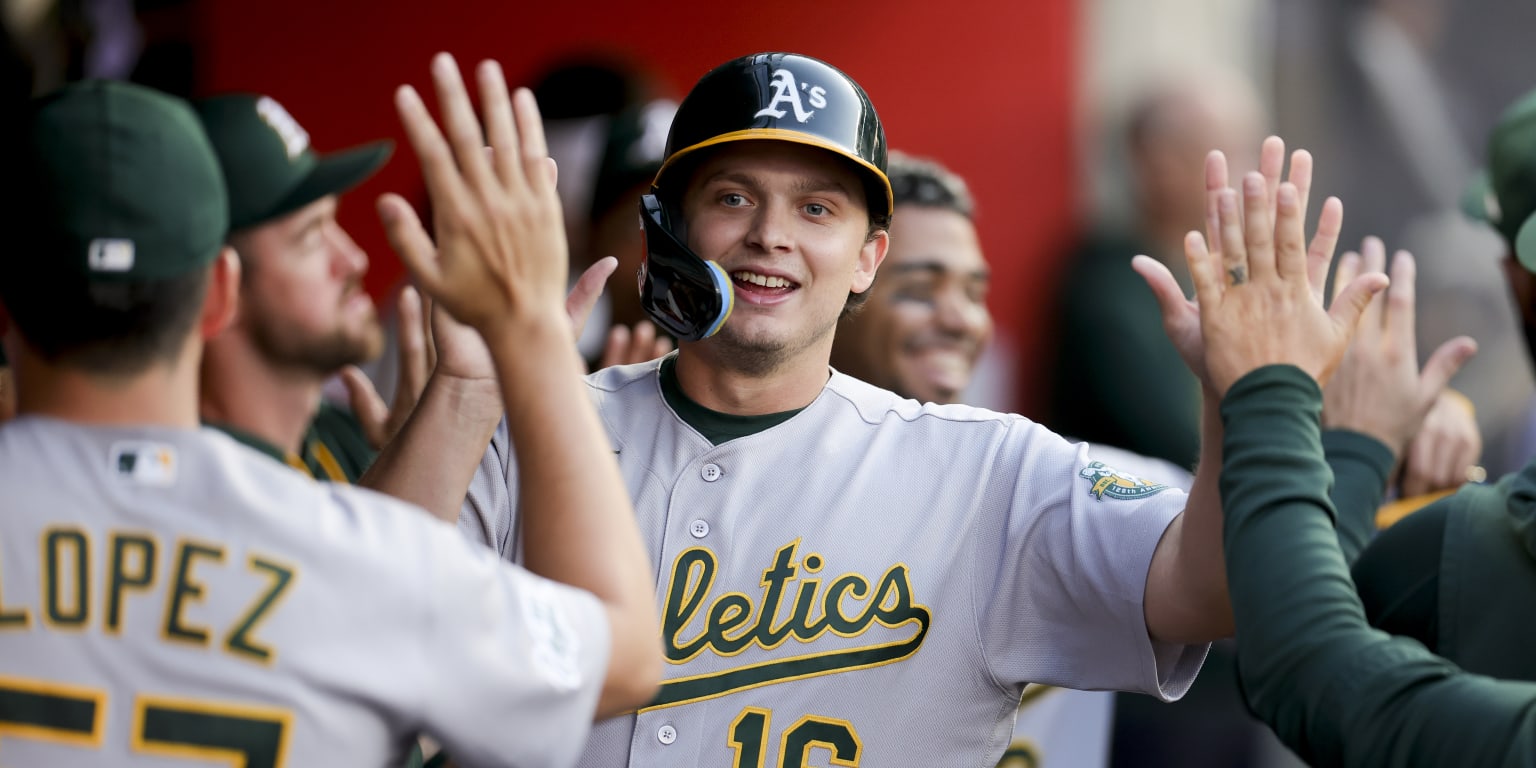
Oakland's 14-6 demolition of Anaheim on Tuesday delivered exactly what manager Mark Kotsay identified as the team's hidden advantage heading into the night: an offense with untapped capacity. The A's entered play under .500 for the first time since April 10, yet perched atop the AL West by a game—a contradiction that pointed not to luck but to correctable mechanical failures at the plate. The third-inning explosion, in which Oakland scored six runs with two outs and batted around against Angels starter Reid Detmers, illustrated what happens when the lineup stops chasing and starts executing. Five hitters recorded at least two hits in a 15-hit barrage that produced 12 runs with two outs, the most two-out runs any MLB team had scored in a single game all season.
The machinery underneath the outburst matters more than the headline run total. Kotsay's pre-game assessment was surgical: Oakland ranked 10th in weighted on-base average but only 20th in runs scored—a gap that signals not bad luck but missed leverage opportunities. In other words, the A's were squandering at-bats with runners in scoring position, a tactical failure rather than a talent failure. Monday's loss featured the same dynamic: runners left stranded, clutch moments undelivered. Tuesday flipped the script. The same batters who flailed in high-leverage spots 24 hours earlier—Brent Rooker, Zack Gelof, and Nick Kurtz—combined to go 8-for-14 with 11 RBIs and two homers. Kurtz alone drove in five. The difference was discipline and pitch recognition, not a lineup overhaul.
The danger for Oakland is pattern, not anomaly. Before Tuesday, the A's had lost 10 of their last 16 games while averaging 3.0 runs per loss—a stretch that reveals the depth of the inconsistency. Sporadic double-digit scoring nights paired with consecutive offensive droughts is not a path to a division title, even in a weak West. The A's believe this version of the offense can repeat, and the talent roster supports that belief. But one dominant third inning against a left-handed starter does not reset the underlying data. Oakland will face top-tier arms in tighter ballparks where scoring opportunities don't arrive in bunches.
From a prop lens, this game exposes a market inefficiency in how Oakland's offense is being priced relative to its ceiling. The A's remain parlay-friendly unders on many books because the season-long run-scoring average (currently 4.1 per game) anchors the line, yet Kotsay's own diagnosis—high weighted on-base relative to runs scored—suggests the market is undervaluing future positive regression when the team corrects its two-out execution. Against weak or error-prone pitching (like Detmers, who allowed six runs in two-plus innings), Oakland's team total climbing from 4.0 to 4.5 or higher is justified by the evidence Tuesday produced. But that edge tightens sharply against elite closing pitchers and in hostile parks. The short-term angle: lean overs on Oakland's team total for the next 2-3 games while the lineup remains hot and bookmakers haven't yet repriced for Tuesday's demonstration of improved approach. The longer-term reality: a one-night eruption doesn't change a season-long pattern of offensive volatility. Watch whether Rooker, Gelof, and Kurtz maintain their disciplined approach in the next 5-7 games. If the two-out hitting rate sustains above 35%, the over carries durability. If it reverts toward the season's 28% mark, the edge evaporates.