Acuña and Kim Begin Rehab in Florida; Braves' Lineup Depth Still Week Away
By Ty Whitney ·
Two wounded Braves stars enter minor-league recovery today, but neither is expected to accelerate a quick return to Atlanta's lineup.
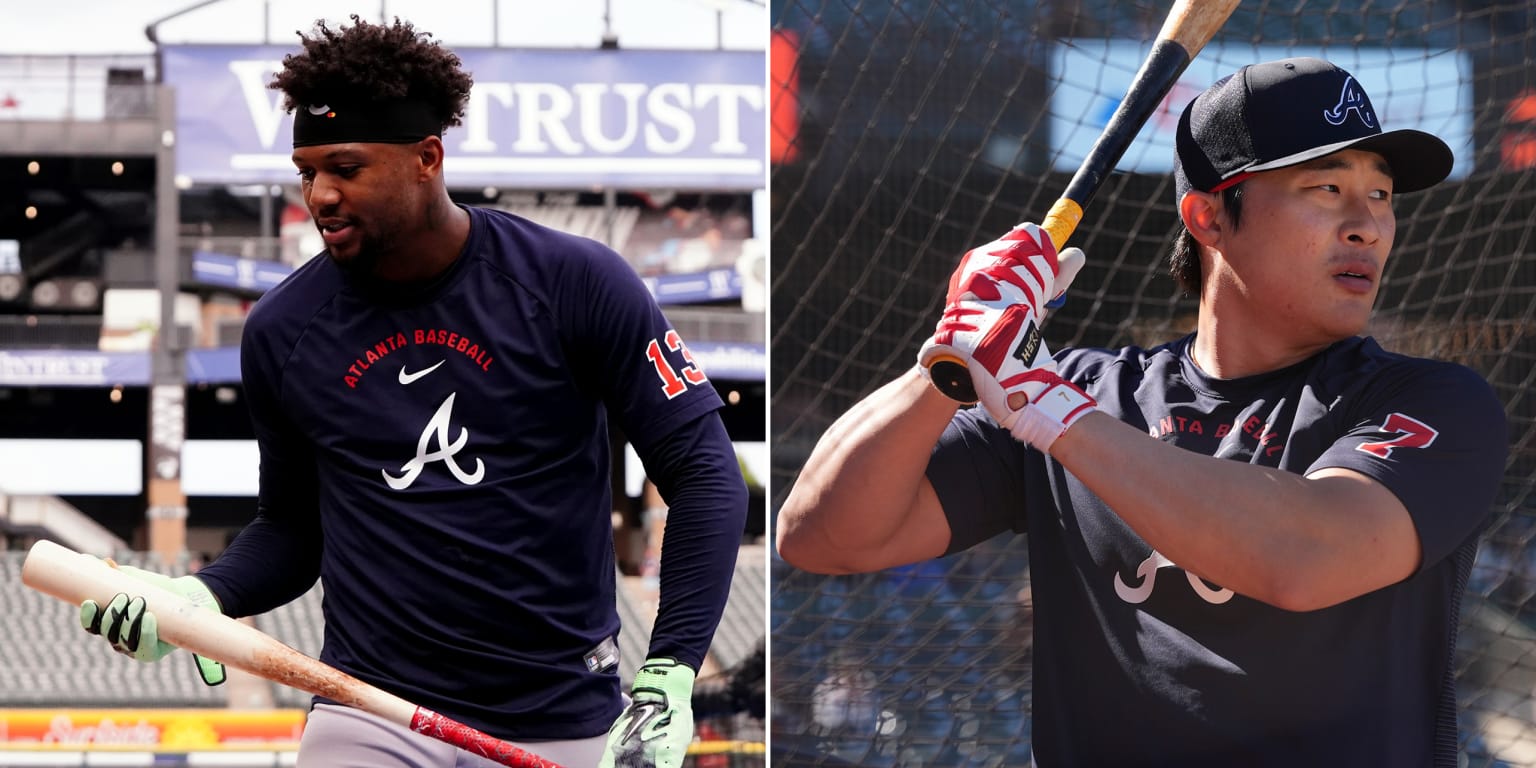
Ronald Acuña Jr. and Ha-Seong Kim report to the FCL Braves in North Port, Florida today to begin supervised minor-league rehab assignments. Acuña has been out since re-aggravating his left hamstring on June 9—a familiar injury site, given an earlier strain on May 2 that sidelined him for roughly two weeks before he returned and posted a .893 OPS across 19 games. Kim, meanwhile, has been battling back from right middle-finger surgery (torn tendon) performed in the offseason and completed a nine-game rehab stint in May, only to return to the majors and collapse: .068 average, .239 OPS across 27 games.
The team has not disclosed timeline targets for either rehab assignment. That deliberate vagueness signals caution. Acuña's hamstring history—the same muscle group, twice in one season—suggests the Braves will move slowly even if early minor-league performance looks encouraging. A six-week cycle from initial injury to full-game action is conservative baseline; Kim's path is murkier, as he's not just recovering from surgery but also fighting to find rhythm against live pitching after a historically poor offensive stretch.
For betting purposes, the key variable is Braves lineup composition over the next 10-14 days. Without Acuña (.251/.794 OPS baseline, 15 stolen bases in 53 games) and Kim (.068 average, signed to a $20 million one-year contract in January), Atlanta's right-field and utility-infield depth will carry more load-bearing responsibility. Utility hitters and bench outfielders will see elevated plate appearances and leverage situations—a textbook setup for variance inflation in individual prop markets. Braves team totals should compress modestly; the two-position vacancy removes 0.4 to 0.6 wins per game from Atlanta's offensive ceiling, all else equal.
Prop bettors should monitor minor-league box scores for both players over the next 5-7 days. Acuña's strikeout rate, walk rate, and sprint speed—all trackable in the Florida Complex League—will indicate whether the hamstring injury has degraded his bat-to-ball control or his willingness to put full force behind his swings. Kim's contact rate and exit-velo metrics matter more, since his offensive collapse has been total rather than speed-specific. If either player posts three consecutive games at full DH workload with sub-25% strikeout rates and above-45% hard-contact rates, expect whispers of an accelerated return within 8-10 days. Until then, fade Braves team-total overs and treat Acuña and Kim solo props as unplayable.
The market has likely already adjusted team totals and moneyline pricing for the depth loss, but individual hitter props—strikeout lines for backup outfielders and infielders now getting 300-plus additional plate appearances—are tracking slower. That's the edge: volume accumulation for fringe players whose normal prop markets don't exist or trade at inflated strike prices due to low sample size.