Abrams Breaks Through at 21: Nationals' Shortstop Pace for 34 HRs Transforms Summer Run
By PropBetEdge Editorial Team ·
CJ Abrams' career-high 21st home run on July 19 arrives with 62 games left to play—and his power trajectory suggests a finish well above his previous career ceiling.
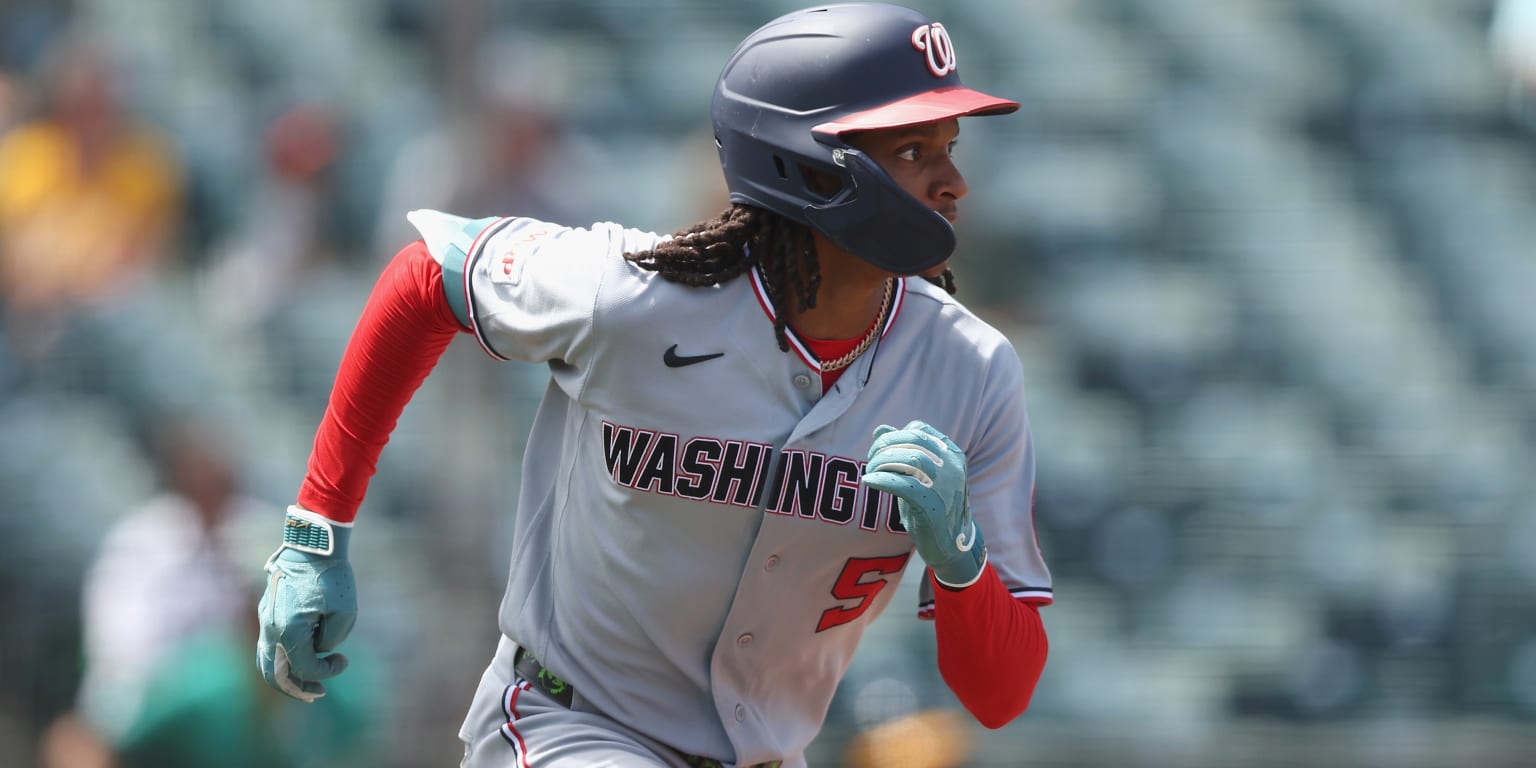
CJ Abrams crushed a 105 mph, 422-foot home run against Athletics reliever Elvis Alvarado on Sunday, breaking his career home-run record in a 5-2 Nationals win. The shortstop knew exactly what he'd accomplished, delivering a refreshingly direct answer when asked if he was aware of the milestone: "No. I knew." And he should have—reaching a career high in home runs by mid-July, with more than a quarter of the season still remaining, is not a footnote. It's a signal.
Abrams' path to 21 mirrors the shape of a player whose offensive profile has fundamentally reset. In 2024, his first All-Star season, he finished with 20 home runs across the full schedule. He's now matched and surpassed that in fewer than 90 games. At his current pace of one home run per 3.8 games, Abrams projects to 34 homers for the season—a 70 percent jump from his previous peak. That's not a hot streak; that's a new baseline. His 0.869 OPS and 70 RBIs (tied for second in the NL) confirm the power gains are part of a broader offensive expansion, not isolated from his core hitting approach. Manager Blake Butera emphasized Abrams' discipline and pitch recognition—the shortstop waited for fastballs from the hard-throwing Alvarado and punished the one in the zone—a pattern Butera says extends across the entire lineup. "They do such a good job of having a plan when they go up to bat every time, and they execute that plan," Butera noted.
The broader Nationals context matters here: the team is already at 144 home runs, tied with the Yankees for the league lead with two months of play remaining. That offensive firepower earned Abrams the starting shortstop slot for the National League in Tuesday's All-Star Game—the first Nationals shortstop to open the Midsummer Classic. This isn't a mid-market offense punching above weight; it's a team genuinely built to produce. The back-to-back homers with Dylan Crews (his seventh of the year) in Sunday's fifth inning represent the Nationals' third such pairing this season and their second in 10 days. That clustering matters for team-total and run-line bettors: when an offense has established multiple power-hitting threats operating on overlapping hot cycles, the probability of crooked-number innings spikes sharply.
For prop bettors, Abrams presents a specific edge: his home run pace is now front-running his preseason projections, but the market hasn't fully repriced his season-long HR totals to reflect the 34-homer pace. Books typically lag on mid-season recalibrations for players whose value inflected during team's second-half push. At 21 HRs through July 19 with 62 games left, Abrams would need just 13 more to reach 34. His recent contact quality (105 mph barrel against Alvarado) and approach discipline (fastball hunting in the zone) are durable mechanics, not variance-dependent luck. If his prop line for home runs across the remaining slate hasn't moved to reflect a 13-15 target (roughly one per 4-5 games), that's underpriced relative to his recent evidence.
The Nationals' overall offensive trajectory also tilts team-total unders into risk territory going forward. With Abrams and Crews both carrying momentum, and the team's power infrastructure already churning out 144 homers before August, expect mid-to-high team totals against Washington going into late July and August matchups. The market will likely price Nationals totals at 4.5-5.0 runs in many remaining games; that's underweighting a lineup that now has two proven 30+ homer bats and a manager who's clearly optimizing plate approach across the order.