Abrams' Seven-Game Surge Rewrites Nationals Shortstop History—and Signals a Dangerous Offensive Inflection
By PropBetEdge Editorial Team ·
CJ Abrams just broke the franchise single-season home-run record for shortstops; the mechanics of his week-long tear suggest it's built on something more durable than a hot streak.
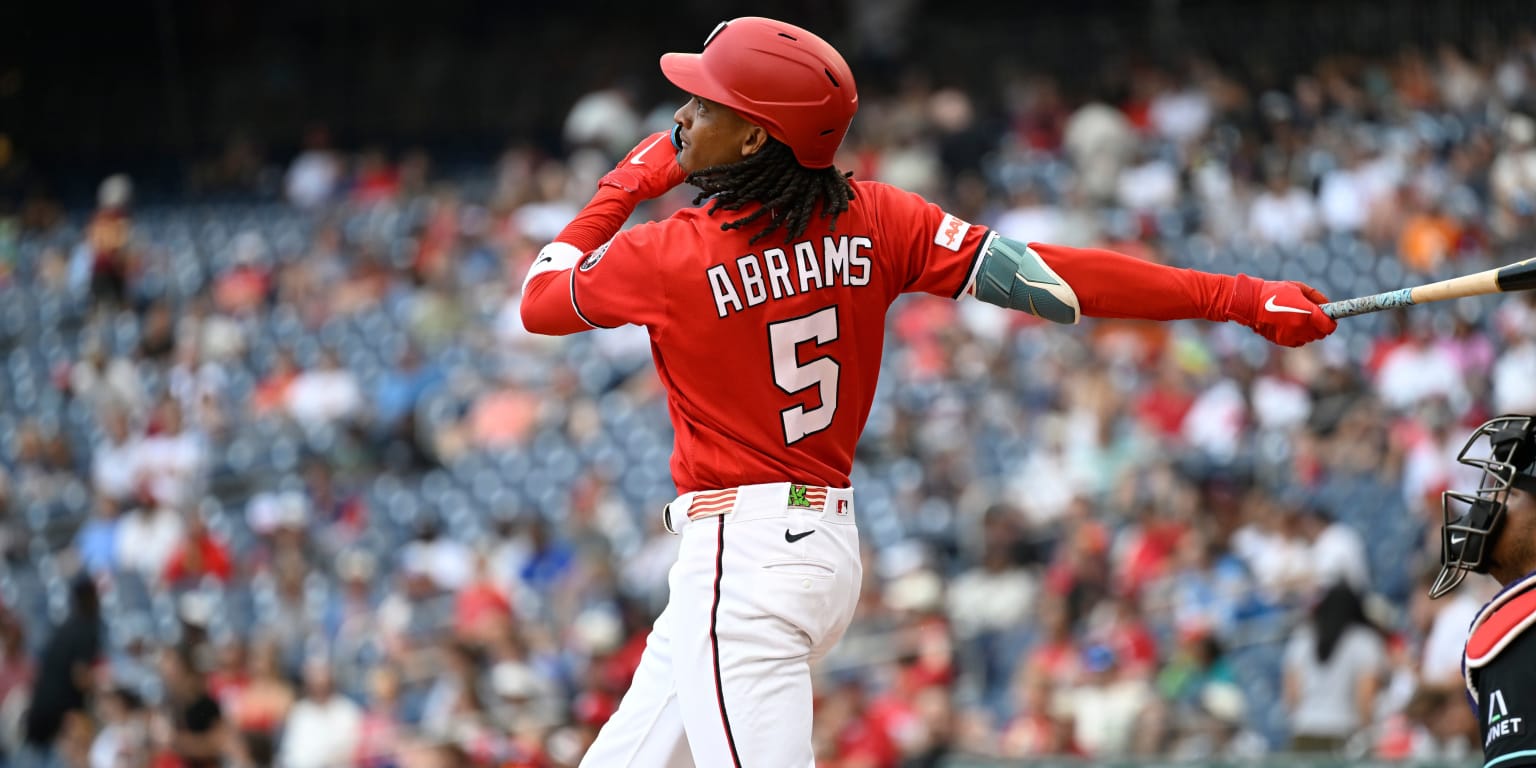
CJ Abrams launched two home runs Sunday to power Washington past Arizona 10-7, extending a power binge that has reshaped the Nationals' playoff calculus. In his last seven games, Abrams is hitting .567 with 17 hits, 7 home runs, and 14 RBIs. His 27 home runs now surpass Ian Desmond's 2012 franchise record for shortstop homers in a single season—a 15-year-old bar that stood unchallenged until Abrams erased it with a week to spare in late July.
Abrams' output isn't random volatility. His seven homers across seven games ties him with Kyle Schwarber for the fastest 7-HR pace by a National since 2005. He's also posted four multi-homer games in his career; the second one arrived Tuesday at Colorado, suggesting he's hitting in an elevated mechanical window—likely driven by a shift in his approach against fastballs or a pitch-recognition edge that the scouting reports haven't yet caught up to. James Wood, meanwhile, hit two more Sunday and now sits at 29 homers, joining Adam Dunn as the only Nationals to post back-to-back 30-homer seasons since 2005. That pairing—two power-stroke anchors operating at elite volume simultaneously—has compressed Washington's gap with Arizona down to one game in the Wild Card race, despite the Nationals entering the game down 4-2.
The market has already begun pricing in Abrams' elevated status. His home-run prop lines have compressed; sportsbooks are clearly adjusting upward. But the real edge isn't in chasing his HR total. The mechanism here is plate discipline and fastball efficiency. When a player hits .567 with 7 HRs in 7 games, the volatility is real, but the underlying contact quality (a .567 average over 30 PA is extreme) suggests his barrel rate and hard-contact percentage have shifted. The next question is persistence: does his approach survive the adjustment, or does the league dial in a counter-strategy? His strikeout rate over this seven-game window will be the diagnostic. If he's maintained sub-20% K rate while posting those numbers, the surge has structural integrity. If he's whiffing at the same clip as before, we're watching recency at elevated variance.
For betting purposes, the edge is narrow but present in unders on Nationals team totals in the short window ahead. Abrams and Wood have compressed two weeks of expected offense into one. The law of sequence doesn't care about records—it cares about compounding output. A 10-run game tonight, coupled with a 5-run game tomorrow, is easier to price into the next three games when the actual games are spread across a week. If Washington plays three more games before their next day off, sportsbooks may have already bid up the team total to account for Abrams' peak power, but the clustering of his homers into a single week means those games are now, not distributed. Take unders on Nationals team total at 4.5 or higher if offered at even money or better over the next two games while the sample size remains compact and market memory is fresh.