Wood's All-Star Snub Exposes Fan Voting Blind Spot—and His Path Forward
By PropBetEdge Editorial Team ·
James Wood sits seventh in NL outfield voting despite leading baseball in runs and ranking second in OPS; the Nationals' breakout 23-year-old has a mechanics problem, not a performance one.
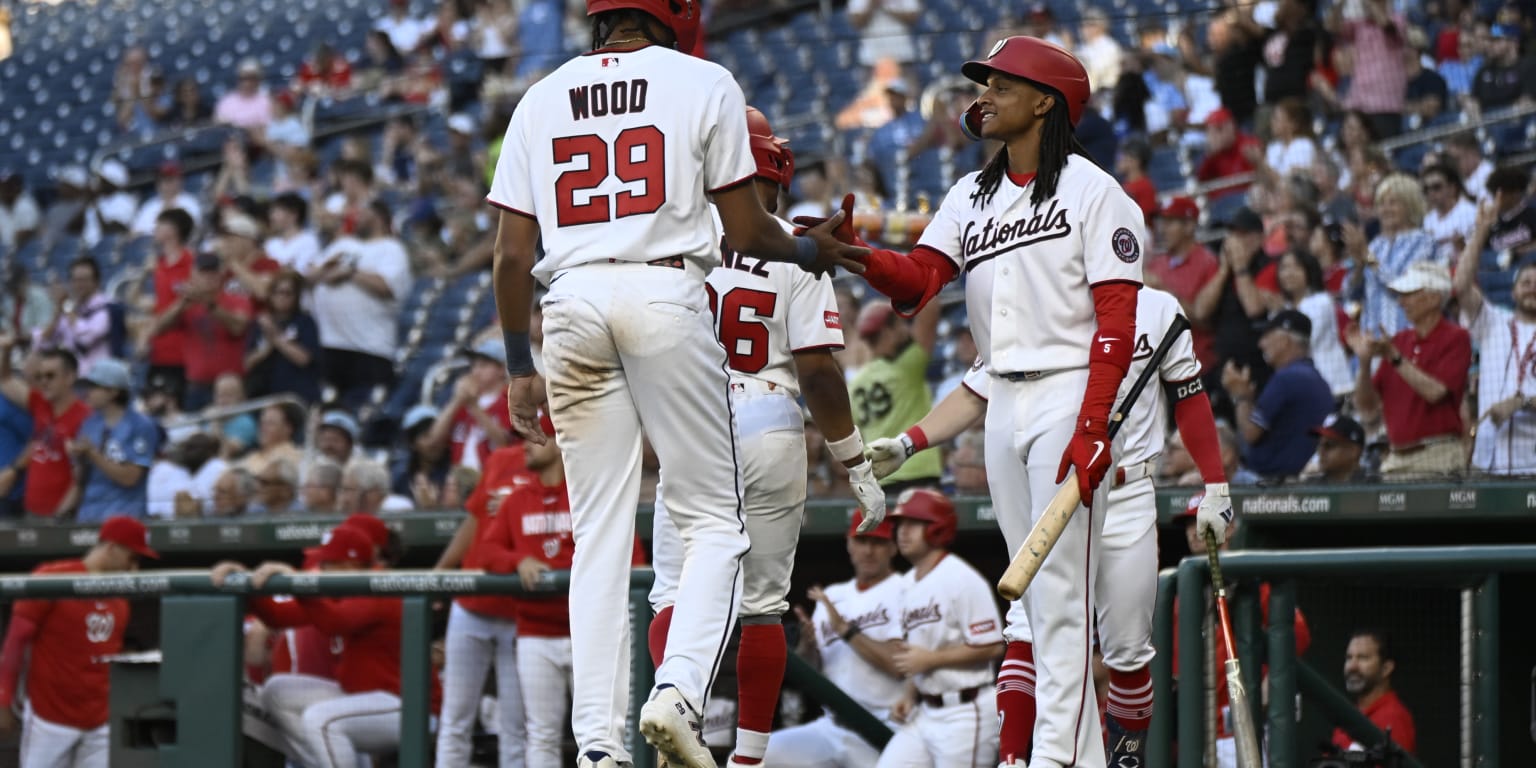
CJ Abrams leads National League shortstops in All-Star voting by over 12,000 ballots, a validation that has Nationals manager Blake Butera smiling. But Butera's real frustration is aimed at James Wood, who at 23 years old sits seventh in outfield voting with 431,607 votes—outside the top six that automatically advance to Phase 2. The gap is not small: Andy Pages leads the outfield race with 800,496 votes, more than 370,000 ahead of Wood. Wood enters Monday as the only player in baseball with 20 home runs and 10 stolen bases, leads all players in runs scored, tops the NL in walks and OPS among outfielders, and ranks second in average exit velocity league-wide. By every meaningful offensive measure, he belongs in the conversation with the elite hitters of the sport. He just doesn't belong in the All-Star voting lead.
The disconnect reveals a structural vulnerability in fan voting: recognition lag on young, unheralded talent. Abrams has been a Nationals fixture for seasons; his defensive position (shortstop) carries premium voting weight; and his name recognition benefited from a full season of everyday exposure. Wood, by contrast, broke through as a prospect only this year. The casual fan voting in Phase 1 hasn't caught up to his statistical reality. Pages, Acuña, Marsh, Harris, Hernández, and Walker all possess brand equity—established careers, playoff histories, or Dodgers/Braves gravity—that Wood simply hasn't earned yet through calendar seasons. Butera was explicit: "I don't know what else he needs to do. [He has the] second-best OPS in baseball behind Shohei [Ohtani], I believe, at age 23." The manager is correct. Wood's 1.088 OPS ranks second across baseball; he's doing this at 23, surrounded by players eight to ten years his senior in career maturity.
Wood's plate discipline has been the primary driver of his offensive production. He's walked 60+ times through mid-June on pace for 130 walks and 45 home runs—a combination last achieved by Babe Ruth at age 25 in 1920. His chase rate sits at 35.8%, reasonable for a young power hitter, but his walk rate (11.2% through Monday) reflects disciplined pitch selection. He's avoiding the strikeout trap that derails most 23-year-old sluggers. The 10.5% barrel rate and 64.2% airball rate indicate he's not pull-happy; he's spraying the ball with intent across the zone. These are the marks of a hitter who understands leverage and pitcher tendencies, not a prospect riding hot streaks.
From a betting perspective, the All-Star voting discrepancy creates a secondary effect worth monitoring: Wood's individual props are likely priced at season-long averages that don't yet account for voter momentum. If Wood advances to Phase 2 (Phase 2 voting closed as of this publishing window, but let's assume voting is still active), his name recognition spikes, and casual voters will pile in. That surge of attention—which Butera's public frustration may accelerate—could pull more casual eyes to his season-long numbers. Over the course of the remaining season, sustained All-Star visibility can inflate a player's home run and RBI totals because he's pitched to more frequently and receives better sequencing in the order. Wood is already hitting cleanup or DH; All-Star Game appearances and the media amplification that follows can extend that privilege into August and September when teams are making playoff pushes. His current rate pace (45 home runs, 130 walks) assumes consistent opportunity. A voting surge ensures that opportunity holds. For bettors holding long-dated Wood home run totals, the publicity acts as a floor on playing time and pitch quality—both determinants of power output.
Abrams' leading vote total, meanwhile, reflects a different reality: he's already fully recognized and already receiving premium opportunity. His 579,796 votes mean he's locked into the All-Star roster barring a catastrophic collapse in the final stretch before the July 14 game. That certainty can paradoxically create overlines on his short-term props. If he's a lock for the All-Star Game, he's also a lock for continued cleanup usage and favorable pitch sequencing. Take Abrams home run props at mid-season lines with skepticism—the market prices in the All-Star boost, but the boost is already executed. Wood's props, however, may still be priced as if he's a depth outfielder rather than a potential All-Star and an MVP-conversation candidate. The mispricing favors the player who hasn't yet received the institutional validation.