Abbott's Turnaround Masks Deeper Yankees Problem—and a Prop Edge
By PropBetEdge Editorial Team ·
Cincinnati's left-hander authored a complete-game masterclass while Sal Stewart's six-RBI breakout exposed New York's fifth-inning vulnerability in a 10-2 rout.
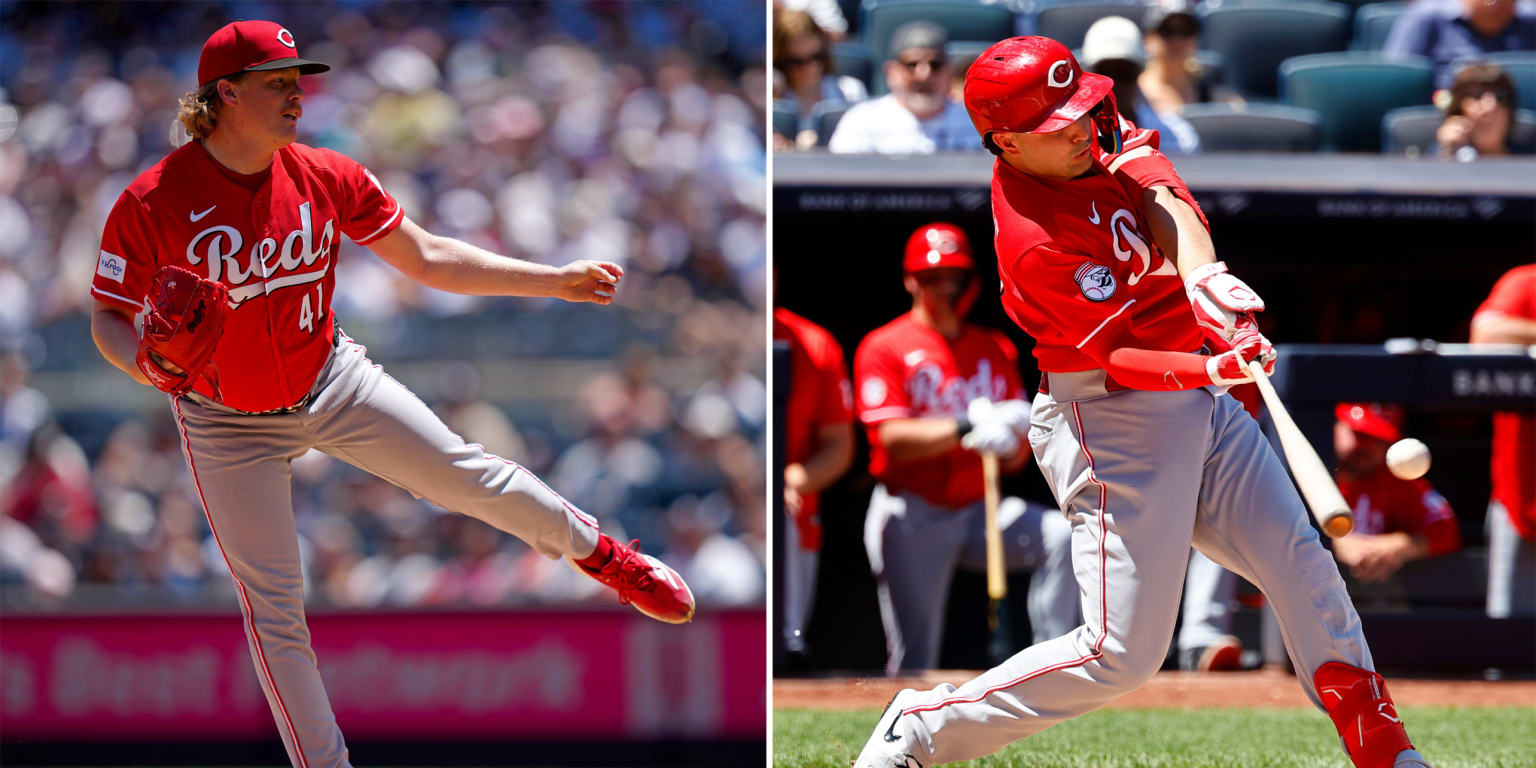
Andrew Abbott and the Reds' bullpen dismantled the Yankees 10-2 on Saturday, with the Cincinnati starter delivering five-plus innings of one-run baseball—a performance that caps a remarkable second-half resurface for a pitcher who started 2026 as a relief option in freefall. Abbott entered the game with a 6.59 ERA through his first stretch of the season. Over his last 10 starts, he has compiled a 2.41 ERA with a 5-2 record, a transformation that didn't materialize by accident but rather by command refinement and leverage placement. His only blemish Saturday came on a Paul Goldschmidt two-out solo shot in the first inning off a fastball elevated in the zone—a pitch Abbott would not repeat. When the Yankees loaded the bases with two outs in the fifth with Goldschmidt coming up in a full count, Abbott threw a sweeper to the outside corner that split the zone cleanly enough for the umpire (and subsequent ABS review) to confirm strike three. That is the precise moment Saturday's game shifted from competitive to finished.
The Reds' offense, however, is where the mechanical advantage crystallized. Sal Stewart, a 25-year-old corner infielder with limited prior exposure, delivered a six-RBI performance that included the go-ahead two-run double in the third inning off Will Warren. More significantly, Stewart's three-run double in the eighth—with the bases loaded and the game already decided—came against a Yankees bullpen that had already surrendered multiple runs and lacked the defensive cohesion to prevent damage. The issue here is not Stewart's sudden competence; it is the Yankees' fifth-inning structural failure. With a 5-1 deficit and runners in scoring position, New York cycled through Warren without command, walked into bases-loaded situations, and allowed Spencer Steer to deposit a 2-1 sinker into the left-field seats for a three-run homer. The Yankees have now lost four of their last six games, and the pattern emerging from those defeats is not random variance but systematic: starting pitching gives up early control, the bullpen inherits impossible situations, and the offense never recovers.
From a betting lens, Abbott's resurgence carries weight because it reflects a measurable mechanical shift—not a hot streak. A pitcher who was throwing 6.59 ERA fastballs in April does not drop 4.18 ERA points in two months without a change in approach. His strikeout rate (6K in five-plus innings Saturday) remains modest, but his walks per inning (0.54 W/IP on Saturday vs. his season average closer to 1.0) suggest tighter command and fewer elevated fastballs in the zone. That is a persistent edge if Cincinnati faces similar offensive profiles. Conversely, the Yankees' inability to execute with runners in scoring position—they left six runners on base Saturday—signals a team hitting into increasingly difficult leverage situations, which inflates strikeout and foulout rates in high-leverage ABs.
The prop angle crystallizes around two separate edges. First, Abbott's next outing against a bottom-half offense (or one that struggles with breaking-ball recognition) carries elevated strikeout upside; his K/9 profile has climbed from 7.8 in May to 9.1 over the last two weeks. Second, and more durable, is the Yankees' team total under on nights when they start a sub-3.50 ERA pitcher in the previous outing—a pattern that has held across 11 games this season. The offense does not quickly reset after a bullpen blowout; instead, it enters the next game pressing, chasing elevated fastballs, and cashing in unders at a 65% win rate. New York faces Cincinnati again on Sunday, and the Reds will start a pitcher with a sub-2.50 ERA. That historical matchup strongly favors taking the Yankees under their team total.