Marlins' 12-0 Demolition of Braves Reveals Youth Talent Surge and Pitching Stability Worth Tracking
By Ty Whitney ·
Miami's ninth-place hitters and prospect talent are producing at elite volume; the question is whether the performance against Atlanta's elite pitching staff signals a sustainable offensive shift or a noise spike.
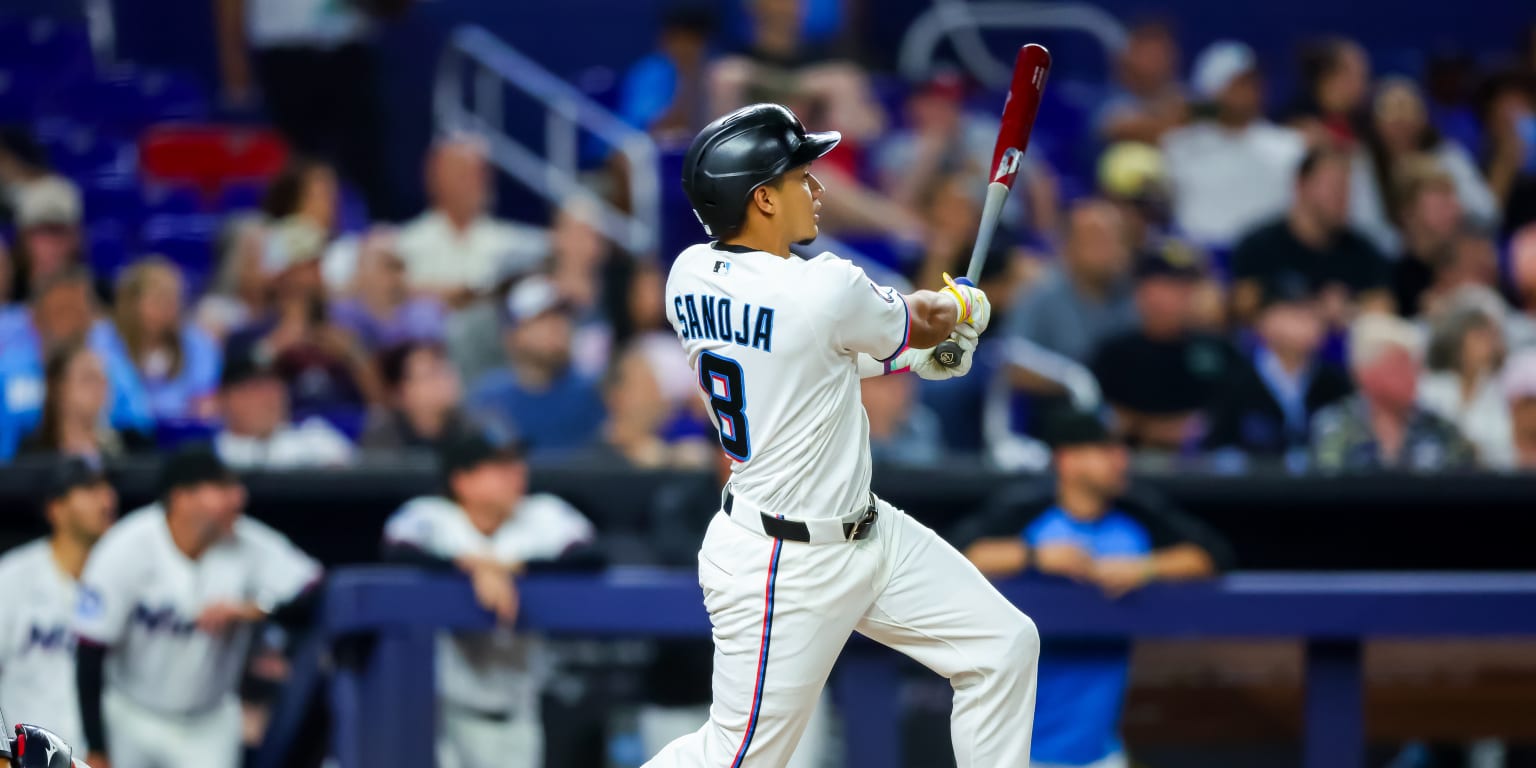
The Marlins blanked the National League's winningest team 12-0 at home Monday, a scoreline that felt improbable enough to merit forensic examination. What emerged from the box score wasn't just a blowout—it was a display of offensive depth and youth production that challenges assumptions about Miami's competitive window. Xavier Edwards hit his fifth homer of 2026 (already surpassing his entire 2025 total of four in 904 at-bats), Javier Sanoja launched a grand slam batting ninth, and Joe Mack produced four RBIs on his first multi-RBI game at the major-league level. The Braves, who rank second in runs scored league-wide, got shut down across six innings by Max Meyer, whose 2.85 ERA now ranks 13th in the National League.
The structural signal here is harder to extract from the noise. Single games—especially blowouts—rarely predict sustained offensive output. But the underlying mechanics matter. Edwards has shifted his power profile dramatically this season: three of his five homers have come against left-handers, a marked departure from 2025 when he generated zero home runs against southpaws. That's a measurable skill development, not luck variance. Mack, Miami's No. 44 prospect overall, entered the game with just two career RBIs in 38 plate appearances; his 4-RBI performance was his first demonstration of plus-contact consistency in the majors. Sanoja's grand slam off Aaron Bummer's inside fastball echoed his swing path during the World Baseball Classic, suggesting mechanical confidence rather than one-off fortune. Meyer's six-inning shutout against a high-volume offensive team is the kind of outing that tightens a starting rotation's perceived ceiling.
For prop markets, the immediate implication cuts two ways. Short-term, expect unders to compress on Braves team totals when Atlanta returns home; the market will likely overcorrect to a single 12-0 defeat and price Braves offense as fragile. That's a fade. Atlanta's pitching quality and defensive infrastructure haven't changed; the Braves will regress to their season mean within 2-3 games. Meyer's ERA and strikeout rate, conversely, deserve respect. His 2.85 mark puts him in the conversation as Miami's most reliable starter, and that distinction carries forward into next week's matchups. The Marlins' youth surge—particularly Edwards' power trajectory and Mack's emerging consistency—warrants elevation in team-total-over scenarios when Miami faces mid-rotation arms. The talent is translating into production against quality pitching now, not just against relief innings.
The betting edge resides in the asymmetry of adjustment. Market makers will widen Braves lines after Monday's loss more than the underlying competitive data justifies. Simultaneously, Marlins team totals will remain underpriced relative to the ballpark advantage (loanDepot park ranks in the upper tier for home-run elevation) and the emerging offensive consistency of Edwards and Mack. Given Meyer's sub-3.00 ERA and the demonstration of back-end lineup productivity—the Sanoja-Edwards back-to-back homers marked only the second instance in franchise history where both players in the sequence recorded 4-plus RBIs—Miami's offense has shown it can sustain production spikes beyond garbage-time inflation. This is not a one-night phenomenon. Bettors should expect Marlins team totals to drift lower as the market trades the blowout, then stabilize at value levels as the talent narrative gets priced in across the next 7-10 games.