Patrick Bailey to Cleveland: What the Guardians' May Trade Means for Team Totals and Pitching Props
By PropBetEdge Editorial Team ·
The best defensive catcher in baseball just landed on a contender — and the ripple effects on Cleveland's run prevention are more significant than the mainstream take suggests.
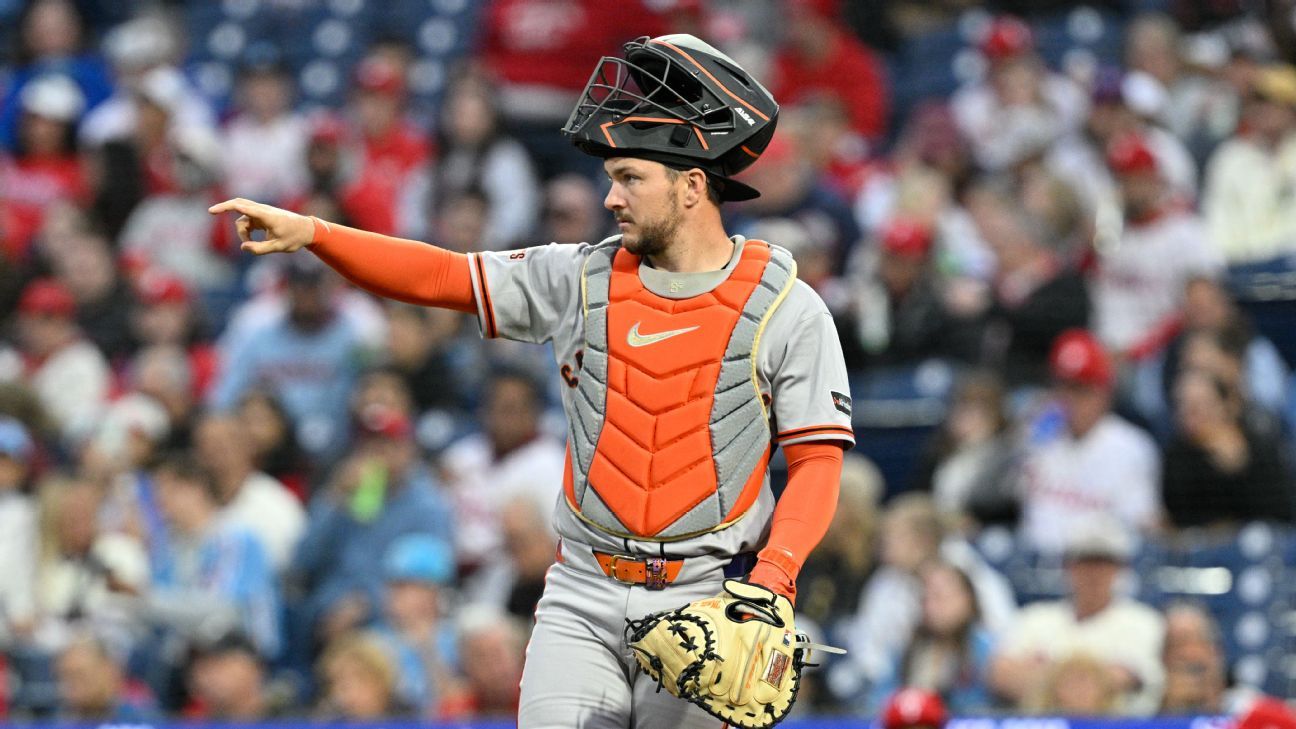
The Cleveland Guardians made one of the more unusual moves of the early season Saturday, acquiring Gold Glove catcher Patrick Bailey from the San Francisco Giants in exchange for left-handed pitching prospect Matt Wilkinson and a 2026 competitive balance round A draft pick. As ESPN reported, Bailey — the most prolific pitch-framing catcher of his generation — heads to a first-place AL Central club that desperately needed an upgrade behind the plate. May trades are rare. This one matters.
The Bailey acquisition is fundamentally a defense-and-pitching-staff upgrade, not an offensive one. Let's be direct: Bailey's bat is a liability. His .396 OPS this season is brutal even relative to his own modest offensive history. Cleveland isn't buying a run producer. What it's buying is the single most valuable defensive presence at any position in baseball over the past three seasons — 32 fielding runs above the next-best fielder at any position since 2023, per Statcast. That number is not a rounding error. It's a structural advantage.
The context that makes this deal particularly interesting is the ABS challenge system now in play across MLB. Bailey's entire value proposition was theoretically threatened by full robot umpiring — a world where framing skill is zeroed out. The challenge system's adoption preserved that skill set, and Cleveland is explicitly betting that elite receiving and zone management remain premium commodities. Bailey's ABS challenge numbers are middling so far (minus-0.8 run value, 63rd of 77 catchers per Baseball Savant), but sample sizes are tiny and the league is still learning how to interpret those metrics. The upside here is his historically elite framing ability flowing through to Cleveland's pitching staff in ways that don't show up on a simple game log.
For bettors, the immediate angle is Cleveland's team total and first-five-innings lines. The Guardians' rotation — already one of the better units in the AL by ERA and FIP — now has a backstop capable of manufacturing strike calls and managing sequences at an elite level. Austin Hedges was serviceable, but Bailey represents a genuine tier jump in pitch-framing quality. Pitching staffs with elite framers consistently suppress runs at a rate that outpaces ERA projections alone. Expect Cleveland's under to become slightly more attractive on a per-game basis, particularly in low-scoring environments against contact-heavy lineups where framing volume is highest. The Guardians' team total has been hovering in the 4.0–4.5 range for opponents; Bailey's presence makes the lower end of that band more defensible on a consistent basis.
The trade also has downstream implications for Cleveland's NRFI (no run first inning) appeal. Bailey's pitch-calling and framing in early counts — when hitters are most vulnerable to borderline pitches — should tighten up the first frame for Guardians starters. In a tightly bunched AL where marginal edges compound, a reliable defensive anchor behind the plate is exactly the kind of quiet variable that separates a 90-win team from an 87-win team. The return cost — a mid-level pitching prospect and a draft pick — is modest. Cleveland is playing for now, and this move says so plainly.