Misiorowski's Historic May Makes Him a Strikeout Lock Against Houston
By Erik Schwartz ·
Jacob Misiorowski's May performance ranks among the most dominant months in franchise history, and his first career start against the Astros offers a rare opportunity to fade the market's adjustment to his velocity surge.
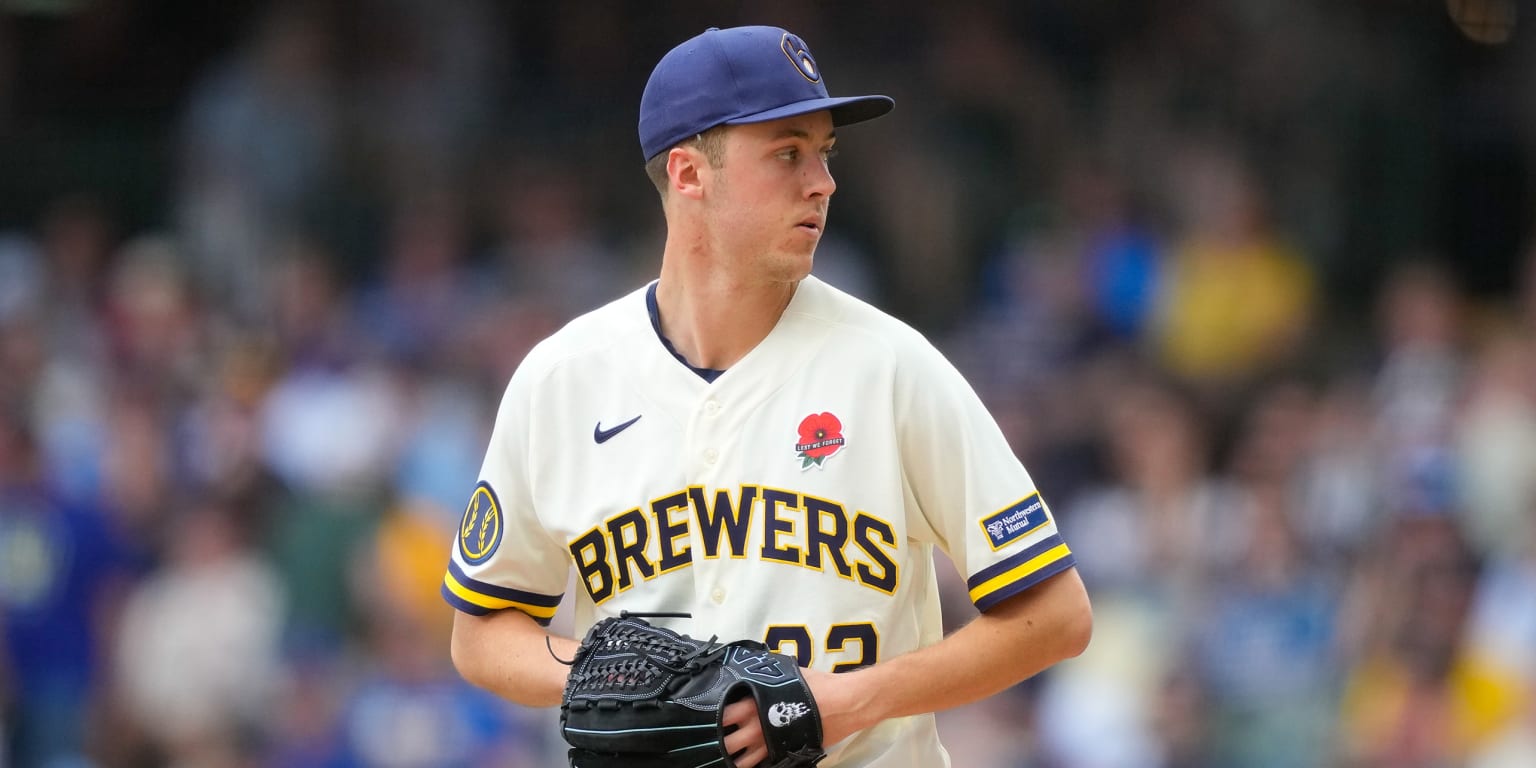
Jacob Misiorowski takes the mound Sunday in Houston with a stat line that belongs in a video game: 4-0 in May with a 0.29 ERA, 49 strikeouts across five starts, and a 0.54 WHIP that ranks second all-time for any pitcher with four-plus starts in a calendar month since pitch tracking began in 2008. The only comparison point close enough to mention is Freddy Peralta's August 2025 (0.32 ERA), and Misiorowski has outpaced him in strikeout rate and contact management. Against 105 batters faced in May, Misiorowski has allowed exactly one hit to land for extra bases—zero. In his last six starts spanning April and May, he's gone five-plus innings without permitting an extra-base hit, a feat matched only four times since 1900 by names like Christy Mathewson and Bob Welch.
The mechanical root of this dominance traces to his offseason investment. Misiorowski spent the winter building lower-body strength, a focus that converted into measurable velocity gains and, ironically, an entirely new wardrobe—the pitcher went from a 36-inch waist to 38 inches, requiring custom 37-inch-inseam replacements. That added mass translates to deeper hip drive and ground-force production in his delivery, which amplifies his ability to elevate fastballs and generate whiff-rate on off-speed pitches. Brewers pitching coach Jim Henderson confirmed the correlation: the build-out was methodical, not accidental, and the results—14.07 strikeouts per nine innings in May—prove the work paid off.
What makes this Sunday start against Houston meaningful for prop bettors is timing and information asymmetry. Misiorowski's strikeout line will be available early in the week, likely priced without full adjustment for the velocity component or the April-May trend. Books will account for his ERA and face-value strikeout rate, but they may not have fully modeled the causal mechanism: that his added strength produces carry-gains on his fastball that compress batter timing, especially against a lineup that hasn't faced him before. Houston's offense has struggled against high-velocity heaters this season, and Misiorowski now sits in the 88-90 mph band on his four-seam fastball—elite for a starter and a weapon he's weaponized with precision.
The concern is durability. Misiorowski's 0.29 ERA and extra-base-hit streak are unsustainable and will regress once the calendar flips to June. The Astros have seen him throw once; unfamiliarity expires quickly in baseball. By his next start, if he faces a team that's studied tape or has faced him before, the strikeout rate will normalize downward. This angle carries a five-to-seven-day shelf life. Early-week lines—if the strikeout prop opens at 8.5 or 9 strikeouts—offer legitimate value on the over, because the market hasn't yet priced in that the added strength, not sequencing luck, is the driver.
The play isn't to bet Misiorowski to strike out 15 again or to assume he stays at 14+ per nine. It's to recognize that his baseline strikeout rate, even post-regression, is now higher than the public understood three months ago. If the line prices him at 8.5 strikeouts, assume a true expectation of 9.5-10.5 once the market catches up to the velocity data. That gap closes fast—probably by Wednesday night. Get ahead of it.