Wetherholt's All-Star Snub Masks a Rookie Season Too Valuable to Ignore
By Ty Whitney ·
The Cardinals' leadoff hitter is delivering top-tier value across all three dimensions of the game—and the market hasn't fully priced in his sustained excellence.
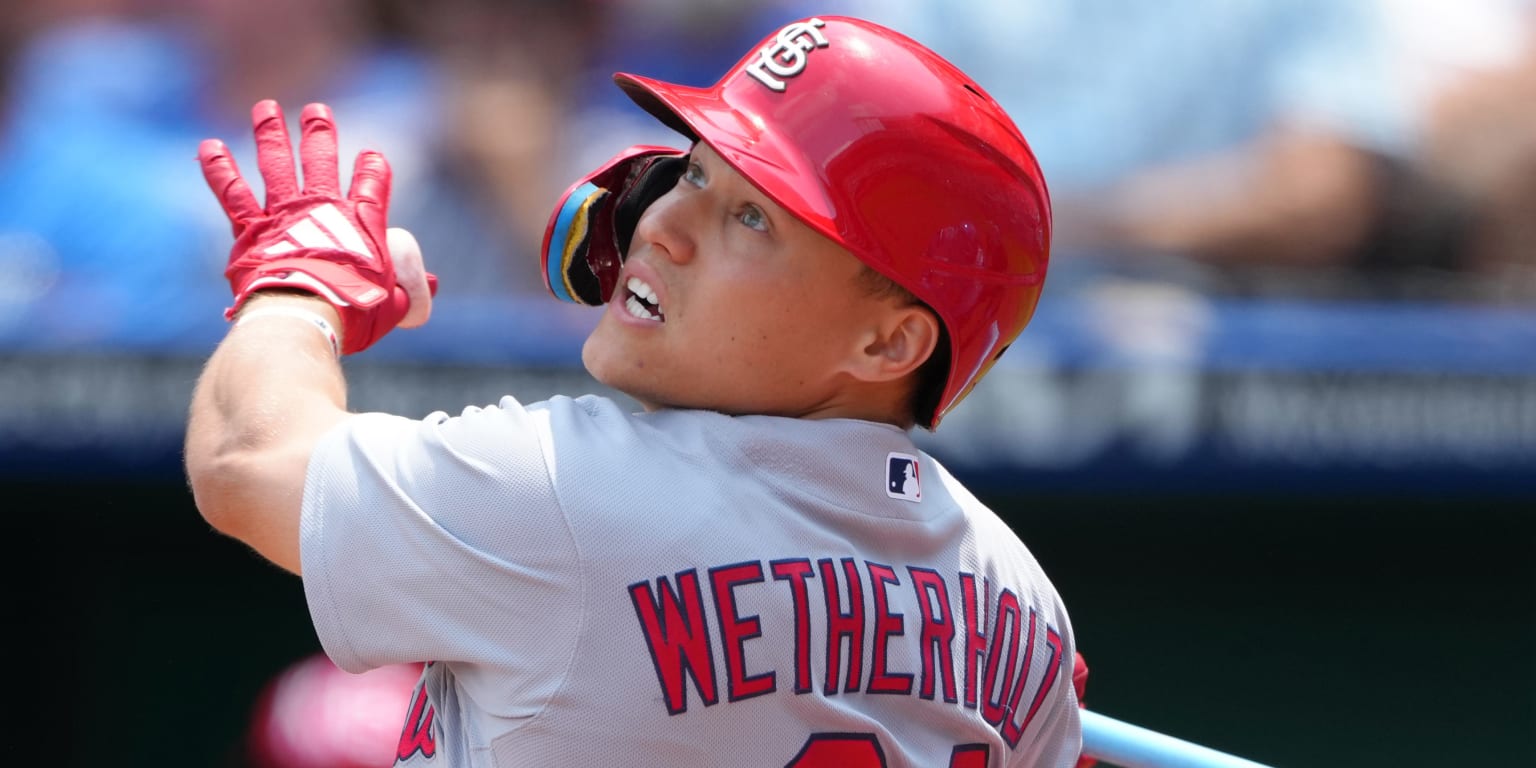
JJ Wetherholt stepped to the plate at Wrigley Field on Saturday, two days after All-Star rosters landed without his name. He faced a Cubs crowd primed to heckle and a nationally televised audience. The rookie deposited the first pitch into left field for a hit. Composure like that tells you everything about a player who has spent his first 83 games redefining what a rookie utility impact looks like in 2026.
The numbers are staggering across every axis. Wetherholt owns 3.8 fWAR through the break—sixth in MLB, third in the National League—despite missing All-Star selection. His offensive line sits at .269/.364/.416 with 13 home runs, 54 runs scored, and a 120 wRC+ that places him 20% above league average as a 23-year-old getting regular at-bats. But the offensive contribution, while solid, is only part of the story. His 18 outs above average leads baseball and projects to 33 OAA for the full season, which would rank second-best since the metric began tracking in 2015. He's also added 14 defensive runs saved (fifth in MLB), 9 stolen bases, and a +3 baserunning value that ranks tied for 12th league-wide. The breadth of that production—elite glove work, average-plus bat, base-running creation—is what distinguishes Wetherholt from the typical rookie breakout.
What makes his All-Star exclusion particularly revealing is how it signals market inefficiency. The voting occurred before this weekend's games, meaning the electorate voted on a smaller sample and likely weighted recent performance less heavily than the cumulative body of work. Yet Wetherholt has been producing at this level consistently all season; the exclusion says more about All-Star voting's recency bias than his actual trajectory. Jordan Walker earned the Cardinals' other All-Star nod, and that's a defensible call for an outfielder in his second season. Wetherholt's snub, by contrast, looks like an oversight once you account for his defensive premium and positional scarcity at second base.
For bettors, the implication is straightforward: Wetherholt's playoff odds and award equity are likely underpriced. His WAR trajectory suggests a 5.0-5.5 full-season finish is entirely plausible—that places him squarely in Rookie of the Year conversations and makes the Cardinals' postseason ceiling materially higher than the pre-season projections allowed. Since he bats leadoff, his run-creation value flows into team-total overs and runs-scored props. A team with a rookie second baseman posting 3.8 fWAR in 83 games, combined with Walker's established production and the rest of St. Louis' lineup, carries edge on team totals in games where the Cardinals face a below-average pitcher or an opponent's bullpen is depleted. Monitor his stolen-base line closely as well; his aggressive approach on the bases (9 SB, +3 baserunning value) combined with his elite contact rate (.364 OBP) makes him a candidate to eclipse 15 stolen bases for the full season, which would mark elite efficiency for a second baseman.
The Wetherholt story is ultimately a lesson in filtering narrative noise from signal. The All-Star omission created a media moment on Saturday; the underlying production, when disaggregated across fielding, hitting, and speed, has been exceptional all season. Books have likely not adjusted team-total overs enough to account for a rookie of his caliber hitting leadoff for a competitive division contender entering the second half.