Emerson's Ohio Homecoming Breaks Slump—and Raises Questions About Young Mariners Upside
By PropBetEdge Editorial Team ·
A 20-year-old rookie infielder snapped a brutal two-week stretch with a solo homer to lead Seattle past Cleveland, but his real value to bettors lies in what his early composure tells us about the Mariners' margin for error.
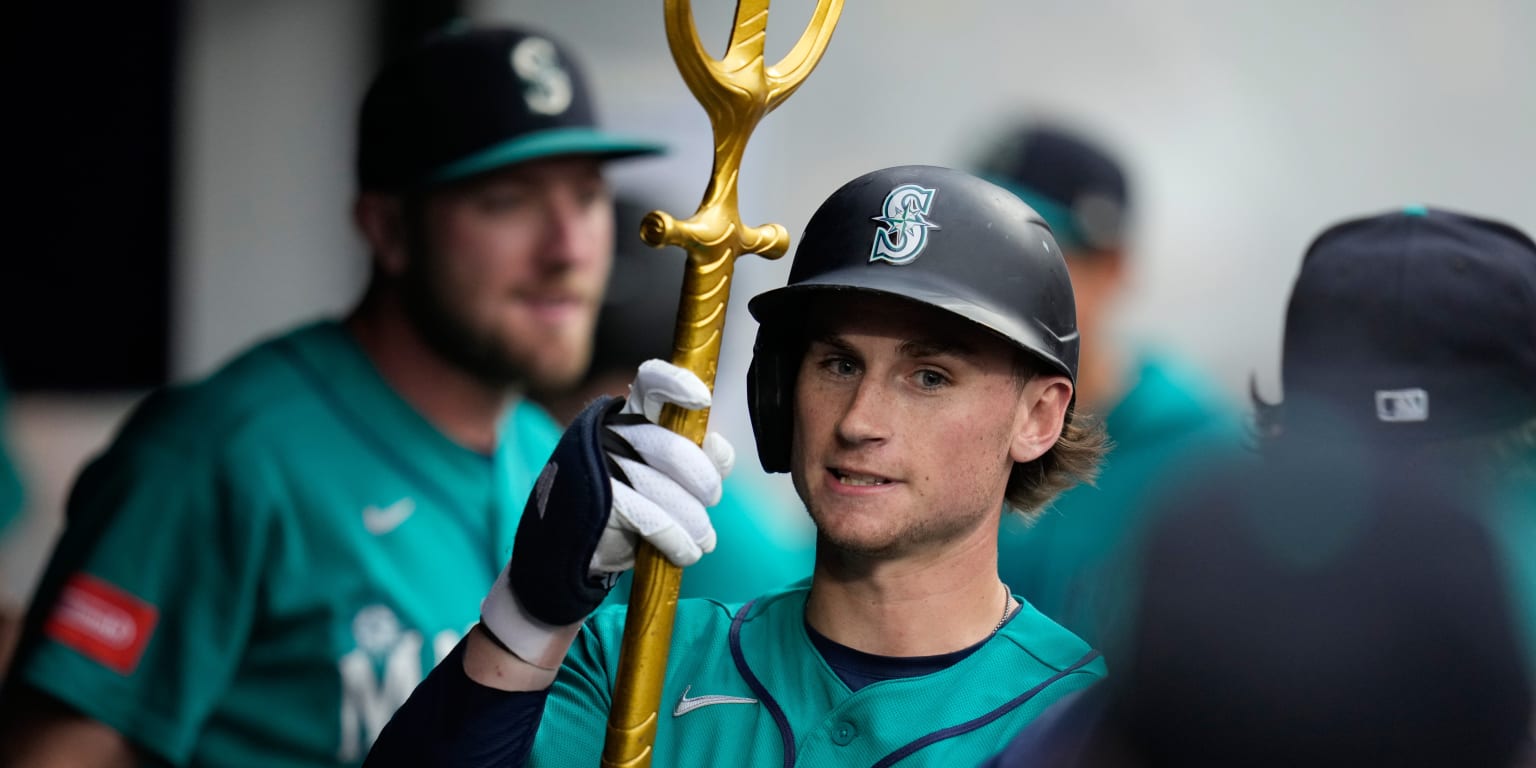
Colt Emerson launched a solo shot in the third inning Friday night as Seattle defeated Cleveland 3-1, punctuating what the rookie called his toughest stretch since joining the majors six weeks ago. The timing matters: Emerson came out of the All-Star break candidate conversation and into a visibility moment—playing in front of family and childhood context in Ohio—at precisely the moment his early-season trajectory needed a reset button.
The headline read as routine youth-power narrative until Emerson's postgame framing reframed it entirely. He separated baseball performance from personal identity, explicitly rejected the psychological trap of letting slumps define him, and articulated a worldview his peers are mostly living through college orientation. That kind of emotional bandwidth at age 20, in front of cameras and family in a homecoming setting, is predictive of something beyond a single game: it suggests the Mariners' front office saw something in him that goes deeper than box-score talent. The team wouldn't have accelerated his timeline to the majors without believing he could compartmentalize.
So what does that mean for the prop market? Emerson's two-week funk—whatever the underlying mechanics (opposing pitcher mix, adjustment window, small-sample noise in a 162-game season)—is already baked into his current market pricing. Books priced him conservatively during the slump; they're pricing him cautiously now despite the homer, because a single game and a feel-good narrative don't overwrite 14 days of data. But if Emerson's composure is real—if he's genuinely the kind of prospect who doesn't psychologically collapse when facing adversity in front of an MLB audience—then his floor is higher than the market has repriced it. His strikeout rate will normalize. His contact quality should improve as he sees more pitching. And crucially, his presence in the Seattle lineup reduces variance in Mariners team totals and moneylines during this homestand; a 20-year-old who doesn't panic is a 20-year-old who doesn't kill rallies in critical spots.
The prop angle isn't about taking Emerson over 0.5 homers next game—that's recency bias wrapped in a feel-good story, and the market will have already adjusted. The angle is in Seattle's team total and moneyline over the next week. If Emerson's emotional stability translates to consistent at-bats without catastrophic swings, the Mariners' offensive floor rises. Homers are volatile; consistency is not. A rookie infielder who can compartmentalize stress doesn't go 0-for-4 with runners in scoring position three nights in a row. He grounds into double plays at normal rates. He takes good pitches. The team wins more games than oddsmakers priced before they understood his psychological profile.
This is a durable edge because it rests on process, not outcome. One game proves nothing. But a young player's public demonstration of resilience—especially one that explicitly names the mental framework he's using—is information the market underweights in real time. Book it before Seattle's team total drifts up further on the back of this win.