Smith's 12-Pitch Marathon and Little League Mishap Illuminate Braves Depth Against Faltering Marlins
By Ty Whitney ·
A grinding sixth-inning at-bat followed by a collision-induced inside-the-park homer expose the gap in offensive muscle between Atlanta's loaded lineup and Miami's struggling pitching staff.
Dominic Smith's night against Miami on Wednesday reads like a highlight reel assembled by a drunk editor—the kind of game-script noise that props markets should ignore, but often don't. In the Braves' 9-1 demolition of the Marlins at loanDepot Park, Smith muscled through a 12-pitch at-bat in the sixth inning against Janson Junk, fouling off multiple fastballs before riding an 81.4 mph curveball into right-center for a three-run homer. That at-bat ranked third in Braves history for pitch count in a home-run plate appearance since 1988, trailing only Sean Murphy and Jurickson Profar's 13-pitch blasts in 2025. Smith's patience—a deliberate shift after two earlier strikeouts against the same pitcher—bought time for Atlanta's lineup to reset the count in Junk's favor, grinding the reliever down ahead of a two-out situation with Olson camped on third.
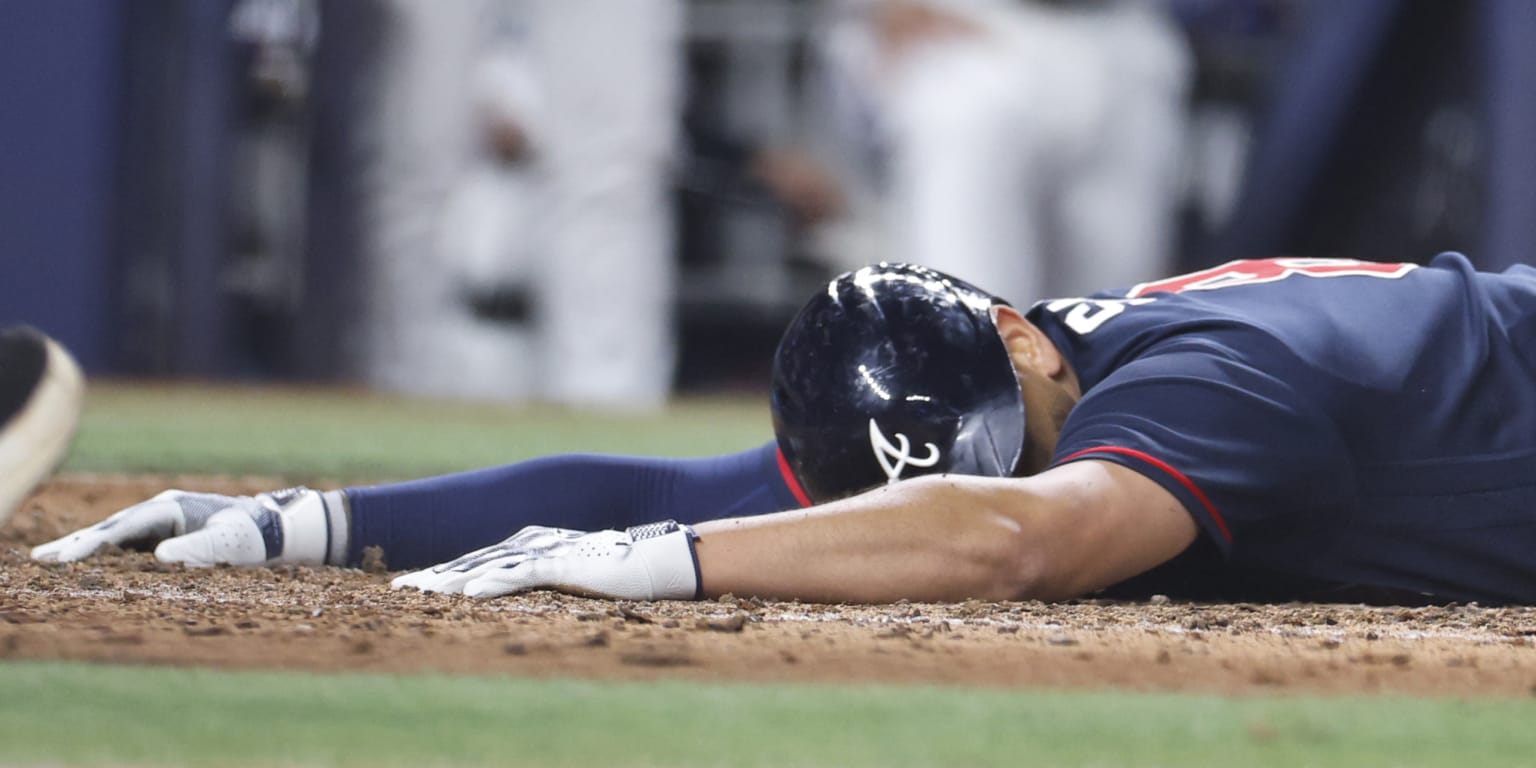
But the night's most revealing moment came in the eighth inning, when Smith lofted a sweeper into the right-center gap that became a Little League home run only after Marlins outfielders Esteury Ruiz and Owen Caissie collided while tracking the ball. Smith scored on the ensuing chaos—technically a triple that became a run—a play that crystallized Miami's defensive dysfunction and Atlanta's margin of error. This wasn't skill; it was a team capitalizing on an opponent's implosion. For context, Smith had hit just .209 with a .603 OPS in the month before this game. One explosive night against a basement-dwelling pitching staff doesn't reprieve that offensive track record.
The Braves' offensive environment matters here more than Smith's individual performance. Atlanta put runners on base constantly against Miami—Acuña, Harris, Olson, and Albies all singled to open the sixth, a sequence that illustrates the Marlins' inability to generate length from their bullpen arms. Junk threw 34 pitches in 1.2 innings, with the Smith at-bat consuming 12 of them. When a team faces that depth of accumulated plate appearances and pitch counts, the cumulative offensive output inflates. Smith's three-run bomb was less a turning point than a symptom of Miami's pitching collapse.
From a betting angle, the Braves' team total and run line were already advantageous at their opening numbers against Miami's broken rotation. What last night's game should not do is shift perception of Smith as a reliable offensive producer going forward. He remains a below-average hitter with feast-or-famine plate discipline—the 12-pitch at-bat was an outlier rooted in a specific matchup (Junk's inability to put away hitters with off-speed pitches) rather than a structural improvement in Smith's swing mechanics or pitch recognition. Markets that lean on last night as evidence of Atlanta's offensive firepower in future games are pricing a single strong outing from a weak bench bat as predictive signal. The Braves' true offensive edge sits with Acuña, Olson, and Harris—players with sustained track records. Smith remains a variance play. For the next week of Braves games, fade any bump in Smith's individual prop lines (batting average, RBI) that the market may have attached to his night. The edge is betting that regression, not that one-off hero at-bats, define his actual value.
The more durable angle is Atlanta's team totals and run lines against below--.500 pitching. That edge survives because it rests on roster construction, not one batter's hot game. Smith's two home runs (one earned, one gifted by Miami's defense) should not move those numbers. If they do, there's meat on the other side.