Suzuki Joins Rarified Air at 100 Home Runs—and the Cubs' Power Surge Has Betting Implications
By Erik Schwartz ·
Seiya Suzuki's 100th career homer marks a historic milestone for Japanese-born hitters, but the real story is the timing of his surge and what it signals about the Cubs' offensive environment going forward.
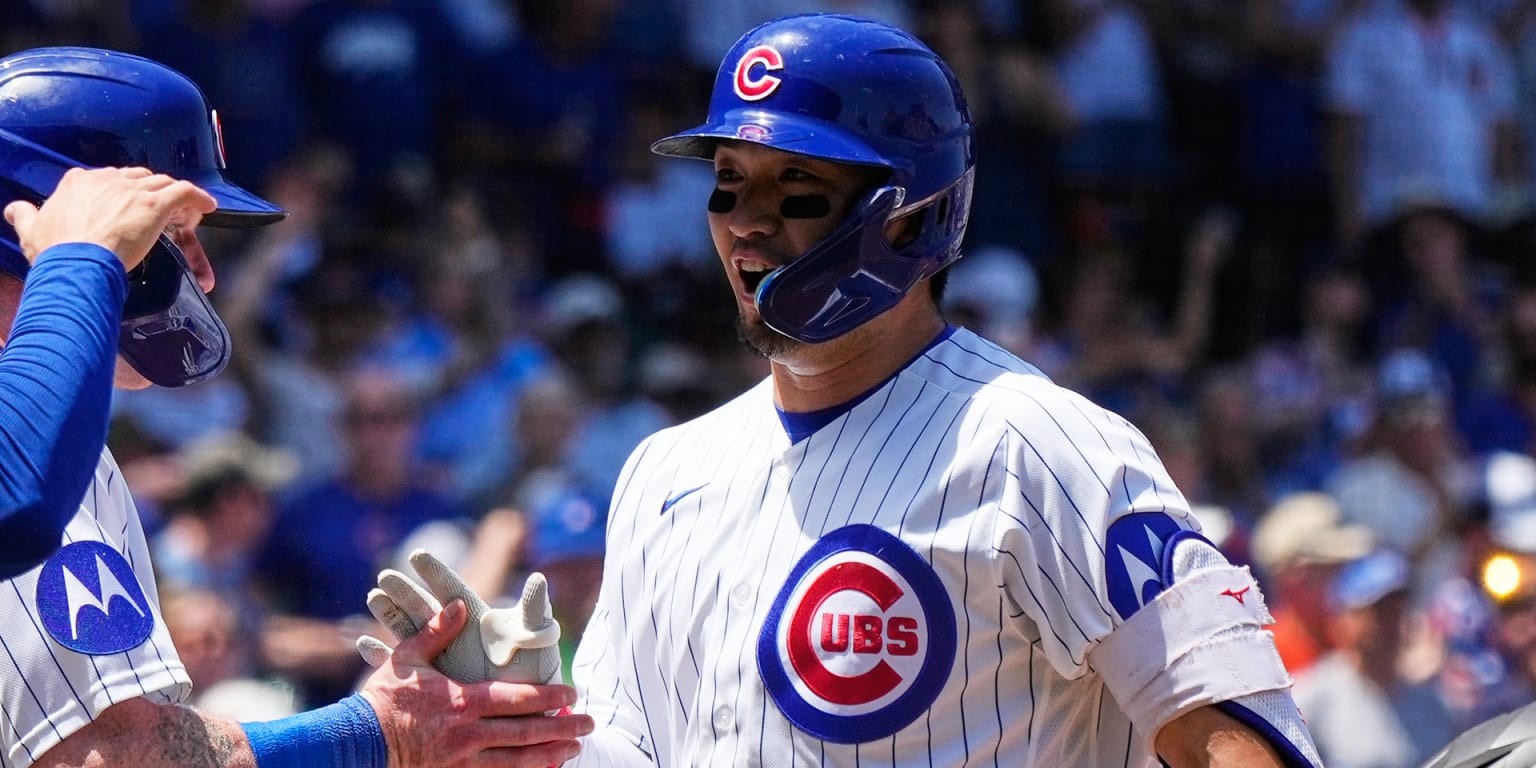
Seiya Suzuki joined an exclusive club on Wednesday, becoming the fourth Japanese-born player to reach 100 career home runs in the majors. His three-run blast off Walker Buehler in the first inning sailed 426 feet over the ivy at a sweltering Wrigley Field, putting the Cubs ahead early in their series finale against San Diego. The milestone itself is significant—only Hideki Matsui, Ichiro Suzuki, and Shohei Ohtani preceded him—but the manner of his arrival matters more for what it reveals about his current offensive trajectory.
Suzuki's power hasn't materialized in isolation. After a minor right-knee tweak on June 13 that dented his early-month output (.375 slugging percentage over eight games), he entered Wednesday's game riding a five-game hot streak (.714 slugging percentage). This represents a stark volatility swing: a player recovering from injury, then reigniting with explosive force. Wednesday's dinger was his third since Friday, including two outings against Brewers fireballer Jacob Misiorowski—making Suzuki one of the few hitters in baseball to homer off the young righty multiple times. The Cubs' right fielder is 31 years old, in his fifth season with Chicago, and has now established a clear pattern: when healthy and engaged, he generates elite power production.
The betting implications hinge on durability and regression risk. Suzuki's .714 slugging percentage over five games is sustainable only if he avoids re-injury and maintains his plate discipline against a baseball heating up in July. A five-game hot streak following injury recovery is not a season-long inflection point; it's a performance spike that the market will initially price as signal of true talent unlocking, when it may simply be variance in a recovery window. The Cubs' lineup, which benefited from his power surge, will see public perception shift upward. Team totals and offensive prop lines on Chicago will likely tick up in the short term, especially at home where Wrigley's warm conditions (as noted Wednesday) enhance ball carry and exit velocity.
However, the causal mechanics warrant skepticism. Suzuki's knee issue occurred just over two weeks ago. Five-game sample sizes post-injury often regress as conditioning demands increase and the adrenaline of recovery settles. His season slugging percentage (approximately .486 through June 30) sits well below this week's .714 clip, suggesting the spike is orthogonal to his true baseline talent. The Cubs' team-total overs may see early takers banking on this recent surge, but the edge lies in understanding that Suzuki's power explosion is temporally bounded—a product of both injury recovery momentum and a handful of favorable matchups, not a permanent upgrade to his value profile.
For prop bettors, the play is tactical and short-window: if the Cubs' team totals rise on the back of this week's offensive performance, fade the overs over the next 7–10 days while the market is still digesting Suzuki's 100th-homer headline. His individual home-run props may also see early support; avoid overs at inflated numbers until his true post-recovery baseline stabilizes over a larger sample.